Skip to Main Content

Education Fairs

Education Fairs

Meet Us near You

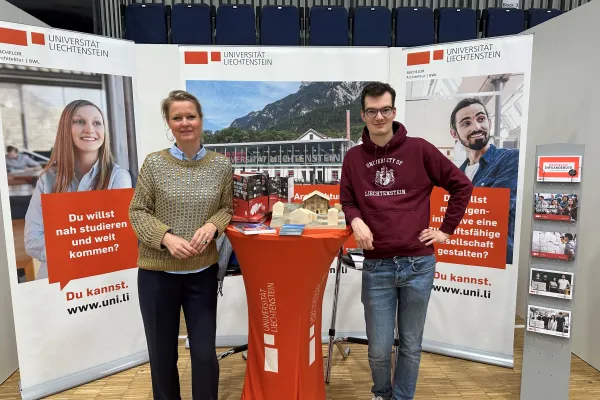
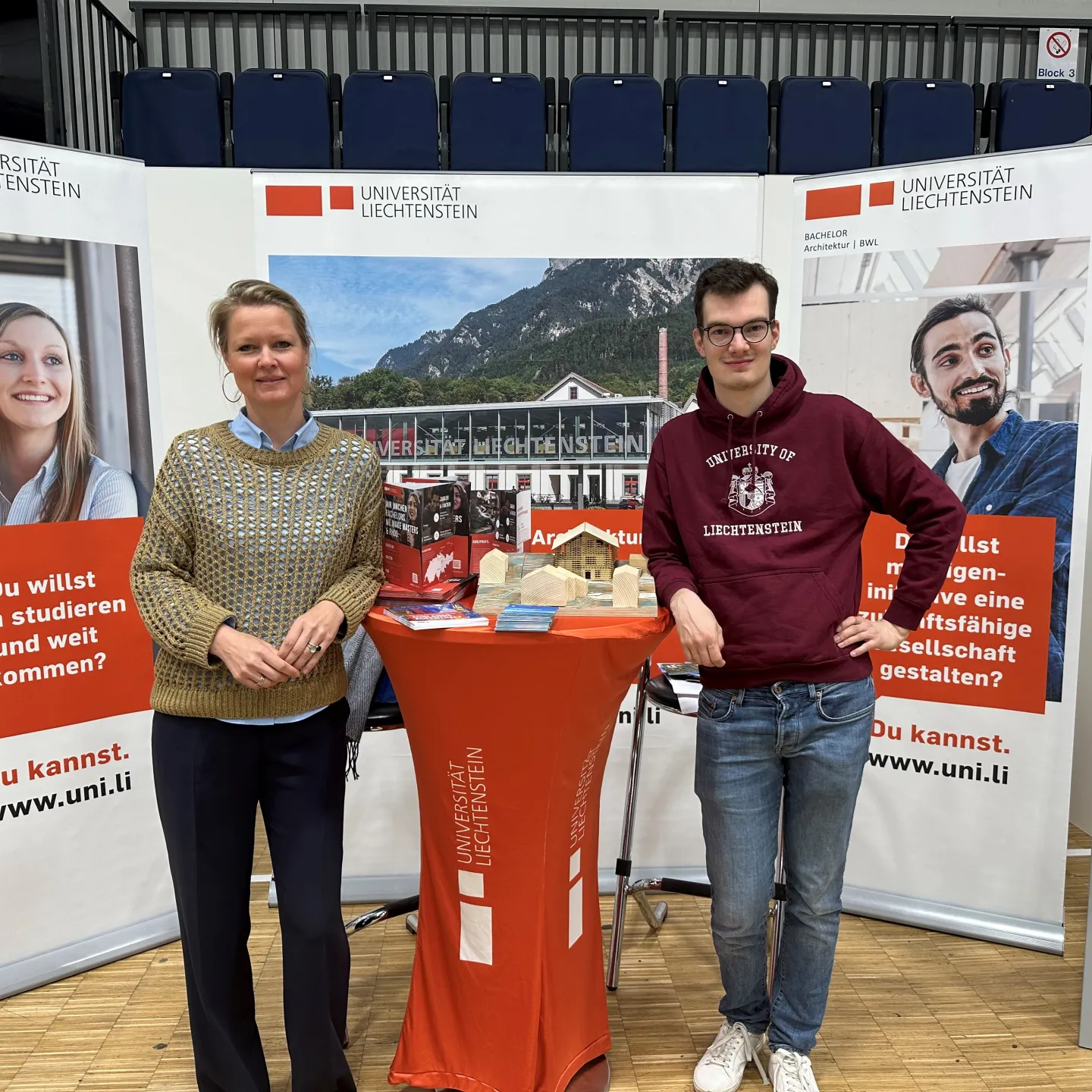
Drei Frauen im Gespräch an einem Stehtisch beim Infotag der Universität Liechtenstein, mit Informationsmaterialien und freundlicher Atmosphäre.

We will be attending education fairs in Liechtenstein, Germany, Austria and Switzerland in 2025 and look forward to meeting you in person!


Whether you have questions about our degree programmes, the application process, studying abroad or career opportunities: our students and programme directors will be happy to advise you on site, directly, honestly and as equals.


Curious what student life at our university is like? Then come and see us and get all the information first-hand.


We look forward to your visit!

Drei Frauen im Gespräch an einem Stehtisch beim Infotag der Universität Liechtenstein, mit Informationsmaterialien und freundlicher Atmosphäre.

Next Step: Master

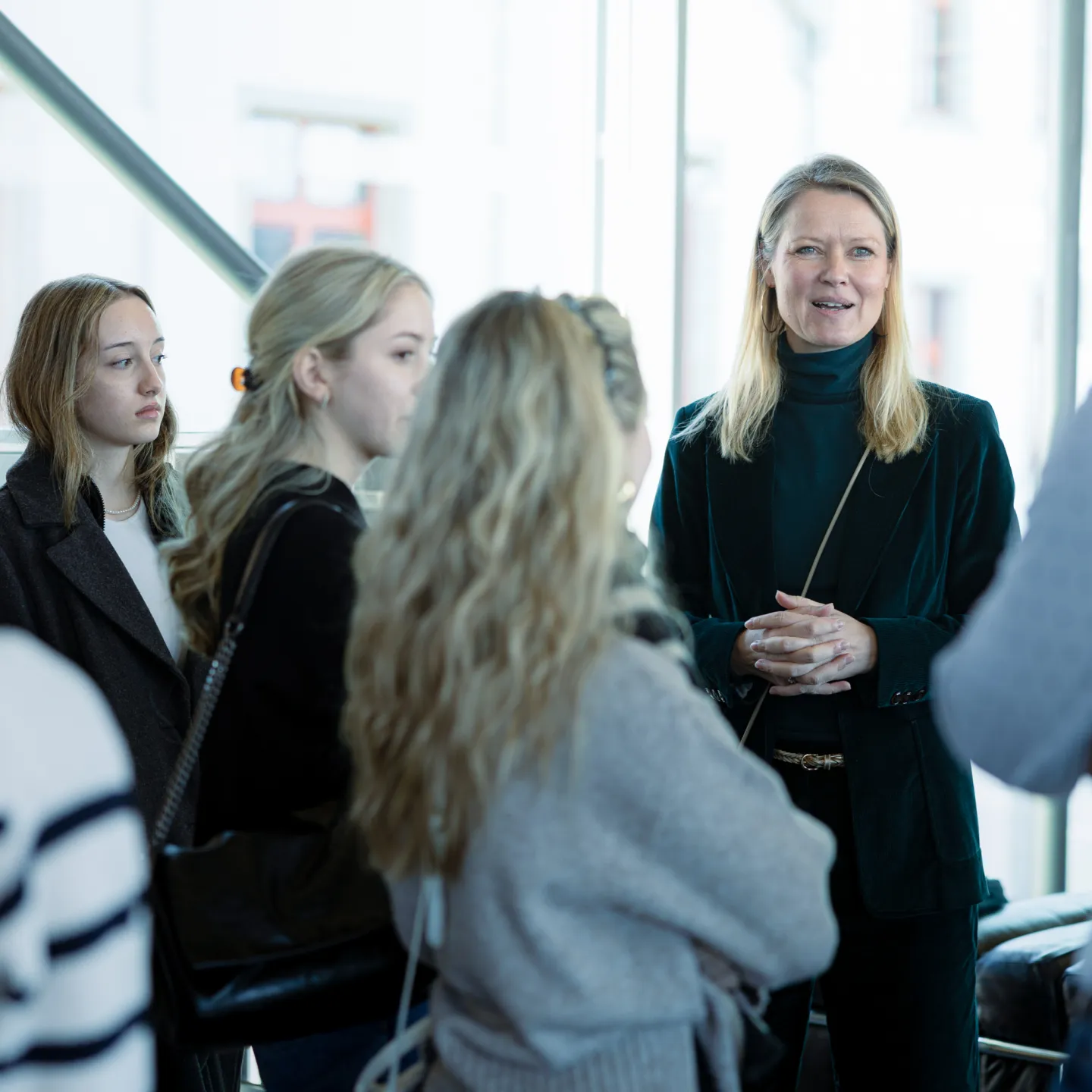
Eine Dozentin der Universität Liechtenstein spricht mit einer Gruppe interessierter Studierender bei einer Campusführung.

Are you looking for the right Master's programme for your next career move?

Get to know our Master's programmes in Entrepreneurship, Innovation and Leadership, Innovative Finance and Information Systems - in a direct conversation with us on site.

Drop by, ask your questions and find out how we can support your potential.

In person. International. Future-orientated.


Dates 2026


Eine Dozentin der Universität Liechtenstein spricht mit einer Gruppe interessierter Studierender bei einer Campusführung.

Professur für Betriebswirtschaftliche Steuerlehre und Steuerrecht

Prof. Dr. Martin Wenz

Professorship for Business Taxation and the Laws of International and Liechtenstein Taxation

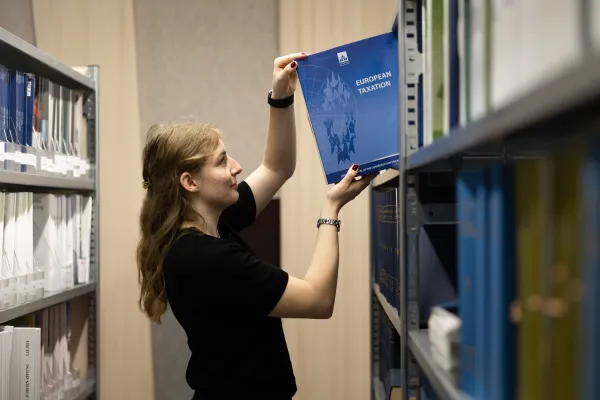
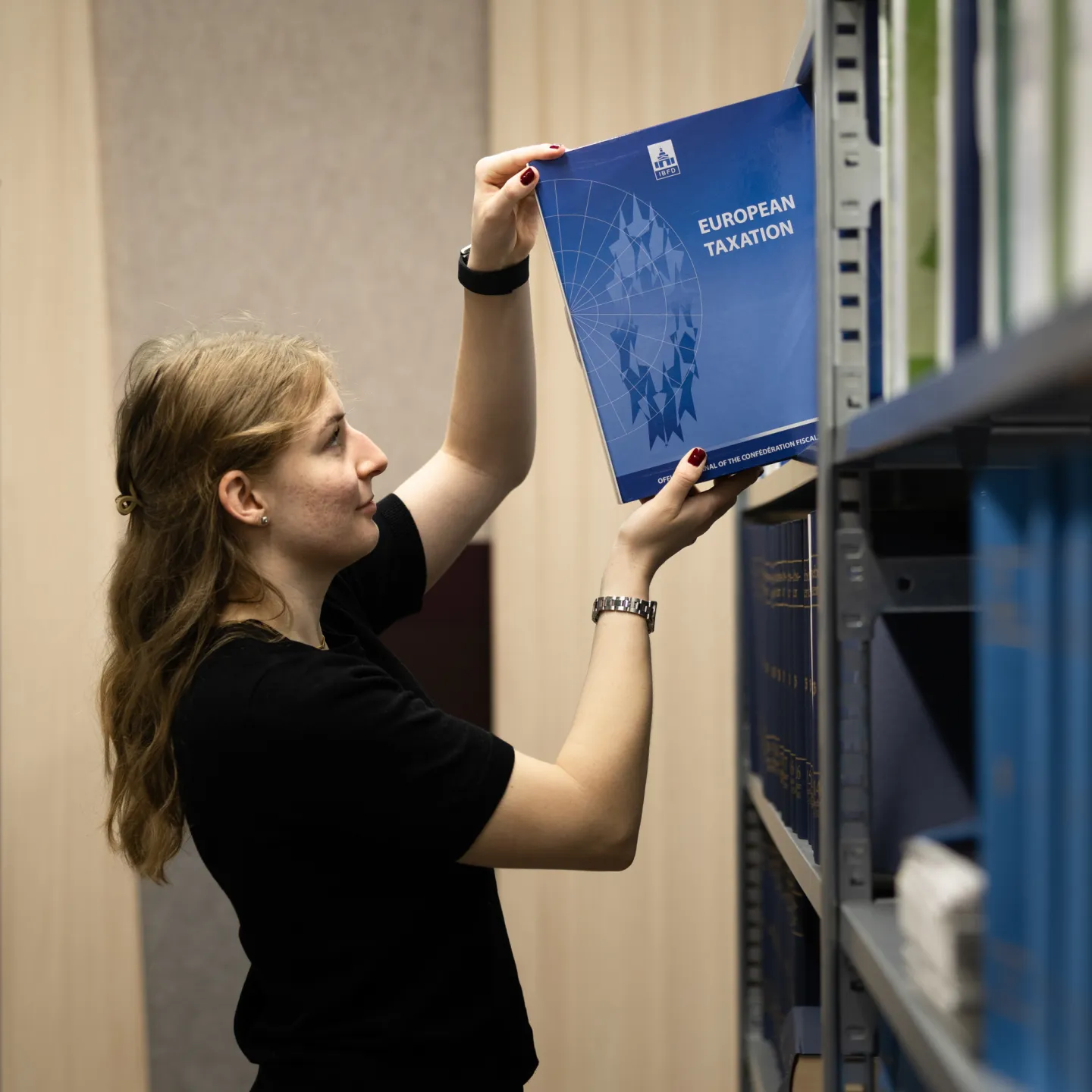
Frau holt Zeitschrift European Taxation aus Regal in der Bibliothek der Universität Liechtenstein.

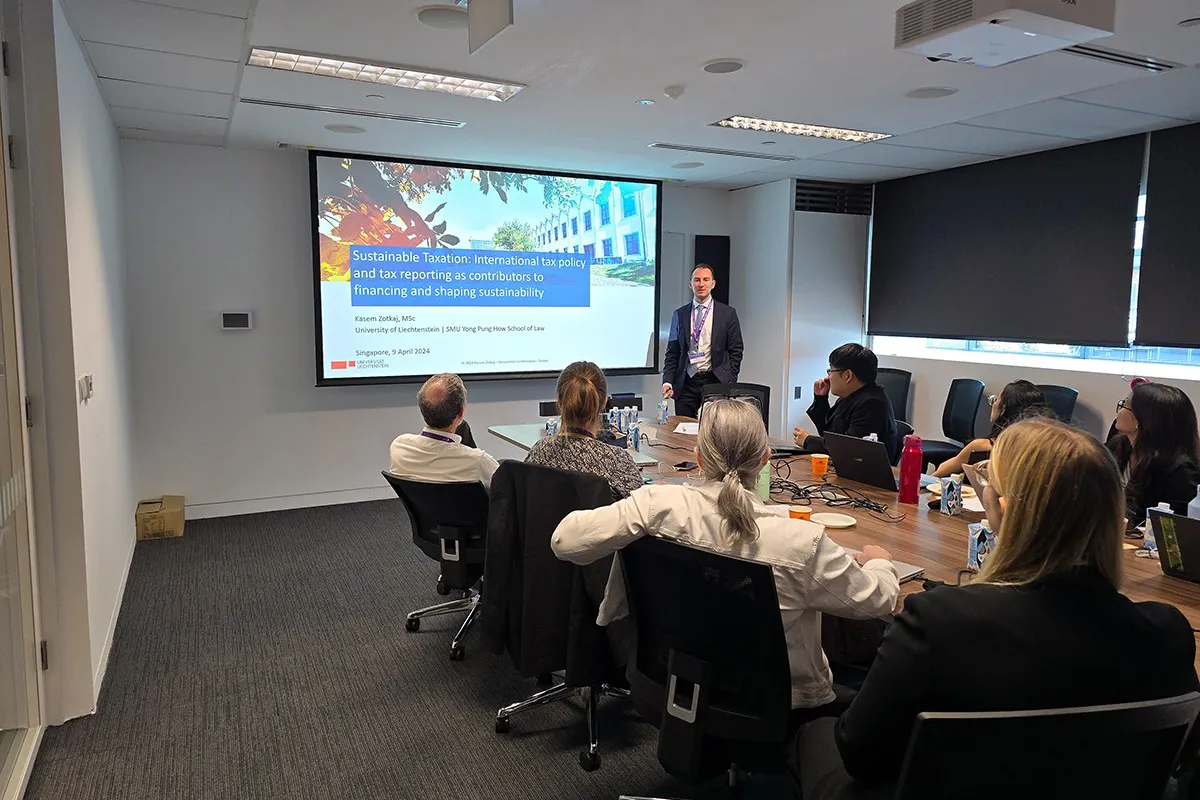
Prof. Dr. Martin Wenz and the staff of the professorship focus on national and international tax law and the tax systems of the four German-speaking countries (LI, AT, CH, DE), international tax cooperation (DTA, TIEA, MLI, FATCA, AIA, CRS) and international tax planning with regard to private individuals, companies, asset structures and financial instruments.

Frau holt Zeitschrift European Taxation aus Regal in der Bibliothek der Universität Liechtenstein.

These contents are taught in the BSc, MSc and PhD programmes, in the Certificate Programme in Tax Law, in the Executive Master of Laws (LL.M.) in International Taxation and at various tax conferences.

In research, the focus is on projects relating to Liechtenstein and European tax law and the international taxation of asset structures, and in knowledge transfer on the revision of tax law, double taxation and tax treaties. Numerous publications and lectures in German and English complement the activities in research, teaching and knowledge transfer.

Research Focus Areas

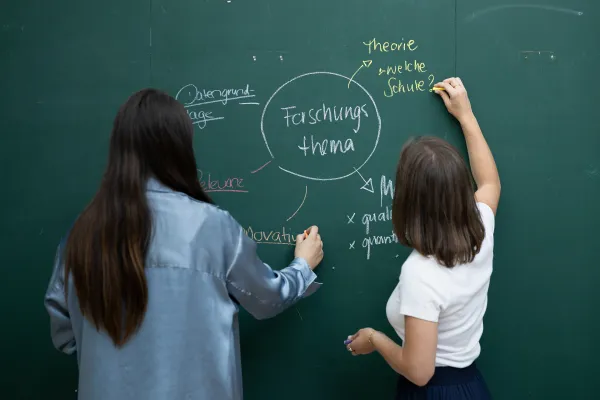
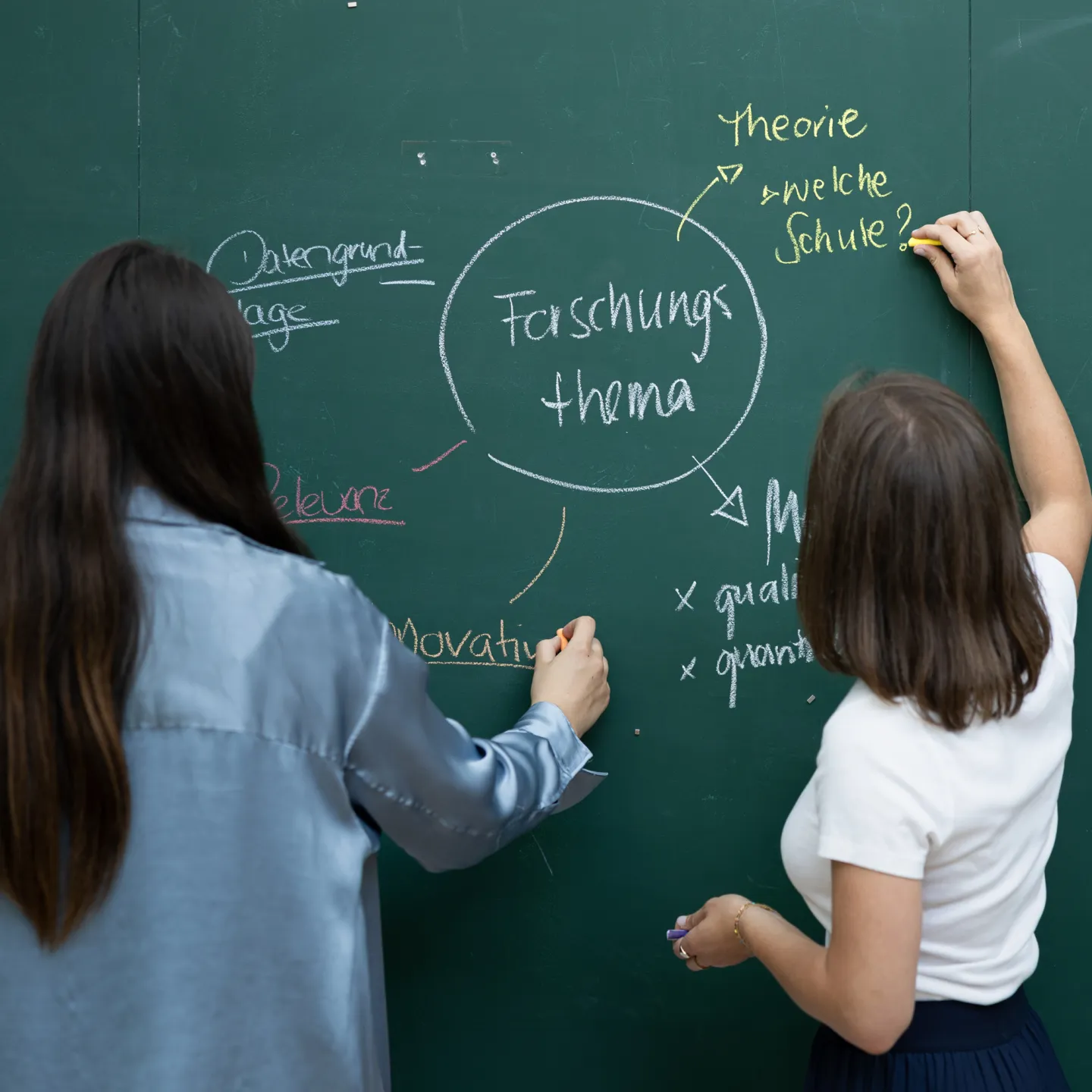
Zwei Studierende entwickeln ein Forschungsthema auf einer beschrifteten grünen Tafel mit Kreide und Farben.
  • Liechtenstein Tax Law
  • European Tax Law
  • International Taxation of Asset Structures
  • Revision of the Liechtenstein Tax Act
  • Double Taxation and Tax Treaties
  • Knowledge Transfer between Research, Legislation and Practice
  • Publications and Lectures in German and English on Tax Law Topics
Insights into Research on Business Law
Zwei Studierende entwickeln ein Forschungsthema auf einer beschrifteten grünen Tafel mit Kreide und Farben.

Research Projects

Events

There are currently no events taking place. Information on future offerings of the Chair of Business Management Taxation and Tax Law will follow.

Publications

Contact Us

Questions about the Professorship?

Prof. Dr. Martin Wenz
Professor - Business Management Taxation and Tax Law Academic Director - Liechtenstein Executive School
Employee
Contact Us

Questions about the Professorship?

Antonia Kuster-Dürr
Assistant - Dean's Office Liechtenstein Business Law School
Employee

School Workshops

Discover Uni Life

Taster Workshops for School Classes

Bastelmaterialien auf Holztisch: Spaghetti, Kleber, Marshmallows und bunte Werkstoffe – Workshop an der Universität Liechtenstein

Would you like to get a taste of university life with your school class? Our workshops offer pupils practical insights into architecture and business, either on campus or directly in your classroom.

Through interactive formats, students can experience what studying is like, talk to current students and discover what a degree programme at the University of Liechtenstein looks like. There is no pressure to perform, only authentic university atmosphere.

Bastelmaterialien auf Holztisch: Spaghetti, Kleber, Marshmallows und bunte Werkstoffe – Workshop an der Universität Liechtenstein

What to Expect


  • Inspiring workshops and short presentations
  • Insights into the degree programmes in Architecture and Business Administration
  • Exchange with current students
  • Guided campus tours
  • A relaxed atmosphere with snacks and drinks


Flexible and uncomplicated
 

Visit us with your class at the University of Liechtenstein, or let us bring the university experience directly to your classroom.

For more clarity on your path to choosing a degree programme.

Current Workshop Offers

Architecture

Who can build the tallest skyscraper? Who will construct the bridge with the longest span?
This hands-on activity is designed to explore which factors influence both the stability and the aesthetic quality of structures.

Steel and spaghetti share similar physical properties. That is why spaghetti can be used to create structural models comparable to steel constructions.


Instructions

Students work individually or in teams to create their own spaghetti structures.
They can choose to build a skyscraper, a bridge or a free-form structure.
In doing so, they engage with concepts such as span length, load-bearing capacity and stiffness in steel constructions. Geometric principles and repetitive modular systems may also come into play.


Workshop Structure

Step 1: Introduction – Structures and Industrialisation
An introduction to the history of bridge or skyscraper construction provides the foundation for the workshop. This is also a story of industrialisation and thus of steel engineering. The introduction may take the form of a guided discussion, short video or expert talk.

Step 2: Experiment and Build
Based on the chosen theme, students decide whether to build a skyscraper, a bridge or a free-form structure. Using spaghetti, glue and optional mini marshmallow beads, they explore structural design through trial and error.
Teachers or facilitators should support the process by offering guidance on trusses, diagonals and joint connections. Modular systems may be introduced, encouraging repetition and pattern-based construction.

Step 3: Stability Testing
At the end of the workshop, the different constructions are presented and discussed.
Height, span length, cantilever or load-bearing capacity are tested and compared.
This part of the activity may also take the form of a competition, with a winning team, motivating participants to create bold and innovative structures.

This workshop aims to introduce young people to the topic of upcycling in architecture as well as in everyday life. Participants learn to sharpen their awareness of designed spaces and to develop creative ideas further.

In addition to raising awareness for architecture, the workshop also encourages a deeper reflection on the topic of waste. What kind of waste do we produce every day? What materials could be reused or repurposed? And how can design and architecture emerge from waste?


Instructions

Working in groups of four to six, students come up with ideas, design and build architectural objects such as a chair, table or lounger – using discarded materials. These materials are collected in the weeks leading up to the workshop or sourced elsewhere. The focus is not only on materials and design, but also on the users of the objects.

Workshop Structure

Step 1: Analysing Seating Furniture and Sitting Positions
A chair is not just a chair. In the first part of the workshop, students get to know and analyse various types of seating furniture. The aim is to understand how such furniture is used and which dimensions are required. A person’s sitting position on a dining chair is very different from that on a deckchair. Students measure their own bodies and sketch out different seating types in groups. Each group then selects a seating design and a material. Everything is sketched and dimensioned in advance.


Step 2: Understanding and Reusing Materials
Once the material is selected, students start building and testing individual components. The stability and sturdiness of the entire piece of furniture provides insights into possible adjustments in construction. This process allows students to explore and apply the specific properties of different materials in new ways. The concepts of recycling and upcycling may also be introduced and discussed.

Step 3: Reflection and Presentation
In the final phase, students are invited to present their seating objects. They are encouraged not only to showcase the final product, but also to explain the process that led to its creation. Based on sketches, drawings and working models, an exhibition is curated that presents their engagement with recyclable materials – and can be shared with invited guests such as parents and friends.

Designers and architects often draw inspiration from nature. This connection can lead to new and innovative ideas in entirely unexpected ways. In this workshop, vegetables and fruit serve as inspiration for architecture and spatial design.

The workshop focuses on developing creativity, innovation and spatial imagination. It is designed to stimulate students’ creativity and encourage playful exploration.

Instructions:
The workshop is based on a variety of fruits and vegetables. When choosing materials, it is important to select items that allow for complex and spatial interpretation. At the beginning of the session, examples from architecture and product design inspired by nature can be shown to set the tone.

Workshop Structure:
Step 1: Selecting and Preparing Materials
With a single precise cut, participants divide their chosen fruit or vegetable into two halves. They observe and examine the internal structure, especially the hollow spaces and chambers inside the object. The unused parts can later be used to prepare a fruit salad, vegetable sticks or a mixed salad as a break-time or end-of-session treat.

Step 2: Drawing the Section
In the next step, students draw a two-dimensional section of one of the halves on a sheet of paper. The drawing should be approximately 30 by 30 centimetres in size. If students prefer to start with a smaller version, they can enlarge their drawing by photocopying it afterwards.

Step 3: Creating Spatial Models
The drawing or its copy forms the basis for constructing three-dimensional structures using paper. In this creative stage, students freely develop new spatial forms. The only rule is that the shape of the drawing serves as the ground plan for the new space. Using paper strips, they can build imaginative and complex spatial enclosures. The resulting models may be presented in a small exhibition and discussed as a group.

Business Administration

Online stores are experiencing high growth rates in all sectors. The question arises as to why exactly they are so successful and what dynamics lead consumers to pay even higher prices online than in traditional retail stores. Introduction to the topic of IT-supported sales (e-commerce) with special consideration of the specifics of this sales channel. Based on the characteristics of digital products, selected phenomena of e-commerce (network effects, lock-in effect) are presented and their effects analyzed.

Technology is finding its way into our everyday lives to an ever greater extent. Innovations such as the Internet of Things (IoT) and Artificial Intelligence (AI) form the technological basis for new products and services. This workshop will discuss fundamental concepts of innovation and the associated concepts of change and digital transformation.

What is good leadership? Am I a good leader? Through the design of Lego objects and Lego games, in-depth knowledge in the areas of leadership, team building and management is imparted. At the same time, communication, conflict and team-building skills are (further) developed and initial leadership experience can be gained.

This interactive workshop offers students an exciting introduction to the world of artificial intelligence (AI). Participants will learn how AI works, where it is used in everyday life and explore the ethical challenges of this technology. They will also have the opportunity to apply AI models to practical issues. The workshop imparts practical knowledge and arouses interest in one of the most important fields of the future.

Design thinking is a systematic approach to complex problems from all areas of life. The approach goes far beyond traditional design disciplines such as shaping and design. In contrast to many innovation methods in science and practice, which approach the task from the perspective of technical solvability, user wishes and needs as well as user-oriented invention are at the center of the process.

Gebäude Bundesgymnasium Bludenz Österreich
"Once again, a heartfelt thank you on behalf of my entire class. It was a wonderful experience – truly interesting, or in the words of the students, 'a really cool workshop.' Many, many thanks!"
Bundesgymnasium Bludenz
Gebäude Schule Formatio Liechtenstein
First of all, thank you so much for the fantastic workshop, the doughnuts and for organising the speakers! At our open day next Friday, we will be able to show prospective students exactly which experts we had the pleasure of working with."
Formatio Liechtenstein
HLW Feldkirch
On behalf of both classes, we would like to sincerely thank you once again for the excellent organisation and the exciting morning. The students thoroughly enjoyed the presentation, the campus tour, the conversations – and of course the doughnuts 😊 – and the feedback was overwhelmingly positive."
HLW Feldkirch
Kantonsschule Trogen
Once again, many thanks for Monday’s workshop at the Cantonal School in Trogen. It was very well received by the students."
Kantonsschule Trogen

Additional Offers

Drei Frauen im Gespräch an einem Stehtisch beim Infotag der Universität Liechtenstein, mit Informationsmaterialien und freundlicher Atmosphäre.
School Fairs

Are you organising an education fair at your school? We would be happy to take part and advise your students on possible pathways after graduation.

Just send us an email.

Studierende im Gespräch mit einer Mitarbeiterin der Universität Liechtenstein bei einer Veranstaltung im Eingangsbereich
Excursion for Your Teaching Staff

Would you and your colleagues like to get to know the University of Liechtenstein in person?

We are happy to organise a guided campus tour and present our educational opportunities to you in detail.

School Alumni

University Students Supporting School Students

What is it really like to study at the University of Liechtenstein?
Students from the Bachelor’s programmes in Architecture and Business Administration share their personal experiences and give you an authentic look into student life.

Got questions?
Feel free to contact directly out Student Ambassadors.


On request, our School Alumni also visit schools and speak directly to classes about their path to the University of Liechtenstein, daily student life, and their personal insights.

If you're interested or have questions, get in touch with: friederike.metzler@uni.li.

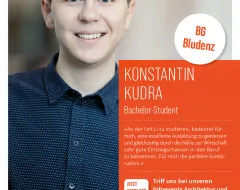
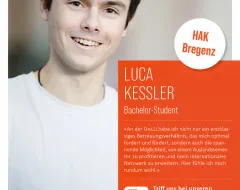
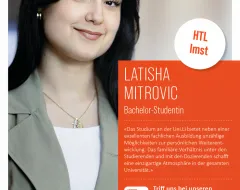
A Selection of Our School Alumni

Still Have Questions?

Contact us

Ass. iur. Friederike Metzler-Koll
Project Manager - Communications and Marketing
Employee

FAQ

Questions and Answers About Studying

Everything You Need to Know

Strassenschild mit Beschriftung links Fragen nach rechts Antworten

Whether you are planning to study at the University of Liechtenstein or are already enrolled – here you will find answers to the most frequently asked questions about studying.

Do you have a question that is not answered here? Then feel free to get in touch – we are happy to help.

Strassenschild mit Beschriftung links Fragen nach rechts Antworten

Start of Studies

As soon as you are admitted to the University of Liechtenstein, you will receive a welcome package containing all the key information.
The official start of both the winter semester (early September) and the summer semester (early February) is marked by an introduction week for all new students.
You can find the exact dates for the upcoming semester here.

The Welcome Week marks the beginning of your studies at the University of Liechtenstein. During this week, you will receive all the information you need to get started in Liechtenstein, at the university, and in your degree programme. You will also get to know your fellow students and various events are offered.

No, registration for all courses and your exams remains open during and after the welcome week. Please make sure that cross-faculty courses do not overlap with your other courses. If you have questions about courses or course selection, please contact your executive director.

We have prepared a checkliste to help you start your studies smoothly and without stress.

Choosing Your Studies

The University of Liechtenstein offers a wide range of degree programmes in the fields of architecture, business administration and business law. These include bachelor's and master's programmes as well as doctoral degree programmes. In addition, we offer a variety of continuing education programmes. You can find further information about each programme, including content and admission requirements, on our pages for academic degree programmes and for professional education programmes. Our executive directors are also happy to provide you with individual guidance.

To find out which degree programme suits you best, you should focus on your interests, strengths and long-term career goals. Make use of the advisory services offered by the University of Liechtenstein to learn more about the various programmes. Speaking with our executive directors can also help you make an informed decision. In addition, you can take part in our information events and our “Student for a Day” experience.

We regularly offer information events on the individual degree programmes. You can find the dates here. In addition, our “Student for a Day” events give you the opportunity to gain first-hand insight into everyday student life.

The University of Liechtenstein offers a wide range of services to support prospective students in choosing the right programme.
Personal counselling sessions help clarify individual interests and goals, and guide you toward the most suitable study programme. Information sessions, participation in education fairs, school workshops, and exchanges with our Student Ambassadors provide authentic insights into university life.
In addition, the university website offers detailed information on degree programmes, admission requirements, and potential career paths. If you have any questions or uncertainties, our advisory team is always happy to help.

At the University of Liechtenstein, you have the opportunity to reflect on your situation in a confidential counselling session and explore possible next steps. Together with our student advisory service, you can determine whether adjusting your study plan, changing subjects or starting a different programme might be the right decision for you.
Topics such as funding, study workload or personal circumstances can also be addressed during the consultation.

Studies and Work

In principle, all of our degree programmes are designed as full-time studies, with a workload of around 40 hours per week. Especially during the first year, having a part-time job is only possible to a limited extent. Whether you can work alongside your studies depends greatly on your degree programme and your individual capacity.

Yes, you can complete your studies on a part-time basis by taking fewer modules per semester. It is important that you earn at least 20 ECTS credits per academic year and do not exceed the maximum permitted length of study (14 semesters for a bachelor’s degree, 10 semesters for a master’s degree). No formal registration for part-time study is required.

All students who hold a residence permit for their studies in Liechtenstein must obtain prior approval from the Immigration and Passport Office before taking up any employment. It is essential to contact the office before starting the job. Your employer must submit an “employment commencement application” on your behalf to the Immigration and Passport Office. If the application for the work permit is submitted too late, a fine of up to CHF 400 may be imposed.
For questions regarding work permits, please contact the Immigration and Passport Office directly. 

Here you will find a job platform where companies from the region and the University of Liechtenstein regularly post student job opportunities. In addition to the job board, the Career Service offers career-related workshops, events with regional companies, and individual coaching sessions.

Housing and Residence

As a student at the University of Liechtenstein, you have various options for finding accommodation. Available to you are our student dormitory located directly on campus, as well as rooms and flats on the private housing market. The university actively supports you in finding a suitable housing solution.

The university offers a platform for the referral of private rooms and flats. Here, you can search for current listings or post your own housing request. All entries are sorted by date and remain online for two months.

Yes, the student dormitory of the University of Liechtenstein is located directly on campus. It consists of two buildings with single and double rooms, each equipped with shared kitchens, common areas and laundry facilities. If you are interested in a place in the dormitory, you can contact the university team directly. As places are limited, early application is recommended.

Rental prices vary depending on the type of accommodation and location. For a room in the student dormitory, you should expect monthly costs between CHF 400 and CHF 600. Private rooms or flats may be more expensive depending on their features and location. Additional costs such as electricity, internet and insurance must also be considered. Early budgeting will help you plan your finances realistically.

If you move to Liechtenstein for your studies, you will generally need a residence permit. If you are from a country outside the EU, EEA or Switzerland, you will also need a visa. You must apply for the visa at the Swiss embassy in your home country. Among other documents, you will need your letter of admission to the University of Liechtenstein. Admission as an guest student is not sufficient. The residence permit must be applied for at the Liechtenstein Immigration and Passport Office before the start of your studies.


It is important that you inform yourself early about the requirements and the application process.

Study Costs and Funding

Tuition fees for bachelor’s, master’s and doctoral degree programmes at the University of Liechtenstein amount to CHF 950 per semester for EU/EEA and Swiss nationals, and CHF 1,250 per semester for students from other countries who do not meet these requirements.


Additional fees may apply for administrative services, decisions or the use of infrastructure. Further details can be found in the Fee Regulations regulations and the associated Implementation Provisions.

For the payment of the tuition fee for the first semester, the rule is: the earlier, the better. Your place of study is only guaranteed once the fee has been paid in full.

For all subsequent semesters, the tuition fee must be paid in full no later than the 15th of the month before the start of the semester. Otherwise, you will not be able to register for courses and continue your studies.

The total expected living expenses for students at the University of Liechtenstein amount to approximately CHF 1,500 per month. However, living costs are highly individual and can vary significantly.

If you live in Liechtenstein for your studies, you are required to have health insurance. In addition, it is recommended that you take out private liability insurance.

Scholarships, student loans and government support, in addition to self-financing, are options for funding your studies at the University of Liechtenstein. Citizens of Liechtenstein can also apply for interest-free loans provided by the government. Public support such as BAföG in Germany, study grants in Austria or cantonal scholarships in Switzerland is often available as well.

Elite Sport and Studies

The University of Liechtenstein supports elite athletes with a study model specifically tailored to their needs. With “Elite Sport Status”, students benefit from flexible examination arrangements, adjusted attendance requirements and individually planned study schedules. Our executive directors act as key contacts and assist with organising the course of studies.

With “Elite Sport Status”, the University of Liechtenstein supports you in successfully combining your studies with your athletic career. This status allows for flexible examination arrangements, adjusted attendance requirements and an individually tailored study plan.


The status is granted to students who can demonstrate athletic achievements of national or international relevance (e.g. membership in a national team or a development squad recognised by the Liechtenstein Olympic Committee, LOC).


The application must be submitted in writing no later than four weeks before the start of the semester. Required documents include proof of performance (e.g. Swiss Olympic Card), a description of your sporting goals and a training schedule.


The Liechtenstein Undergraduate and Graduate School will review your documents and make a decision. The status is valid for one year and can be renewed.

With “Elite Sport Status”, you benefit from tailored arrangements that take your sporting commitments into account:

  • Examinations: Individual examination dates and alternative formats may be requested, provided that the executive director is informed in good time. Short-notice changes due to competitions will be considered wherever possible.
  • Submission Deadlines: Extensions for written assignments can be granted if needed.
  • Attendance Requirements: Absences due to competitions or training camps may be approved. Substitute work can be arranged in consultation with the academic programme director.

Study planning is individually tailored to meet the demands of your athletic career. Our executive directors are your main points of contact and support you with:

  • developing a flexible study schedule,
  • integrating training and competition times into your academic routine,
  • coordinating individual examination arrangements and attendance requirements.

Inclusive Studies

Every disability or chronic illness requires individual support. Specific measures, such as compensation for disadvantages, are tailored to personal needs to ensure equal opportunities in academic studies. The executive directors are always available for personal guidance.

Compensation for disadvantages can be requested informally through the executive directors at the Liechtenstein Undergraduate & Graduate School. You must provide proof of your disability or chronic illness that clearly outlines the impairments relevant to your studies.

The type of compensation for disadvantages is tailored to your specific needs to ensure equal opportunities. Possible measures include extended writing time, adjustments to the examination format, the use of assistive tools, and taking exams in a separate room. The aim is to offset impairments without providing an advantage over other students. The executive directors will be happy to advise you.

For questions about studying with a disability or chronic illness, please contact the executive directors of your degree programme.

Language Courses

The offering includes language courses in English, German as a foreign language, and Spanish. The courses are interactive and take place in small groups to ensure a personal and effective learning environment. You can find the specific course offering here.

Yes, language courses completed at other universities can be recognised as an interdisciplinary elective module, provided they are equivalent in scope and academic level. Please contact the executive directors of your degree programme to have the recognition reviewed.

Yes, as long as you meet the general admission requirements for university studies, you can take part in our language courses as a guest student for a fee. Upon request, we will provide a written confirmation of successful participation and the language level achieved. If you are interested, please contact Kirsten.Steinhofer@uni.li.

English:
New students in the BSc in Business Administration are automatically registered for the Oxford Online Placement Test, which can be taken from home at a specified time before the start of lectures. This test determines your current proficiency level and helps you choose the appropriate course. Further details will be announced in due time. Students in higher semesters and other programmes should refer to the prerequisites stated in the course descriptions and contact Kirsten Steinhofer with any questions.

German as a Foreign Language and Spanish:
For beginner levels (Deutsch I and Español I), you can register directly. For higher levels in German (Deutsch II and Deutsch III), the onSET online placement test is required. This test can be taken before the start of the semester on designated dates. Further details will be provided in due time by the International Office and the German language instructors. For the advanced Spanish course (Español II), please refer to the course description.

When choosing your course, consider your overall score and your score in “Use of English”:

C21_English I (Level B2.2 – C1):
To successfully participate in this module, we recommend an advanced B2.2 level (at least 75 points overall and in “Use of English”). If you do not reach this score, you should first take the module FU_Activation in English I instead.

FU_Activation in English I (Level B2.1 – B2.2):
This course is the right choice if your test result is below 75 points overall and/or in “Use of English”. It will help you develop the competencies needed to reach level B2.2.

C21_English II (Level C1):
This module builds on the skills acquired in C21_English I. You must have successfully completed C21_English I before registering for C21_English II.

Research Topics

Research with Societal and Economic Relevance

Research Topics

The University of Liechtenstein conducts research on key future-oriented topics, interdisciplinary, practice-oriented, and socially engaged. The University of Liechtenstein’s topics in focus digitalisation, innovation, sustainability, and responsibility are embedded across all disciplines and form the foundation for responsible knowledge production. Complemented by specialised key research areas, this creates a research profile that develops solutions to current and future challenges, regionally rooted, internationally connected.

The Cornerstones of Our Research

University-Wide Topics in Focus

Digitalisation represents societal transformation and the shaping of a sustainable future. In research and knowledge transfer, practice-oriented solutions are developed that integrate the social, economic, and environmental dimensions of digital transformation.

More Information

Innovation at the University of Liechtenstein connects research with practice to drive sustainable development. Within the research areas, creative solutions and new business models are developed that enable and actively shape societal change.

More Information

The University of Liechtenstein embeds sustainability as a lived principle in research, teaching, and daily practice. Through innovative approaches, interdisciplinary research, and responsible action, it works together with partners to shape a sustainable society, both locally and beyond.

More Information

The University of Liechtenstein understands responsibility as the foundation of its actions. Through research-based impulses and active exchange with society, sustainable solutions are developed for regional and global challenges.

More Information

Specialisation

Key Research Areas

The University of Liechtenstein views architecture as a socially impactful and interdisciplinary field. Its focus lies on resource-efficient construction, the mindful transformation of existing structures, and the design of resilient living environments, grounded in theory, practice-oriented, and future-focused.

More Information

The University of Liechtenstein explores entrepreneurial action and effective leadership as key drivers of organisational sustainability. The focus lies on entrepreneurs and leaders whose strategic thinking, self-leadership, and capacity for innovation are strengthened through practice-oriented, research-based insights.

More Information

The University of Liechtenstein combines academic depth with practical relevance in the field of Finance and Economics. The focus is on current topics such as digital financial solutions, artificial intelligence in the financial system, and sustainable strategies — with the aim of providing well-founded responses to the challenges of a dynamic financial world.

More Informationen

Research in Business Law and Taxation at the University of Liechtenstein combines international perspectives with practice-oriented analysis. The focus is on current legal challenges related to tax law, financial market regulation, and digitalisation with particular relevance for Liechtenstein as a financial centre and the DACH region.

More Information

In the field of Information Systems, the University of Liechtenstein conducts research at the intersection of technology, business, and society. The focus is on responsibly designed digital innovations — from AI and data science to information security with the aim of creating sustainable solutions for businesses and society.

More Information

Architecture and Spatial Development

Architecture and Spatial Development

universitaet-liechtenstein_studium_Architektur-Atelier-der-Liechtenstein-School-of-Architecture-mit-Studierenden-im-kreativen-Arbeitsprozess

Architecture is more than designing buildings. It shapes spaces, influences societies and transforms our built environment in harmony with ecological, cultural and social demands. Research at the University of Liechtenstein approaches architecture as an interdisciplinary field, one that brings together craftsmanship, construction, building processes, sustainability, spatial development and upcycling in a forward-looking dialogue.

universitaet-liechtenstein_studium_Architektur-Atelier-der-Liechtenstein-School-of-Architecture-mit-Studierenden-im-kreativen-Arbeitsprozess

Research and Knowledge Transfer Projects

Doctoral Research Projects

Recent Publications

Business Law and Taxation

Business Law and Taxation

Person drückt auf ein digitales Paragrafzeichen vor einem leuchtend blauen Hintergrund mit rechtlichen Symbolen.

Business Law and Taxation is a key research topic at the University of Liechtenstein. The academic engagement with questions in tax law, economic criminal law and financial market regulation is practice-oriented, interdisciplinary and situated in an international context. The research focuses in particular on Liechtenstein as well as on the legal frameworks within the DACH region (FL, AT, CH, DE) and beyond.

Person drückt auf ein digitales Paragrafzeichen vor einem leuchtend blauen Hintergrund mit rechtlichen Symbolen.

Research and Knowledge Transfer Projects

Recent Publications

Information Systems

Information Systems

Handfläche mit schwebenden Symbolen für Menschen und Netzwerke, Darstellung von digitaler Vernetzung und sozialem Austausch.

Information Systems is an interdisciplinary research topic at the intersection of technology, business, and society. Researchers at the University of Liechtenstein investigate how digital innovations, information systems, and artificial intelligence (AI) can be designed and used responsibly. A key focus is on the security of digital infrastructures, particularly with regard to information security, data protection, and the resilience of automated systems.

Handfläche mit schwebenden Symbolen für Menschen und Netzwerke, Darstellung von digitaler Vernetzung und sozialem Austausch.

Research and Knowledge Transfer Projects

Doctoral Research Projects

Recent Publications

Finance and Economics

Finance and Economics

Lupe vergrößert bunte Kursverläufe auf digitalem Finanzdatenbildschirm, Fokus auf Datenanalyse und Wirtschaft

Finance and Economics is a research topic of strategic relevance at the University of Liechtenstein. The academic engagement with questions in finance and economics is strongly connected to developments in business, society and policy. Researchers analyse, for example, how political uncertainty affects financial markets, what opportunities and risks are associated with digital financial solutions such as cryptocurrencies, and how sustainable finance strategies can be implemented in corporate contexts.

Lupe vergrößert bunte Kursverläufe auf digitalem Finanzdatenbildschirm, Fokus auf Datenanalyse und Wirtschaft

Research and Knowledge Transfer Projects

Doctoral Research Projects

Recent Publications

Entrepreneurship and Management

Entrepreneurship and Management

Masterstudierende im Studiengang Entrepreneurship und Management der Universität Liechtenstein arbeiten gemeinsam an einem Projekt am Laptop in moderner Lernumgebung.

The research topic Entrepreneurship and Management brings together two complementary perspectives: the promotion of entrepreneurial initiative and the development of effective leadership and management skills. Projects address key questions related to innovation, business development, strategic decision-making and leadership with a strong foundation in academic research and a clear focus on practical relevance.

Masterstudierende im Studiengang Entrepreneurship und Management der Universität Liechtenstein arbeiten gemeinsam an einem Projekt am Laptop in moderner Lernumgebung.

Research and Knowledge Transfer Projects

Doctoral Research Projects

Recent Publications

Subscribe to