Skip to Main Content

Liechtenstein - Vaduz

Liechtenstein - Vaduz

Gabriel Mangelsdorf

Finding a second home

Zwei Studierende halten lächelnd Getränkedosen in die Kamera.

When I applied for a semester exchange in Liechtenstein way back in February 2025, I did so on the recommendation of my best friend Connor, who took part in it in 2024. I applied, signed the papers, and waited for a response without really knowing anything about the country except the praise it had received from Connor. In all honesty, I didn’t know this place existed until he told me about it.

I have lived at home with my family my whole life, aside from holidays with friends and trips within Australia. I haven’t had much experience on my own. I had independence in many ways, but not when it came to the necessities of day-to-day household life. I took this opportunity to come to Liechtenstein to learn about myself and see what I am really capable of. For the nine months leading up to the exchange, I was worried, nervous, excited, afraid, happy, and sad—all because I knew my way of life was going to change; I wouldn’t be comfortable anymore. My family reassured me that it would be a great experience and the best way to move forward into adulthood. Connor, in particular, reassured me that Liechtenstein would feel like a second home very quickly and that the people and places were beautiful. But still, it was in my nature to doubt.

I have now been here for just over one month, and it is safe to say that it already feels like a second home; in fact, it feels just like home. My city of Adelaide is home to 1.47 million people—not exactly the size of Liechtenstein—but as Australia’s second smallest mainland city, it is known as the place where everyone knows everyone. Although that feeling is embedded in my being, it disappears when I travel outside the country and returns when I come back. However, no sooner had I arrived in Liechtenstein than that feeling returned to me. And the most amazing part was that I was not stunned or surprised; rather, it felt natural.

When I stopped to think about it, it was odd. I am now living in a dorm on a floor with 14 people, one kitchen, and three bathrooms, with a roommate from Mexico, at a university with students from many countries and languages, in a country with three dialects and only 40,000 people. Yet everyone stops to talk to me, everyone says hello on the street, the shop workers ask how my day was, a family welcomed me into their home for dinner, and my professors want to get to know me. Even with a small language barrier (which really isn’t a barrier—most people here speak better English than I do), communication, affection, empathy, and curiosity come about in the same natural way as they did back home. I also see this phenomenon affecting the other exchange students, whether they are from big places like my roommate, who grew up in Mexico City, or from smaller cities.

When I think about why this has happened, I believe it is due to the sense of community among the people who live, work, and study in Liechtenstein. As a small country built by the hard work of its people, it takes pride in its residents, whether they are native or not. This pride takes shape as a helping hand when you need it, a friendly gesture while walking down the street, a conversation when you don’t expect it, and an interest in how you are doing and feeling on any given day. I have, in this short time already, experienced all of that, and because of this, it hasn’t taken me back home but brought me home to myself—and it is safe to say that I am overjoyed to be here and keen to take part in this local pride and community throughout my stay.

Zwei Studierende halten lächelnd Getränkedosen in die Kamera.

Liechtenstein - Vaduz

Liechtenstein - Vaduz

Anuar Basila Campos

Living with trust

Ski equipment leaning against a hallway wall at the University of Liechtenstein.

I am currently living in Vaduz, in the student dormitories of the University of Liechtenstein. Before coming here, I had many expectations about what life would look like. The main thing I imagined was snow everywhere. I thought that when I arrived, the whole city would be completely covered in snow. Surprisingly, that was not the case. When I first arrived, there was actually very little snow in Vaduz.

However, something else surprised me even more than the snow: the view.

From everywhere I can see the mountains every day, even from my dorm room window. It is very normal here, but for me it still feels impressive. At night, when I walk back to the dorms, I can also see the stars very clearly. Growing up in Mexico City, seeing the stars is almost impossible because of the pollution. When I realised that here it is normal to see a sky full of stars, I had a strange feeling. It made me feel as if I had been missing something my whole life without noticing it.

But the most interesting cultural difference I have noticed here is something simpler: the level of trust between people.

One moment that made me realise this was during one of my first times skiing. A friend told me that I could leave my jacket on a bench while we went to the slope. Back in Mexico I would feel uncomfortable with that idea; my instinct was to keep my things with me or at least always watch them. In many places, leaving your belongings unattended can be risky.

When my friend told me that, I felt relieved.

I left my things there and realised that here I do not have to worry about someone taking them.

This type of trust also appears in other everyday situations. For example, in some supermarkets you can scan and pay for your items yourself. There is not always someone checking everything carefully. The system works because people are expected to be honest. In Mexico this kind of system is still very rare.

Another place where I noticed something interesting is in the dormitories. Even if people do not know each other very well, everyone is friendly and open. The shared kitchen is one of the places where this happens the most. Almost every night there is someone cooking, washing dishes, or just eating and talking. Many times people share ingredients or help each other cook. It becomes a very easy way to start conversations and meet new people.

For example, one time someone made dinner with me because I did not know how to prepare a dish. Another time someone even offered to make dinner for me because I was missing ingredients. These small moments make the environment feel welcoming and warm.

Another example happened with someone I had never met before. One day a guy texted me asking if I was going skiing. We had never met in person before. Still, we decided to meet downstairs at the dorms and go together. That same day we spent many hours skiing and talking, even though we were basically strangers in the beginning. Experiences like that show how easy it can be here to connect with people.

I also experienced this openness from professors. One of the professors here even lent me a guitar when she found out that I like playing. Even if it was a small gesture for her, for me it shows the same atmosphere of trust and kindness that I keep noticing around here.

Looking back at my first weeks here, some of my favourite moments are actually very simple ones: walking back to the dorms while looking at the stars, slowly learning how to ski, or sitting in the kitchen talking with other students from different countries who I now see as friends.

These everyday experiences made me reflect on something I had not thought about before. In many places, systems are often built on the expectation that someone might break the rules. Here, the system seems to begin with trust.

This does not mean that one culture is better than the other. But it helped me understand how much our daily life is influenced by the level of trust that exists in society.

Sometimes the biggest cultural differences are not in big traditions or famous landmarks, but in small everyday situations. Something as simple as leaving a jacket on a bench or cooking in a shared kitchen can show a lot about how a society works.

And in my experience here so far, these small moments have been some of the most meaningful ones.

Ski equipment leaning against a hallway wall at the University of Liechtenstein.

Norway - Trondheim

Norway - Trondheim

Himl Ghani

First month in Trondheim: Find warmth, beyond the ice

Spiralförmige Spur im Schnee auf gefrorenem See vor Hügeln.

My first view of Norway was from the sky, where the world below looked almost unreal blanketed in frost and snow, covered in white powder that made everything feel quiet, untouched, and entirely new, it looked like something out of a postcard. It was hard to believe that this was my new home for the next 6 months. When I arrived in Trondheim, the first thing I felt was the temperature. It was around minus twelve degrees, something I had never experienced before. The cold was sharp and unfamiliar but the city itself seemed built to withstand it, calm and still in a way that matched the weather.


Growing up in Dubai, a big, fast-paced city full of noise, energy, and constant movement, Trondheim felt strikingly different. Although the city is much larger than Liechtenstein, one of the most striking cultural differences I noticed was how reserved the people are and how social interactions are slower and more deliberate. Back home small talk with strangers happens naturally in buses, on the streets, but in Trondheim, people rarely speak unless spoken to first. At first, this felt cold and confusing however came to realize that this distance is not unfriendliness but simply part of the social rhythm. Once I took the first step to break the ice, the initial formality quickly faded, and I discovered that most Norwegians are warm, kind, and often surprisingly silly, especially when shared interests like music, nature, or travel come up.


Nightlife, however, is limited compared to what I was used to with the streets empty by 10pm, yet there is something quietly comforting about a larger city that moves at a gentler pace. Life here follows a clear rhythm, from morning routines to work, studying, and perusing personal hobbies all in a single day! Observing this made me more aware of how different environments can shape daily life.


Having friends I was already familiar with in Trondheim made the city feel less overwhelming and gave me a sense of comfort during the first weeks. Knowing I had people I could rely on helped me navigate a new culture, climate, and environment with more confidence. At the same time, living further away from them meant that I had to step out of my comfort zone and find my own way in many ways. I learned to manage daily life independently, trying new activities alone, and build connections with people I had never met before. 


Seeing how differently people experience life while still finding common ground broadened my perspective. I made a conscious effort to step outside my comfort zone, trying new activities like snowboarding and hiking, which were intimidating at first but became some of my most meaningful experiences. Solo traveling has also definitely been an eye opener for me further allowing me break personal barriers and grow comfortable in unfamiliar surroundings. 


I had promised myself that I wouldn’t leave Trondheim during Erasmus without seeing the Northern Lights. Remarkably, just two days after arriving, I got to experience them for the first time with friends. The aurora was faint, but the memory of running out into the freezing cold, looking up at the sky in awe, is one of my clearest and most cherished from my time here.  A lot of new experiences in the first month, I hope the next one is even more promising!

Spiralförmige Spur im Schnee auf gefrorenem See vor Hügeln.

Tansania - Daressalam

Tansania - Daressalam

Alexander Walch

First impressions of Tanzania

Gruppe von Personen steht vor einem blauen Gebäude.

I am currently staying in Tanzania for a financial education project, funded by Erasmus+ resources. The first project week was mainly about having to—or being allowed to—find my way in a very unfamiliar environment. Many things work differently here than we are used to, starting with the fact that there are practically no supermarkets and, if there are, product prices are not displayed. So one never knows whether the price charged is the daily rate or perhaps based on friendliness or something similar. Not least, my accommodation in the Tanzanian hinterland may look unusual to some: it is actually a large tent under a shelter roofed with woven banana leaves. Sleeping so close to nature was wonderful, though of course one hears the roosters crowing every day at dawn around 5 a.m. Particularly striking, both in the Arusha region and in Dar es Salaam, is the very chaotic traffic, where even eight-lane intersections manage without traffic lights and seemingly without rules.


In my experience, Tanzania is an exceptionally hospitable country with warm, courteous, and very helpful people. Locals often approach me to offer assistance without asking for payment or appearing intrusive. However, as a socialist-autocratic state, one also observes poverty here in an almost unbearable extent, while at the same time the incredible wealth of certain individuals closely tied to the regime stands out. Quite in line with the saying popular in the former GDR: “All are equal, but some are more equal.”


As mentioned, I spent the first days in the hinterland, in the Arusha region, which is relatively prosperous due to its proximity to Kilimanjaro and Mount Meru. In terms of financial education and cooperation with local schools, the highlight of this week was a visit to the Engilanget Pre and Primary School. This private school is among the best in the country and is run on a non-profit basis by a local, a member of the Maasai people. It has nearly 200 students across grades 1 to 6 of primary school. In addition, there is a preschool and childcare for babies, where even abandoned children sometimes find refuge. The special feature of this school, whose name translates as “Light of the World,” is its inclusive character. Physically disabled students are deliberately admitted free of charge. Principal Boniface explains the main motivation as follows: “We know that all people have their dignity given by God. Therefore, we want to break the stigma and shame often associated with the birth of a disabled child. By being a light to these families, we fulfill our purpose.”


Alongside the tour, I had the opportunity to speak with the principal about the importance of understanding budgeting, saving, and interest—even in households with very small incomes. My partners and I may be able to extend our teaching to this school, thereby reaching a second region of the country. I was also able to visit my two sponsored children, whose schooling I am privileged to support financially, and who proudly introduced me to their sometimes very affectionate friends. Who knows when a European last visited them? Some classes sang me a welcome song, others even saluted; overall, it was an unusual but heartfelt spectacle! Since our visit was spontaneous and unannounced, I perceived all impressions as authentic rather than rehearsed.


One father insisted on inviting me on short notice for a weekend trip to Tanzania’s third-highest mountain, the 4,566 m Mount Meru, knowing that alpine climbing is one of the main focuses of my life. Although Meru is not difficult to climb—a visit is highly recommended and is usually made quite comfortable with mountain huts, porters, and cooks—it offered breathtaking views. In our case, we went alone, self-sufficient, and completed the 3,000 meters of elevation gain in two instead of four days. What remains especially vivid in my memory are the lush rainforest, the many exotic birds, and the wildlife: zebras, giraffes, warthogs, and buffalo. It was also beautiful to watch the sun slowly rise behind Kilimanjaro, the roof of Africa. Near the summit, we encountered a klipspringer antelope, while on the approach the day before we had already seen the rare red duiker antelope, as well as a common waterbuck antelope, which I managed to photograph in the dense bush. From time to time, monkeys also appeared, though with most species one must be cautious, as they are considered “thievish” and always hungry.


I have now arrived at the Indian Ocean in Dar es Salaam, where meetings with my project partners and workshops at our existing partner schools are scheduled. 

Gruppe von Personen steht vor einem blauen Gebäude.

Impressionen

Italy – Rome

Italy – Rome

Sydney Pauger

Finding My Place in the Italian Lifestyle

Frau steht lächelnd vor dem Kolosseum, während im Hintergrund Touristen an der Straße entlanggehen.

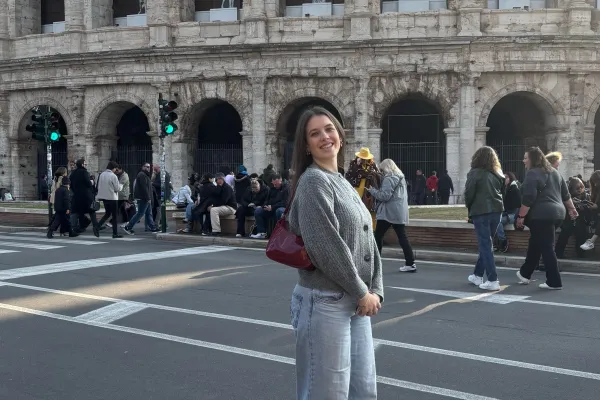
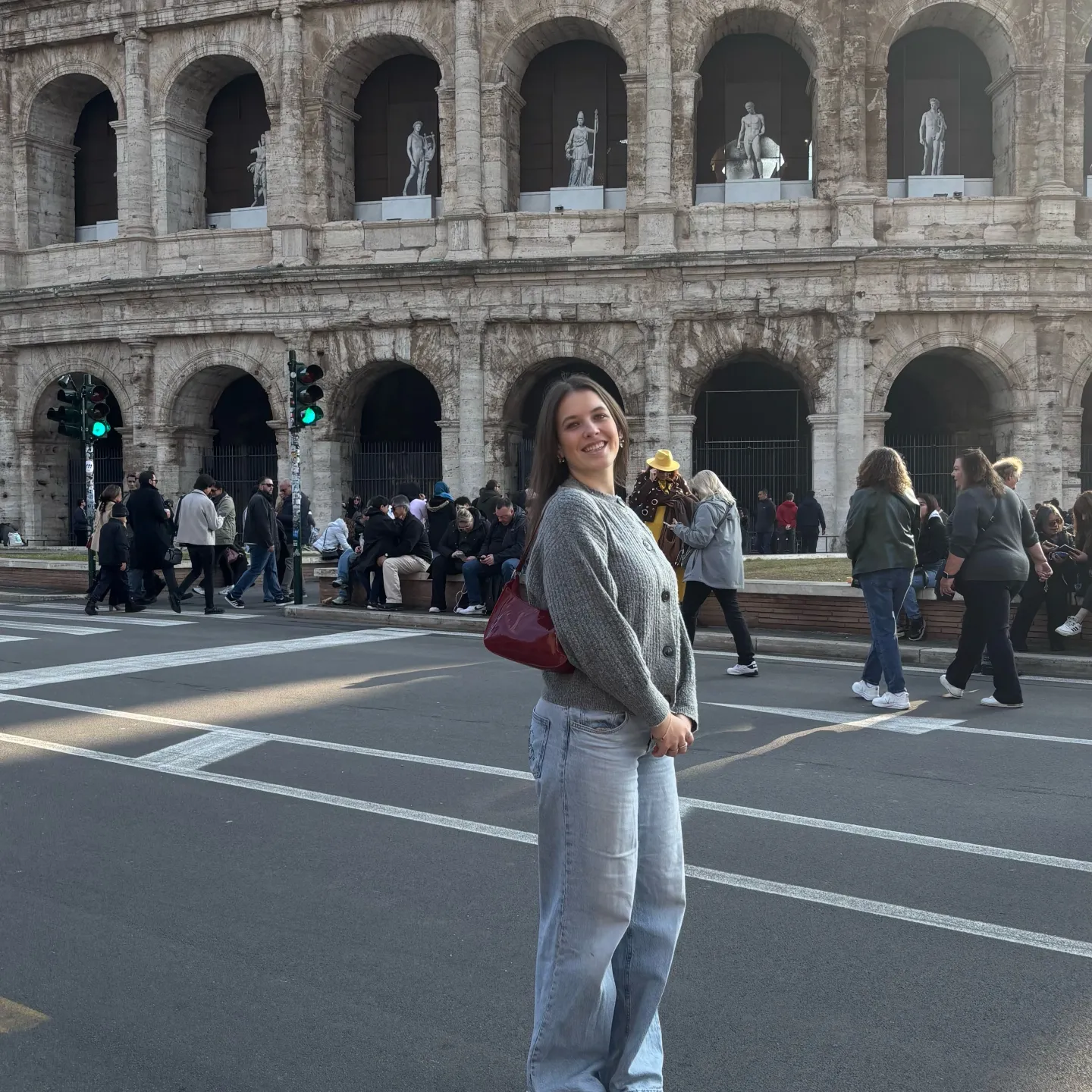
When I first arrived in Italy for my semester abroad, two everyday habits felt especially unfamiliar to me: the very late dinner culture and the general lack of punctuality. Both are such normal parts of Italian life, yet they felt completely foreign to me at the beginning. Coming from Austria and studying in Liechtenstein, I was used to eating dinner around 7 p.m. and to people showing up on time for everything. In Italy, however, everything seemed shifted later, slower, more relaxed. At first, this unfamiliar rhythm made me feel stressed and unsure of how to adapt.


The late dinner was one of the first cultural practices that really stood out to me. In the first weeks, I found it strange and even a bit annoying that restaurants were still empty at 19:30, while Italians were only getting ready to go out much later. My whole routine felt disrupted. I wasn’t used to waiting so long to eat after a long day, and I often felt a bit impatient. But slowly, almost without realizing it, I started to adjust. I began eating later, going out later, and eventually, it stopped feeling strange. Today, the late dinner has become completely natural for me almost like a part of my own rhythm.


The second thing that felt unfamiliar was the relaxed attitude toward punctuality. In Italy, being ten, fifteen, or even twenty minutes late doesn’t seem to bother anyone. At first, this made me uncomfortable. I am normally a very punctual person, and when I arrived early to class or to meetings, only to see people show up much later, it stressed me. I wasn’t sure if I was doing something wrong or if I had misunderstood the time. It took me a while to understand that lateness here isn’t considered disrespectful, it’s simply part of the culture.


Over time, I began to internalize this new mindset. I stopped checking the clock so anxiously. I gave myself more room to breathe. And strangely enough, as soon as I stopped worrying about punctuality, I felt much more relaxed in general. The Italian lifestyle taught me something I had never experienced before: a true work-life balance. Life here moves slower, and because of that, people seem more present, more connected, and less stressed. Accepting this rhythm gave me a new perspective on what it means to live well.

There wasn’t one specific moment when everything suddenly became familiar. Instead, it was a gradual transition, a process of small realizations adding up. One day I noticed I wasn’t hungry at 7 p.m. anymore. Another day I noticed I didn’t feel stressed when someone arrived late. And eventually, I realized I had adapted far more than I thought I would.


This experience also connected deeply with my personal growth. I’ve always thought of myself as impatient, someone who wants things to happen quickly and according to plan. But living in Italy has shown me that I am capable of much more patience than I believed. I learned to slow down, to accept uncertainty, and to let go of habits that I assumed were “normal.” The unfamiliar didn’t just become familiar it reshaped my understanding of myself.


Another part of this transition was the people I met. Early in my stay, I became close with two girls who have now become like family to me. We spend almost every day together, we laugh constantly, and we even took a four-day trip together. They made Italy feel like home. Through them, I learned that feeling familiar in a foreign country often comes from relationships, not routines. Their support, warmth, and closeness played a huge role in transforming my experience and in making the unfamiliar feel safe and comfortable.


Looking back, I see how these cultural differences have shaped my intercultural learning. What felt strange or frustrating in the beginning gradually became meaningful. I learned that unfamiliarity isn’t something to resist; it’s something to grow into. The slow dinners, the flexible sense of time, the relaxed rhythm of life, all of these taught me to be more open, more adaptable, and more patient. They changed not only how I understand Italian culture, but also how I understand myself.

In the end, the unfamiliar didn’t just become familiar. It became something I appreciate, something I will miss, and something that has changed me for the better.

Frau steht lächelnd vor dem Kolosseum, während im Hintergrund Touristen an der Straße entlanggehen.

Australia - Adelaide

Australia - Adelaide

Laetizia Karg

Found in Straya

Steile Felsklippen und markante Felsnadeln ragen aus dem Meer entlang einer wilden Küste mit Sandstrand und brechenden Wellen.

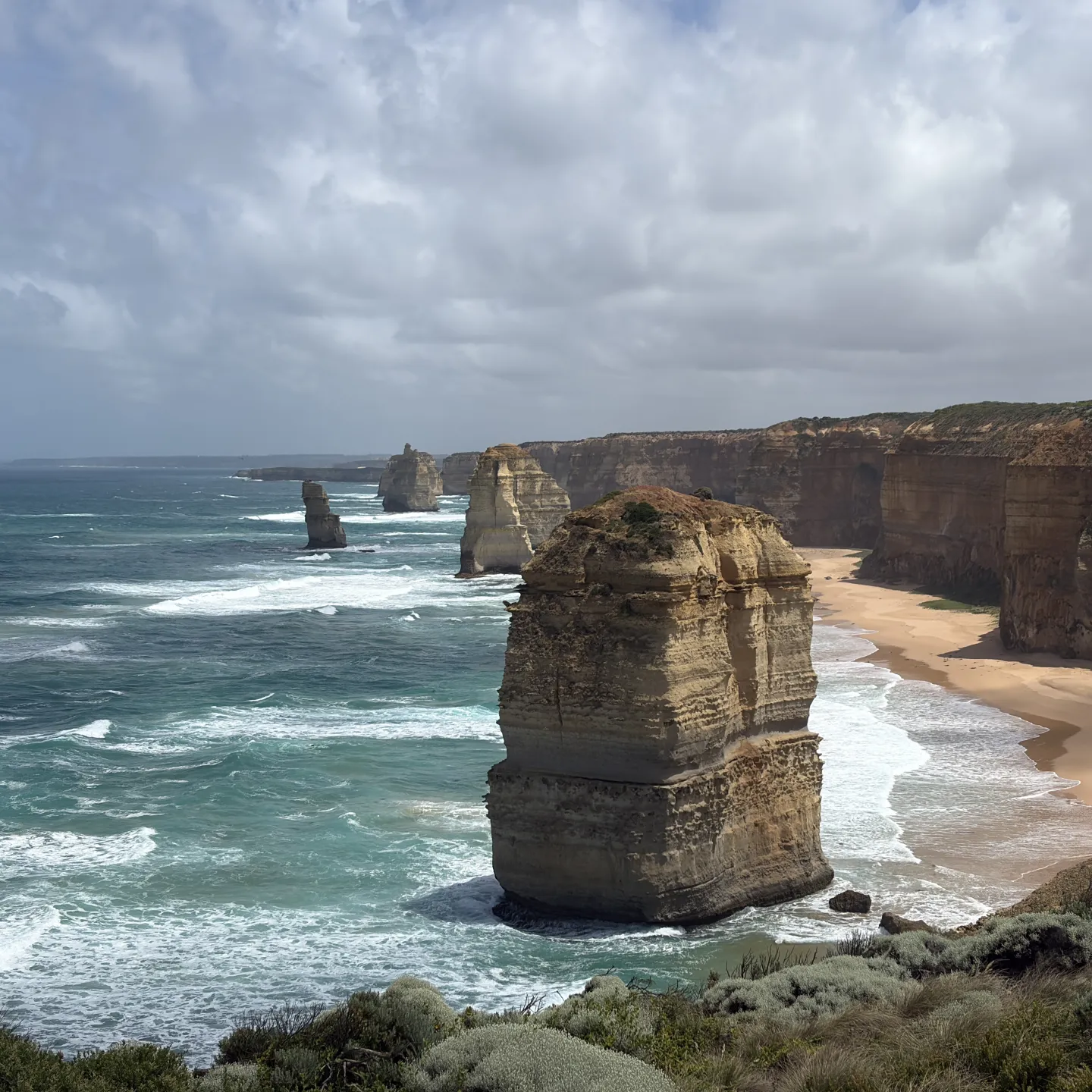
More than four months in Australia, and something interesting has happened. Something that slipped in so quietly that I almost overlooked it. When I first arrived and started my time here, every day felt special, like beginning a new chapter each morning. Even the smallest things and the regular daily life seemed new and exciting. Since you experience so many things each day, the days feel full of impressions and therefore long. You think to yourself: wow, so many things I’ve learned and seen in such a short time. When I looked at my calendar, I counted the days that still remained, and I felt like I had all the time in the world.


But now something has changed. I’ve started to feel like this is some kind of home for me. And with that feeling comes a routine, and suddenly the days pass by so quickly. All the new things have become part of everyday life. And the moment you realise that is when you try to become aware of each day again and appreciate it. You can’t allow yourself to get lost in the desperate feeling of counting the days, realising how few are left and how many have already passed. I had to push myself to change my mindset and shift my focus. I am here, and in every moment that I am here, I can choose to be more present, to give each day not more length but more depth.


Many small, subtle details make me feel more and more at home. It’s not so much the things that surround me that give me this feeling, but rather the way I am. I’ve simply become comfortable no longer pretending. Perhaps home is less a place than a feeling.

I’m aware that this is possible for me because the wonderful people around me, with their warm and open nature, make me feel that it’s okay. Okay to speak differently, look different, know different things, or not know different things. That’s how I’ve learned how people perceive me, or rather, how they don’t judge me but simply accept me. And that has taught me to do the same.


I’ve become myself again, yet I’m also a new, more open version of who I am. I think I’ll carry a piece of Australia with me, even when I go back home. Perhaps Tyrol will feel a little different then, still familiar, but seen through different eyes.

I’m surprised by how much my perspective has changed. When I first arrived, I often found myself searching for what felt like home here, what we had in common. But through contact with different cultures, you realise how little we actually have in common, and yet that never feels negative. On the contrary, the exchange is beautiful and exciting. I’ve gained the feeling that the unfamiliar and the diversity I once thought might exclude me actually became what gave me stability and a sense of belonging. Learning to navigate the unfamiliar, and recognising that I myself am the unfamiliar, has become a new strength.


And now I’m no longer looking for where we’re the same, but for where we’re diverse. Where we’re vibrant. And how wonderful it is when someone invites you into their own lively world. Because what we all have in common is that we’re different, and that is precisely what makes us so beautiful and vibrant.


I came to get to know a new country, and instead, I became a new version of myself. Perhaps the most beautiful thing about an exchange isn’t seeing new places, but learning to give yourself new colours.

Steile Felsklippen und markante Felsnadeln ragen aus dem Meer entlang einer wilden Küste mit Sandstrand und brechenden Wellen.

China – Shanghai

China – Shanghai

Sarah Tschann

My learning experience at Tongji University

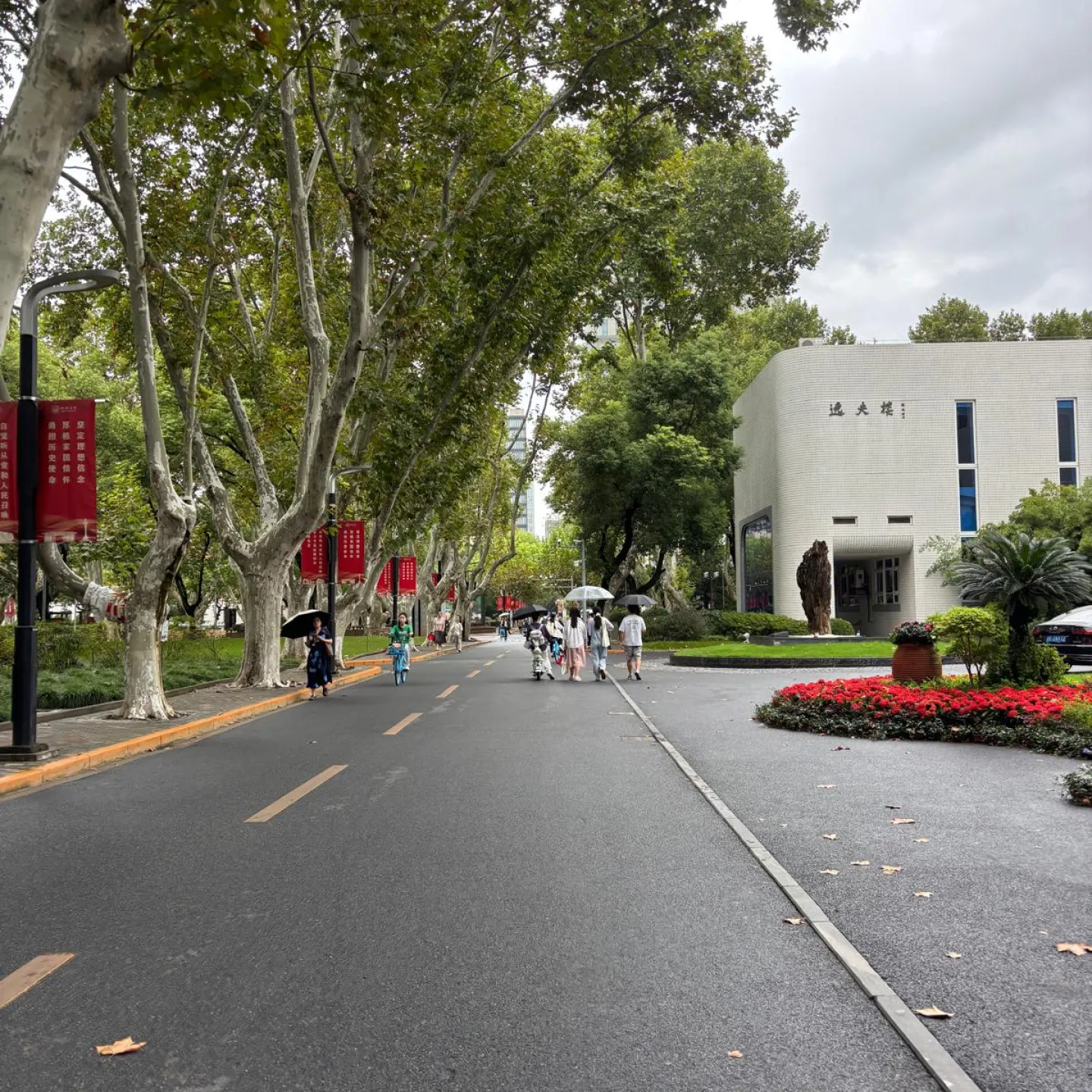
Baumgesäumte Allee auf einem Campus mit Spaziergängern, roten Bannern und einem modernen Gebäude am Straßenrand.

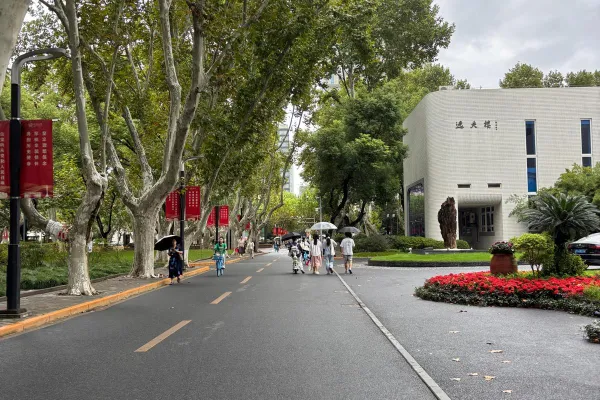
Shanghai is of course a huge step up in scale compared to Liechtenstein. But not only the city felt unfamiliar at first, also the university felt very different and not familiar at all. Tongji University feels like its own little city. The campus is huge, full of buildings, people, canteens, stores and many different sports facilities.
The first big surprise for me was already at the entrance. To even get onto the campus you have to pass a controlled gate with security checks. You can only enter with a valid student card. After that you find yourself in the middle of this giant campus where you basically cannot find your way without a map. Even now, after several months, I still discover new places or meet new people. This is a big contrast to the small and very manageable campus in Liechtenstein that you can cross in five minutes.

One of the biggest unfamiliar things was the learning culture. The most noticeable difference is the amount of courses. Regular Tongji students often take ten or more courses at the same time. At the University of Liechtenstein we have fewer courses but they are more intense, deeper and more detailed.
In China it is more about producing a lot and doing many things in parallel, while at home we focus more on depth, analysis and reflection. In the beginning it was hard to understand that having a lot of work does not always mean that the content is thought through in detail.
The relationship with teachers is also different. Teachers here are respected a lot and communication is more distant. In Liechtenstein it is normal to quickly have a more personal connection and speak very directly. Here feedback is often very soft and less direct. This can be nice because you have more freedom, but sometimes you miss clear criticism that helps you improve.
The expectations also change a lot from course to course. Some teachers are very strict about attendance and punctuality, others are not strict at all. The types of assignments also vary from presentations to creative tasks to videos and essays.

Another thing that surprised me was how insecure many Chinese students are about their English. Many apologise immediately for their “bad English” and do not dare to speak with us. This is a bit sad because it would actually be a great chance for everyone to practice.
In some group projects the university mixes Chinese and international students on purpose. The biggest challenge is coordination. Not only because of the language but also because of different working styles, programs and expectations. With time you learn to adapt, communicate in different ways and work more flexibly.

Slowly the unfamiliar things became part of my daily routine. Paths that felt confusing at first became familiar. I found places with really good food, a hidden souvenir shop, a rooftop to watch the sunset and my favourite study spot in the library.
The cafeteria became a real meeting place. You always run into someone you know and start talking or meet new people. After a while the huge campus began to feel “small”, almost like a village inside a megacity.
The longer I studied at Tongji, the more I understood the system, the learning rhythm and the social life. It even started to feel like a home that you do not really need to leave because you have everything there. You can study in the library, relax in the park, or spontaneously join basketball or try kungfu.

In the end I can say that this experience taught me a lot about intercultural learning. I had to adapt to a new learning system, work in groups with very different people and find ways to complete projects even when communication was difficult.
I learned how different learning can look in other countries. Some value depth more and some value performance and variety. I also experienced how a connected campus can create a strong feeling of community and how you meet new people and moments every day. What felt strange at the beginning feels familiar now. And that is the biggest development for me.

Baumgesäumte Allee auf einem Campus mit Spaziergängern, roten Bannern und einem modernen Gebäude am Straßenrand.

Spanien – Valencia

Spanien – Valencia

Rebekka Kindle

From Elective to Everyday Life: My Spanish in Spain

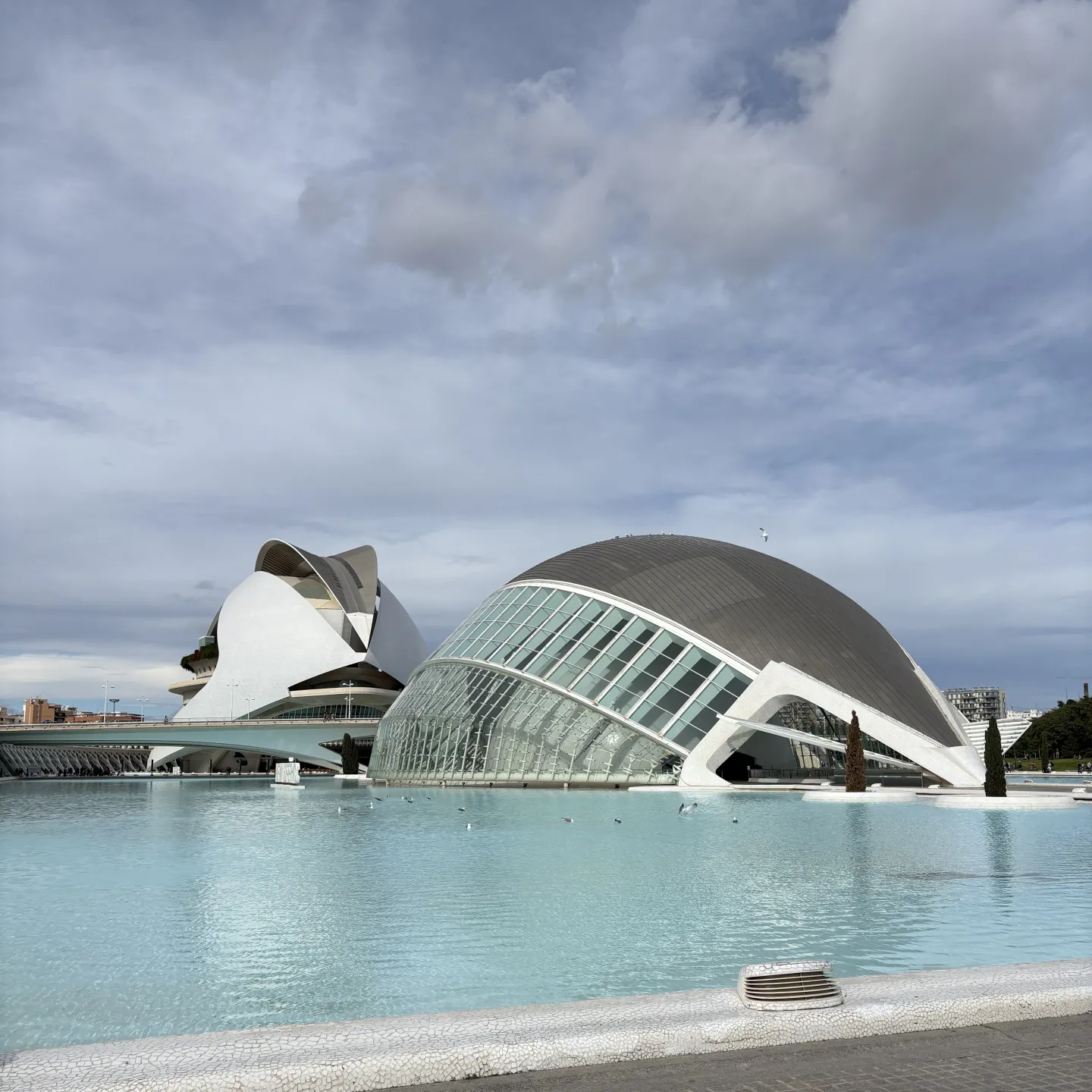
Moderne, futuristische Gebäude mit geschwungenen Glas- und Betonformen an einem großen Wasserbecken unter bewölktem Himmel.

Having studied Spanish for two years as an elective subject, I possessed a foundational understanding of the language. However, due to a long period without practice, my skills had become noticeably rusty. This made me initially a little bit anxious, particularly when faced with everyday tasks such as grocery shopping.


Fortunately, the process of reacclimating to Spanish worked better than I had anticipated. Within a short period, I began to recall vocabulary, grammatical structures, and expressions that were previously not present anymore. The city itself became a dynamic classroom, offering countless opportunities for spontaneous learning and real-time application.


Formal Spanish lessons have certainly supported this journey, providing structure and reinforcing essential linguistic concepts. Nevertheless, I have found that the most impactful learning occurs outside the classroom. Interactions with locals whether in cafés, shops, or on the street have proven to be essential. These encounters not only enhance my comprehension but also build my confidence in speaking, even in situations that once felt intimidating.


A notable milestone in my progress has been my ability to communicate effectively in pharmacies. Initially, I was reluctant to engage in conversations about health-related topics for fear that my limited vocabulary might lead to misunderstandings. Today, however, I no longer view these interactions as problematic. When I know I am going to have to talk more, or that the situation will be more complex like for example, when I am signing up for a gym membership, I typically begin by asking, “Do you speak English?” in Spanish to see whether I can rely on English. If not, I make an effort to express myself in Spanish. It is very important to me to at least show the locals that I am trying to speak their language, rather than assuming that they can speak English and immediately starting to speak to them in English. 


Understanding spoken Spanish has become increasingly manageable. I am able to follow conversations, grasp context, and interpret meaning with relative ease. Speaking, however, remains more challenging. Constructing sentences on the spot, choosing the right vocabulary, and maintaining correct verb conjugations require conscious effort. To navigate these difficulties, I have adopted several strategies: I rephrase sentences when necessary, use gestures to support verbal communication, and rely on synonyms when I cannot recall a specific term. Importantly, I have learned to embrace mistakes as part of the learning process. I now view them as opportunities for growth rather than setbacks, and so far, all of my experiences of talking with locals in Spanish have been positive.


A particularly effective approach has been attentive listening. By observing how native speakers communicate their intonation, commonly used phrases, and sentence structures, I was able to gain some insights into the rhythm and flow of the language. Mimicking these patterns has helped me sound more natural and improved my overall fluency.


I have come to understand that effective communication involves empathy, adaptability, and a willingness to engage despite uncertainty. Speaking a foreign language requires not only technical skill but also emotional resilience and cultural sensitivity.


Looking ahead, I am confident that the skills I have developed in Valencia will serve me well in both personal and professional contexts. The ability to navigate communicative differences, adapt to unfamiliar environments, and connect with individuals from diverse backgrounds is increasingly valuable in our globalized world. 


In conclusion, my time in Valencia has been a transformative chapter in my language learning journey. It has challenged me to confront discomfort, embrace imperfection, and celebrate progress. As I continue to grow as a speaker of Spanish, I carry with me not only improved linguistic skills but also a deeper sense of confidence, curiosity, and commitment to lifelong learning.

Moderne, futuristische Gebäude mit geschwungenen Glas- und Betonformen an einem großen Wasserbecken unter bewölktem Himmel.

Vietnam - Ho Chi Minh

Vietnam - Ho Chi Minh

Timo Volenter

Street Life in Vietnam

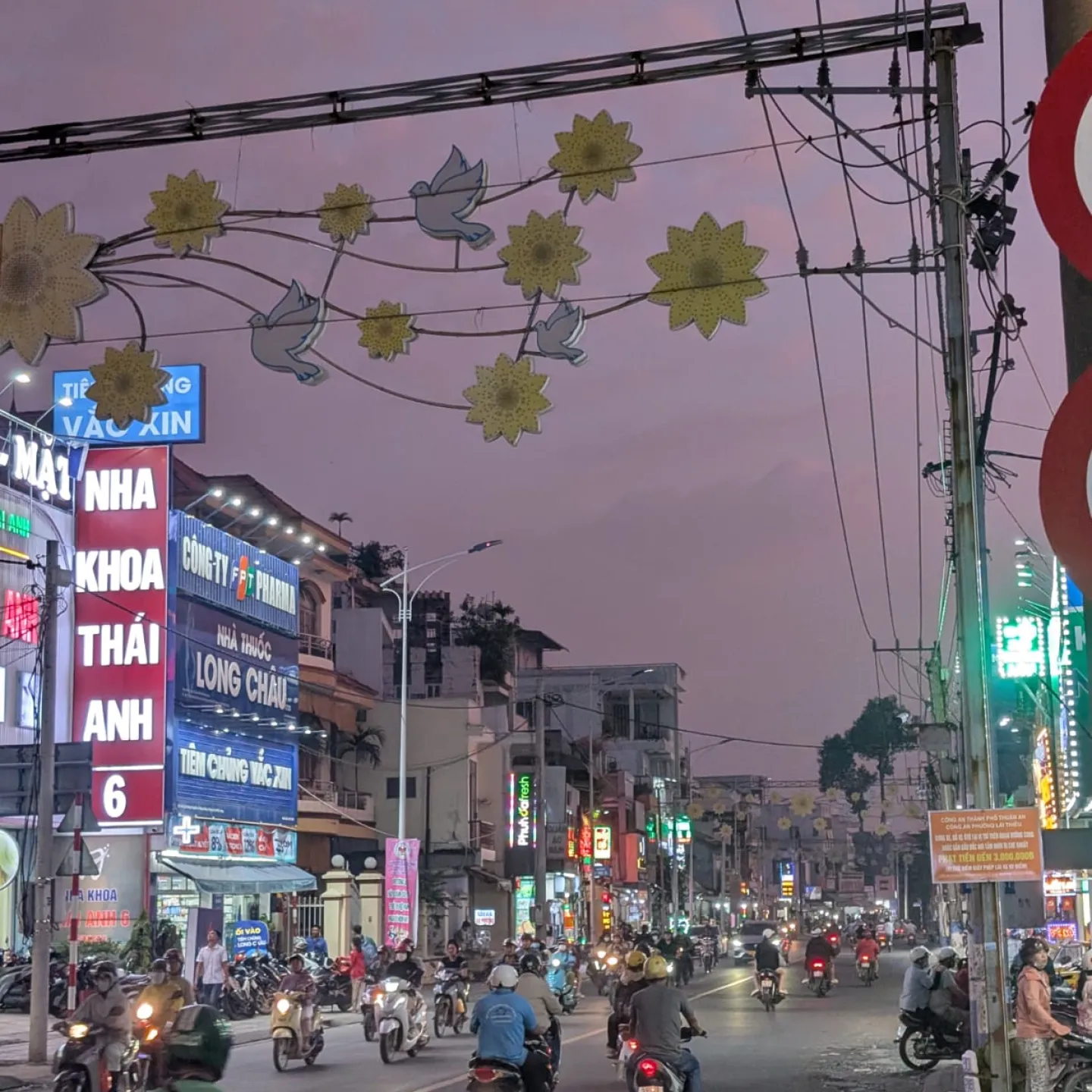
Belebte Straße bei Dämmerung mit vielen Motorrollern, leuchtenden Werbeschildern und dekorativen Lichtern über der Fahrbahn.

When I arrived in Ho Chi Minh City and got into a taxi to go to my temporary accommodation in the city center, I was immediately overwhelmed by a wide variety of impressions. Looking out of the window, I saw people doing all sorts of things at the side of the road. From cooking and washing dishes to cutting hair, everything was there, but I especially noticed people socializing. Compared to Austria, this was hard to believe, but people here in Vietnam use the streets more as a living space than as a traffic space, even if it is loud and sometimes chaotic.


At first, I wasn't sure where the line between private and public space was, especially since in Austria, the sides of the streets are only for walking and everything else, such as restaurants or even hairdressers, takes place indoors. Even though I had read before that this is fundamentally different in Vietnam, I hardly expected it to be to this extent. Seeing families sitting comfortably on plastic chairs at the roadside, eating amid all the noise and air pollution, it was difficult to comprehend, and even when I did it myself for the first time, it was difficult to enjoy. Hardly could I imagine ignoring everything going on around me, eating comfortably, and simply enjoying the moment.


But after a short time, I realized that it's just a matter of getting used to it and something you have to embrace. Walking through the city every day while looking for an apartment made it seem increasingly normal, and I realized that it's not so chaotic after all. There is a system that is difficult to explain, but after a while you understand it intuitively and you stop seeing everything as chaotic and simply view public space as what it should be: a place to establish or maintain social contacts. I learned that this doesn't require a nice restaurant or luxurious food, just a place to sit and the willingness to engage with it.


After almost four months in Ho Chi Minh City, the noise level doesn't bother me anymore. I subconsciously tune it out, as the locals probably do. I eat at the side of the road amid all the chaos and tune out what's happening outside. My expectations when it comes to food have also changed significantly. I noticed this particularly when my family came to visit and found it anything but normal to eat at noisy street stalls where hygiene is not a top priority. As a result, I have become much more flexible when it comes to structure and order in relation to food. I have noticed that it takes a lot of pressure off you when you lower your expectations and accept situations that are simply normal in another country.


Regarding intercultural learning, I have clearly seen that “normal” is something that is defined by society and the corresponding culture. In Vietnam, streets and roadsides are not just places where people drive or walk but also places for social interaction. This became particularly clear to me when I talked to fellow students who said that Vietnamese people often live with their entire families in confined spaces and therefore spread out on the streets to have the space they sometimes need. Even though this is fundamentally different from what I know in Austria, I have learned to be open to new experiences, as much of the adaptation happens subconsciously when you are open to it.


In conclusion, I can say that it has also changed my self-perception. I have noticed that I am much more adaptable than I initially thought and that I can live comfortably in any environment, even if it is not orderly or organized. Strict expectations only create pressure that subconsciously clouds good experiences. In conclusion, I can definitely say that it has also changed my self-perception. I have noticed that I am much more adaptable than I initially thought and that I can live comfortably in any environment, even if it is not orderly or organized. Strict expectations only create pressure that subconsciously clouds good experiences.


I can't think of a way to describe my entire experience here in Vietnam, so I'll let Anthony Bourdain do it: “Vietnam: It grabs you and doesn't let you go. Once you love it, you love it forever.

Belebte Straße bei Dämmerung mit vielen Motorrollern, leuchtenden Werbeschildern und dekorativen Lichtern über der Fahrbahn.

Ireland – Dublin

Ireland – Dublin

Mathias Marian Pfeifer

The Kindness of the Irish People 🇮🇪☘️

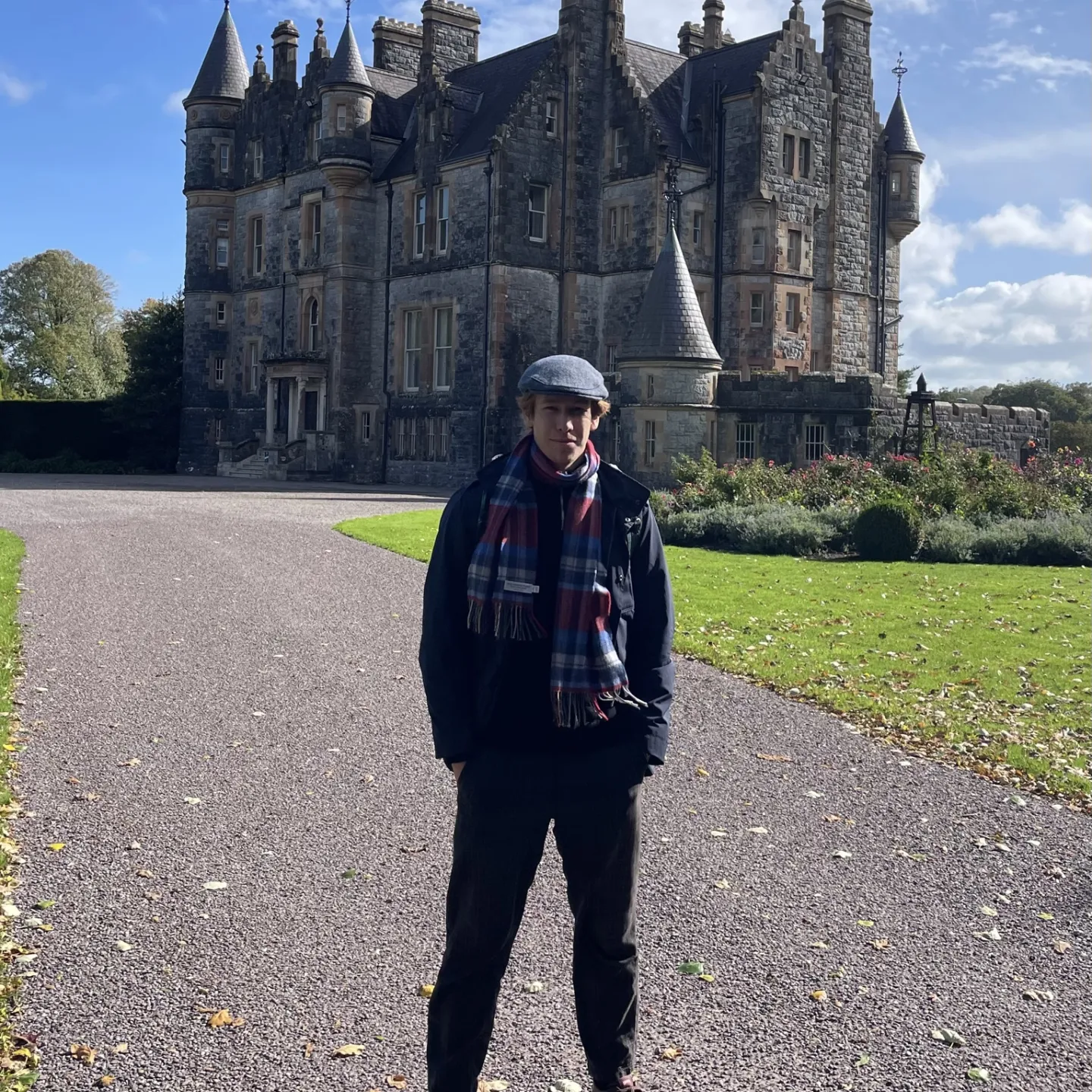
Person mit Mütze und Schal steht auf einer Auffahrt vor einem historischen Schloss aus Stein unter blauem Himmel.

One thing that impressed me from the very beginning of my stay in Ireland is how kind, open, and humorous the people are. I noticed this already on my travel day. At Memmingen airport, I had to wait several hours for my delayed flight to Dublin. Some Irish people at the gate were sitting near me and immediately started a conversation. They were very friendly, made a lot of jokes, and even gave me good tips for my exchange. This first meeting already gave me a warm feeling about the country, and I started to wonder if this friendliness will continue when I arrived in Ireland.


Later, when I went with a colleague from architecture to a traditional Irish pub where mostly locals go, I had a similar experience. After only ten minutes, a group of Irish people sitting next to us wanted to chat with us. They were very open and welcoming, and they shared many recommendations about what to do and see in Ireland. In the end, they even invited us for a pint. It was a really nice moment, as it showed me how much Irish people value kindness and hospitality. In my home culture, I feel that people are often a little more reserved, especially when meeting strangers.


Another thing I noticed quite quickly is the role of humor. Many Irish people I have met use humor as a way of starting conversations and building connections. They sometimes made jokes about my home country, or even about personal things like my red hair, even though they didn’t know me yet. In Austria and Liechtenstein, people are often more serious when they meet someone new. But I found myself laughing along with them, and I realized how powerful humor can be in making people feel relaxed and welcome. This probably also has something to do with the pub culture, as it is a very social meeting place.


Something else I quickly noticed is the way people greet each other. In Ireland, it is very common to say, “how are you?” or “how are you doing?” instead of just “hello” or “hi.” It happens everywhere: in the supermarket, on the bus, or at college. At first, I found this unusual, because in Austria and Liechtenstein you usually ask this question after the greeting, and it often leads to a longer conversation. Here in Ireland, it is more like a simple hello. Some people might say it’s superficial, because you don’t expect a detailed answer. But for me, it feels warm and positive, as if people really care about each other, even if the answer is just “I’m good, and you?” Interestingly, when I started using this greeting myself, I noticed how easy it became to make people feel welcome.


Thinking about this, I realized how much I value friendliness and openness in daily life. I had not thought about this so much before, but now I see how important it is. In my home culture, I sometimes experienced everyday interactions as more distant. Here in Ireland, a small gesture, like a friendly greeting or a short conversation, can make you feel welcome and create a nice connection with others. It also makes daily life more joyful.


Reflecting on these experiences, I see how cultural practices, even very simple ones like greeting or joking, can shape the atmosphere of a whole society. For me, Ireland has shown how valuable it is to approach others with openness and kindness. At first, I thought it might be superficial, but now I believe it is a beautiful way of showing care. It also made me realize that I want to bring some of this attitude back home with me. This exchange experience has already taught me a lot – especially to be more social and how small things like greetings can have a big impact on the well-being of people.

Person mit Mütze und Schal steht auf einer Auffahrt vor einem historischen Schloss aus Stein unter blauem Himmel.
Subscribe to