Skip to Main Content

Artificial Intelligence for the Early Detection of Banking Crises: Research Team from the University of Liechtenstein Presents Compelling Findings

Artificial Intelligence for the Early Detection of Banking Crises: Research Team from the University of Liechtenstein Presents Compelling Findings

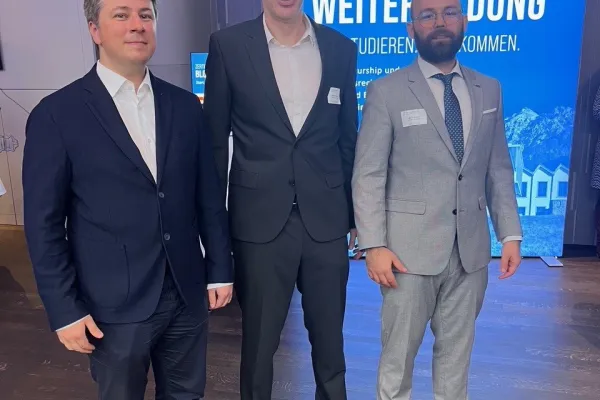
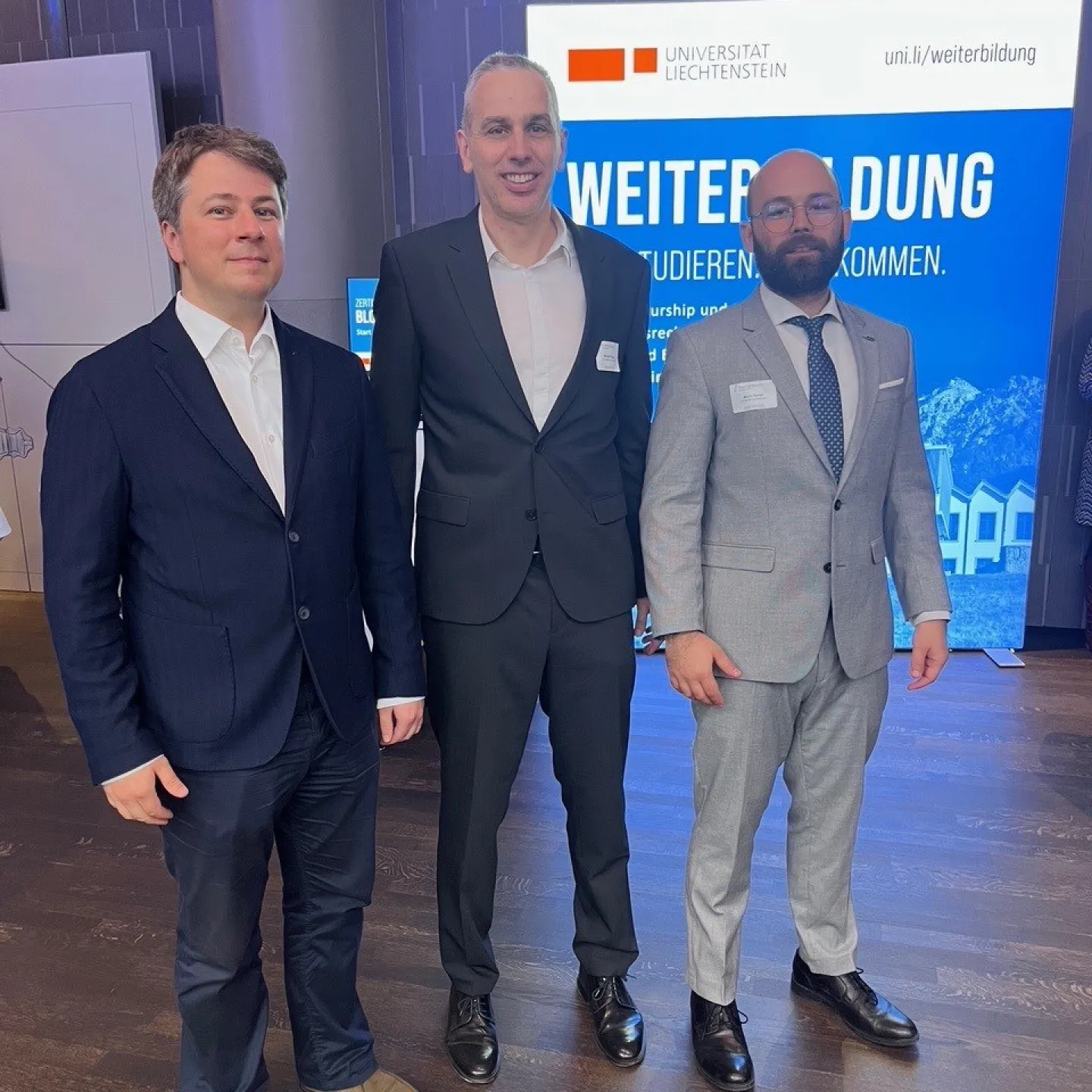
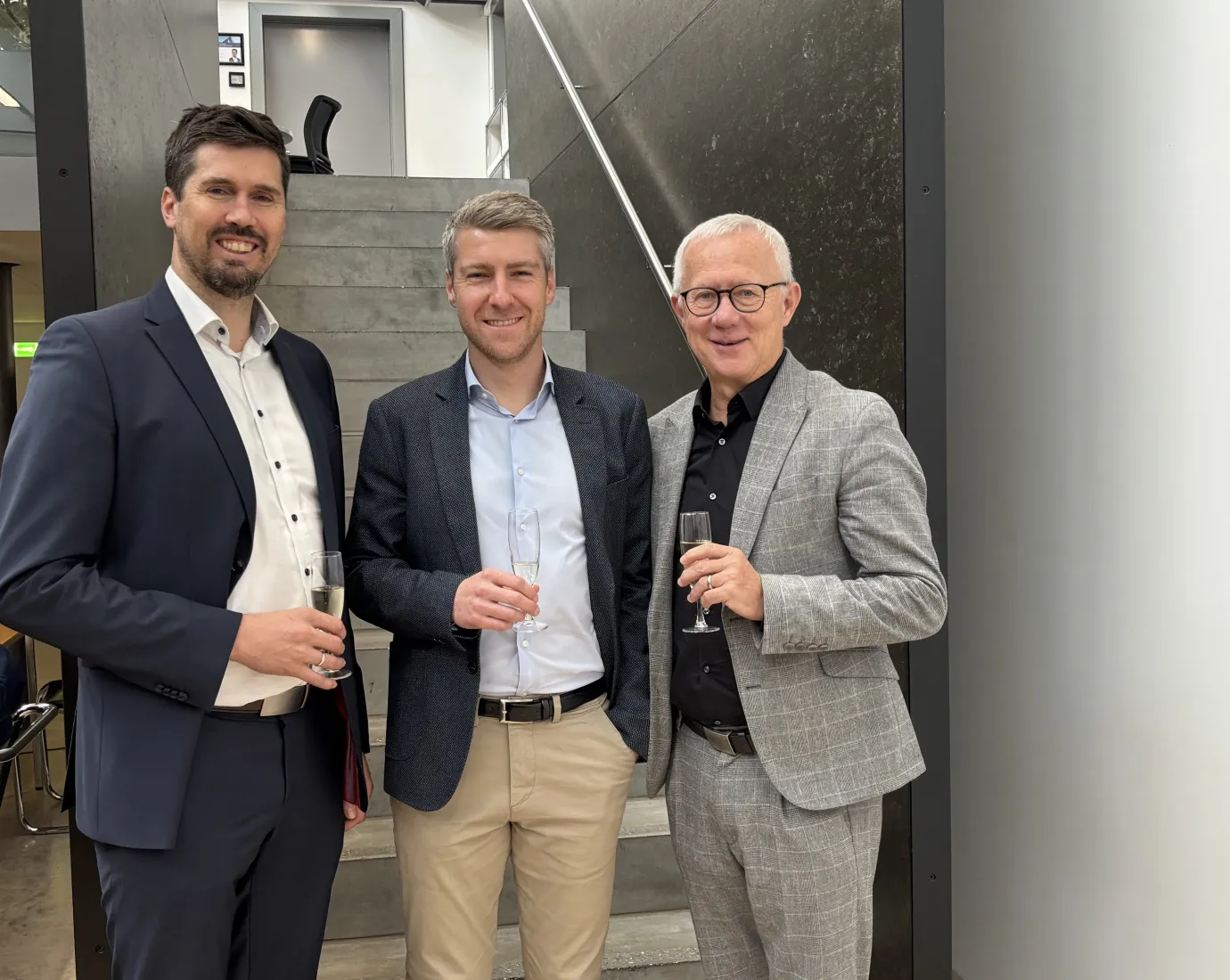
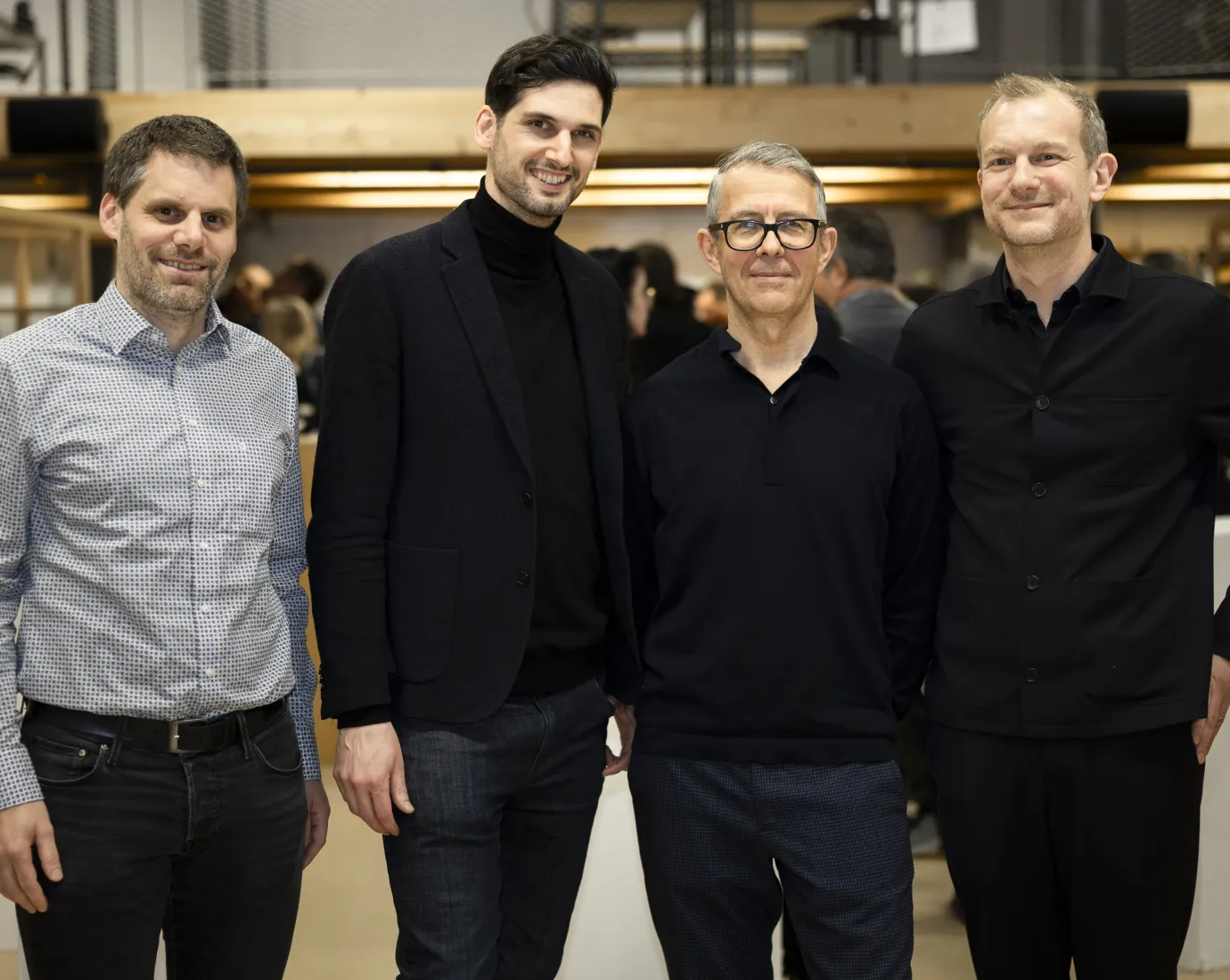
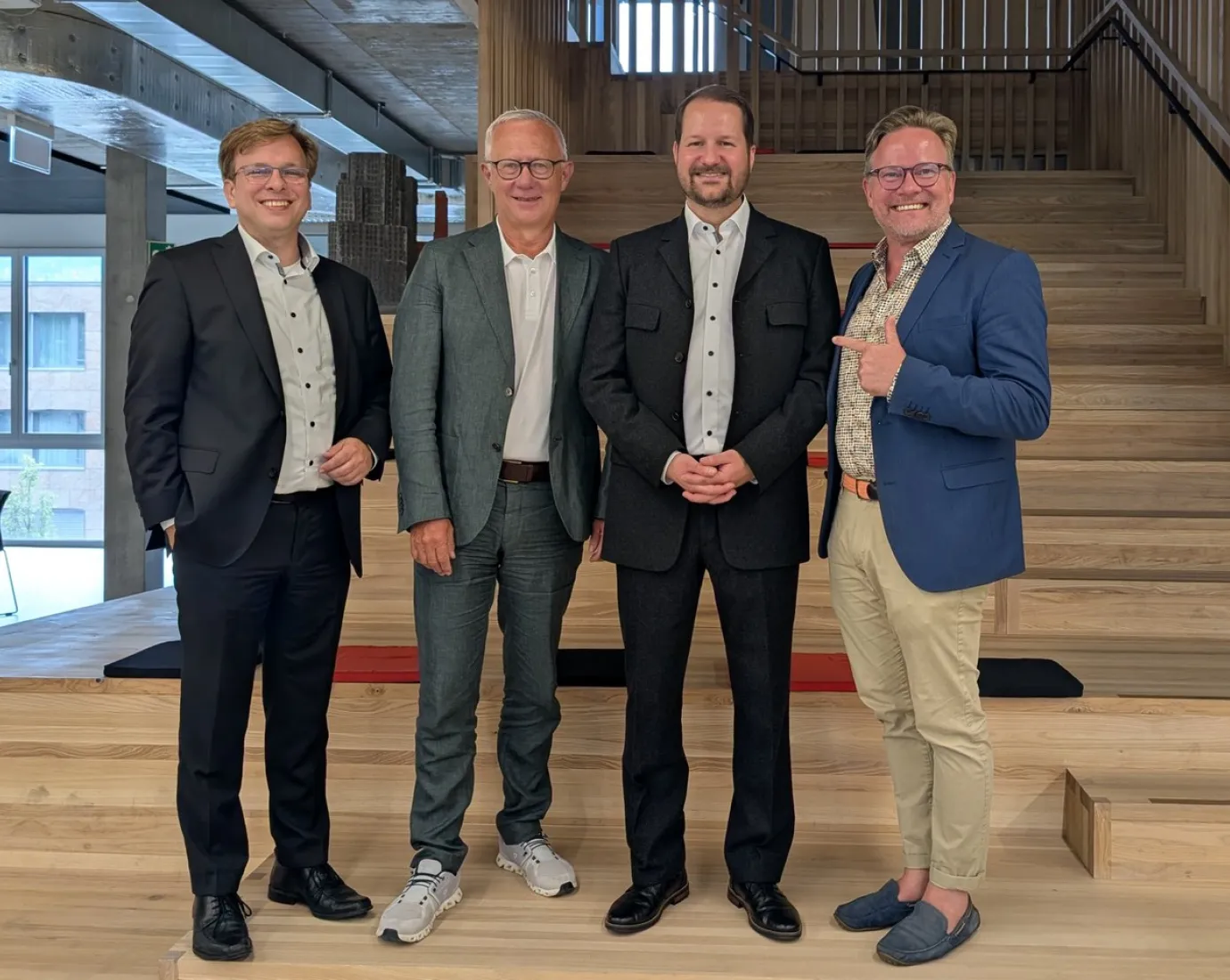
Drei Männer in Anzügen stehen vor einem Schild der Universität Liechtenstein. Im Hintergrund ist ein Banner mit der Aufschrift "Weiterbildung" zu sehen.

At the renowned Finance Forum Liechtenstein, Prof. Dr. Michael Hanke and doctoral candidates Merlin Bartel and Sebastian Petric from the University of Liechtenstein presented their latest research findings on a highly topical issue: the use of artificial intelligence (AI) to forecast banking crises. The workshop attracted strong interest from both industry professionals and investors.


The research team used the U.S. regional banking crisis of 2023 as a case study to demonstrate how machine learning can be applied effectively to detect potential risks at an early stage. Using advanced AI models, the researchers analysed a wide range of macroeconomic and bank-specific data to identify warning signs that may indicate impending market disruptions.


What stood out in particular was the practical relevance of the results: the model not only has the capacity to detect crisis potential but can also generate actionable investment recommendations. For instance, it was shown that an investor following the model’s signals could exit the market in advance of negative developments—resulting not only in reduced downside risk but also in significantly improved portfolio performance, especially in terms of final wealth and the Sharpe ratio.


The results underline the growing importance of data-driven approaches in finance and demonstrate how academic research can help strengthen the resilience of financial markets. This project exemplifies the successful integration of theory and practice—and serves as yet another indicator of the innovative research being conducted at the University of Liechtenstein at the intersection of financial economics and artificial intelligence.

Drei Männer in Anzügen stehen vor einem Schild der Universität Liechtenstein. Im Hintergrund ist ein Banner mit der Aufschrift "Weiterbildung" zu sehen.

International Guests at the University of Liechtenstein

International Guests at the University of Liechtenstein

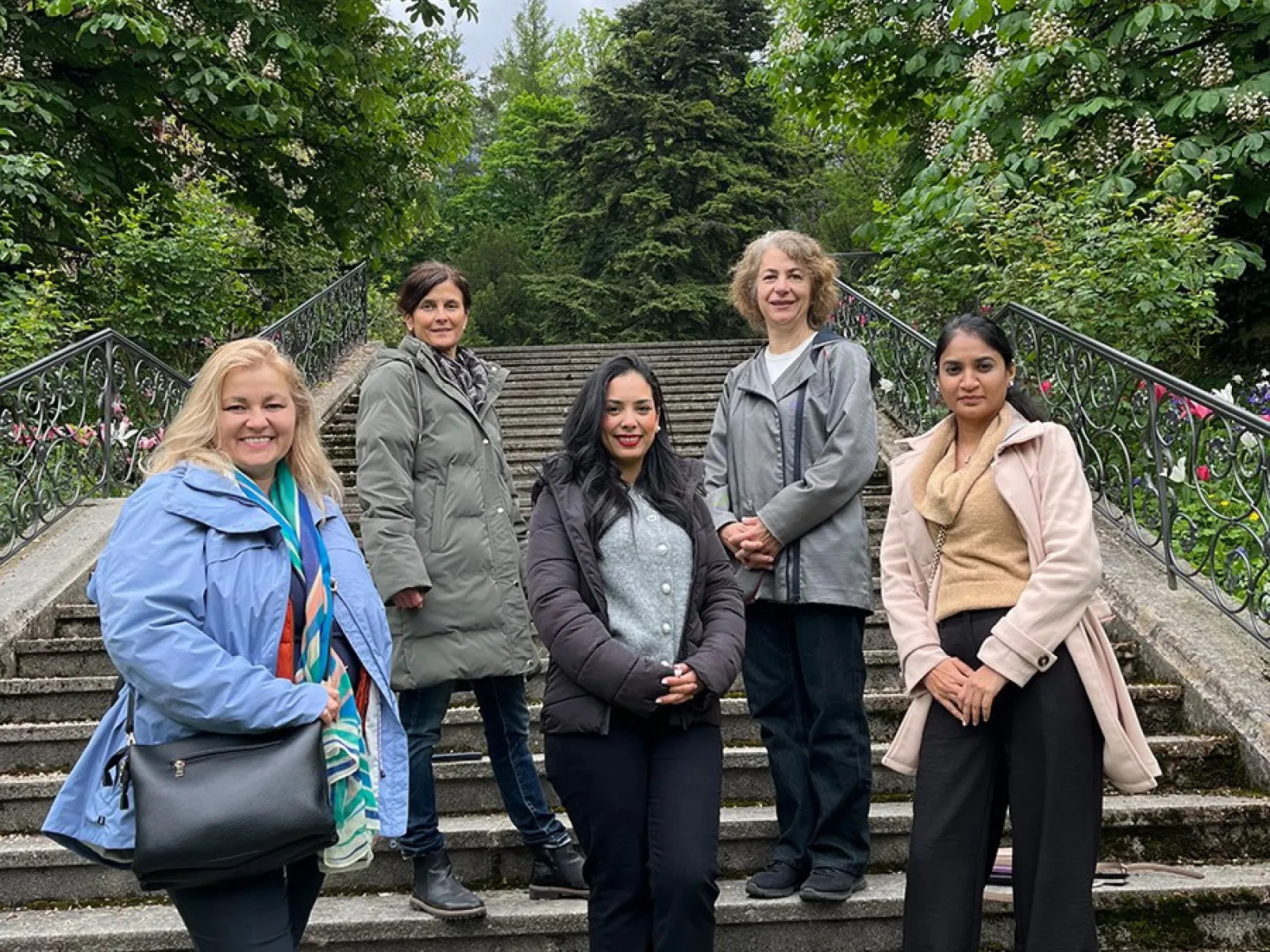
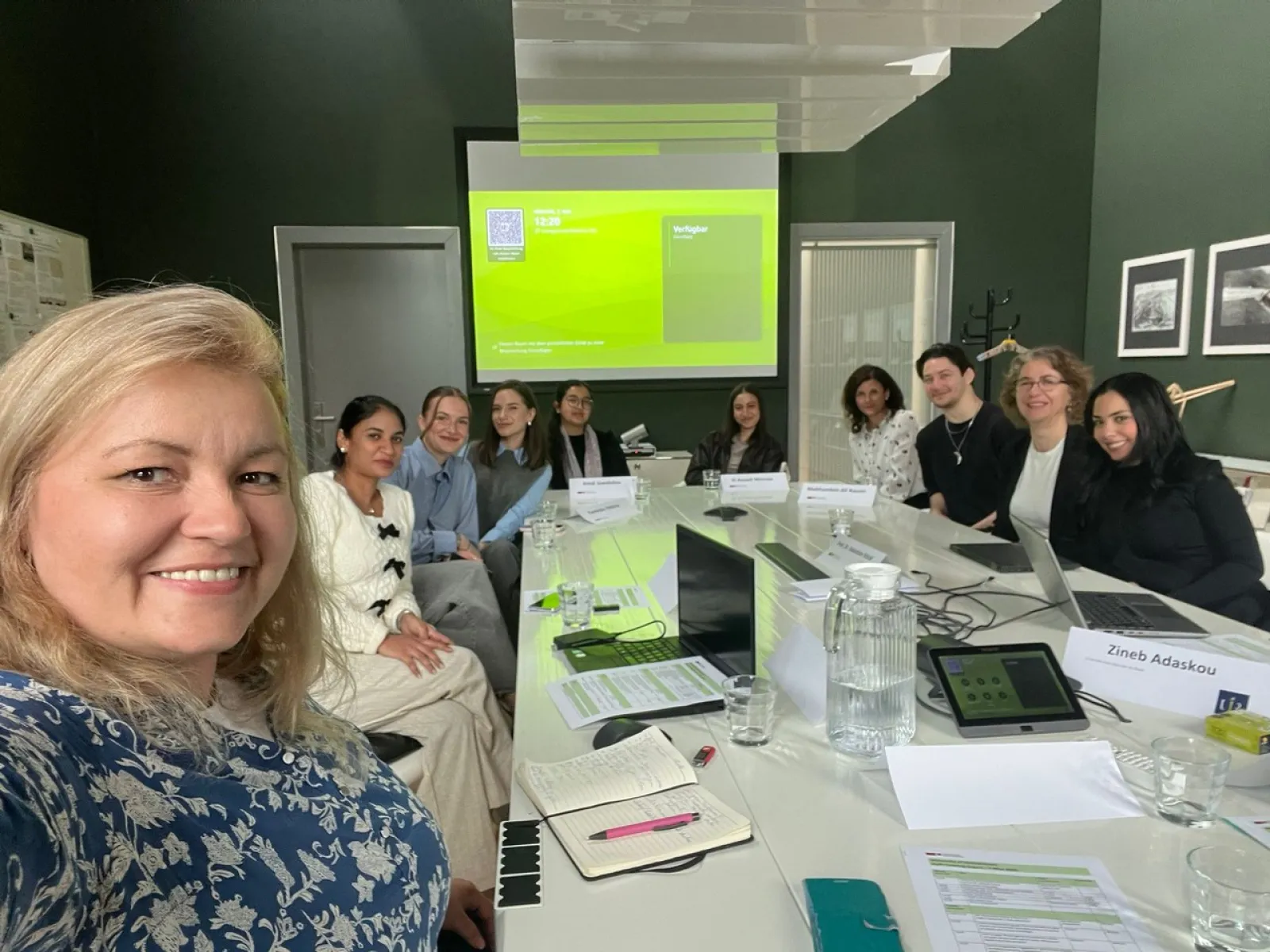
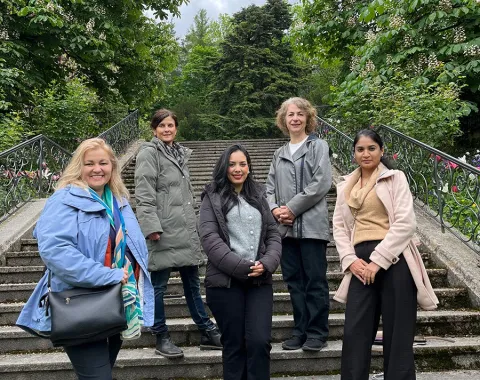
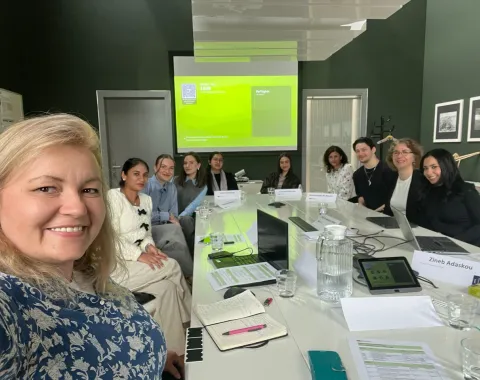
At the beginning of May 2025, the University of Liechtenstein welcomed three guests from partner universities around the world: Dr. Riann Singh from the University of the West Indies (Trinidad & Tobago), Zineb Adaskou from the Université Internationale de Rabat (Morocco) and Dr. Violeta Toncheva-Zlatkova from the University of National and World Economy (Bulgaria). During the Staff Training Days, the visitors gained a wide range of insights into research, teaching, administration and culture in Liechtenstein.


The three-day program began with an introduction by Prof. Dr. Sebastian Stöckl, Academic Director of the Undergraduate and Graduate School, and short presentations by the host universities. The subsequent exchange with international students and a guided tour of Vaduz focused on intercultural dialog.


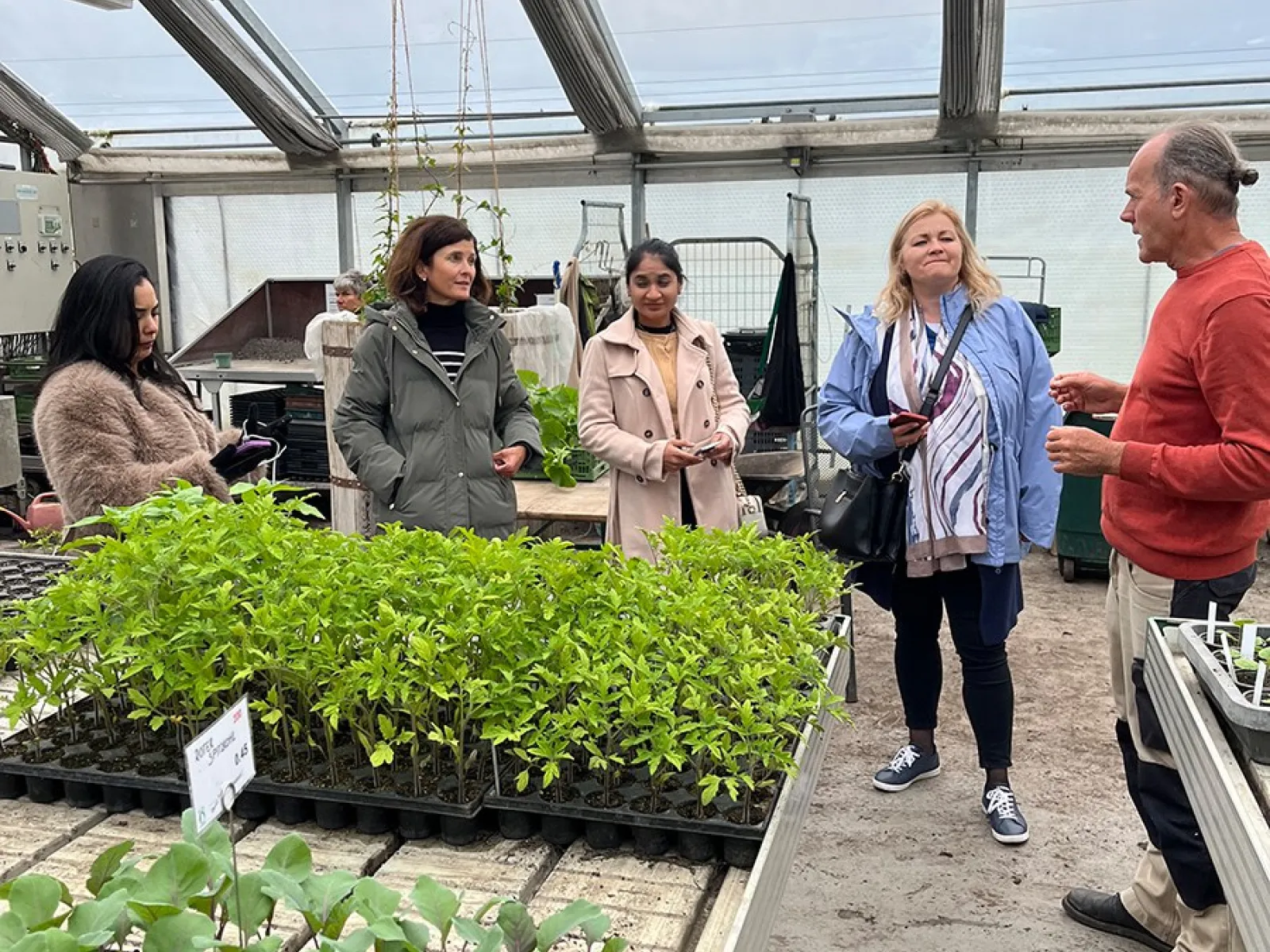
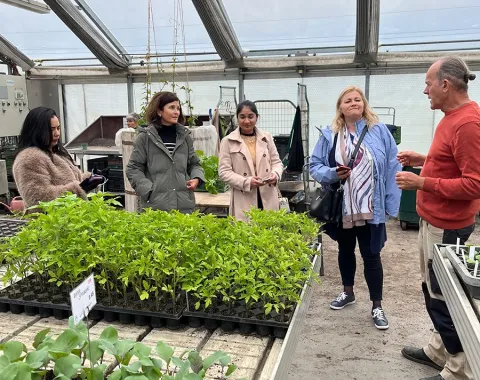
In the following days, the guests accompanied employees of the university as part of job shadowing and got to know various areas: the School of Business, Student Services, the Research Office, the Undergraduate and Graduate School, Legal Services and Data Protection. Visits to social institutions such as the Specki restaurant and the Agra institution, which integrate people with special needs into everyday working life, were particularly enriching.


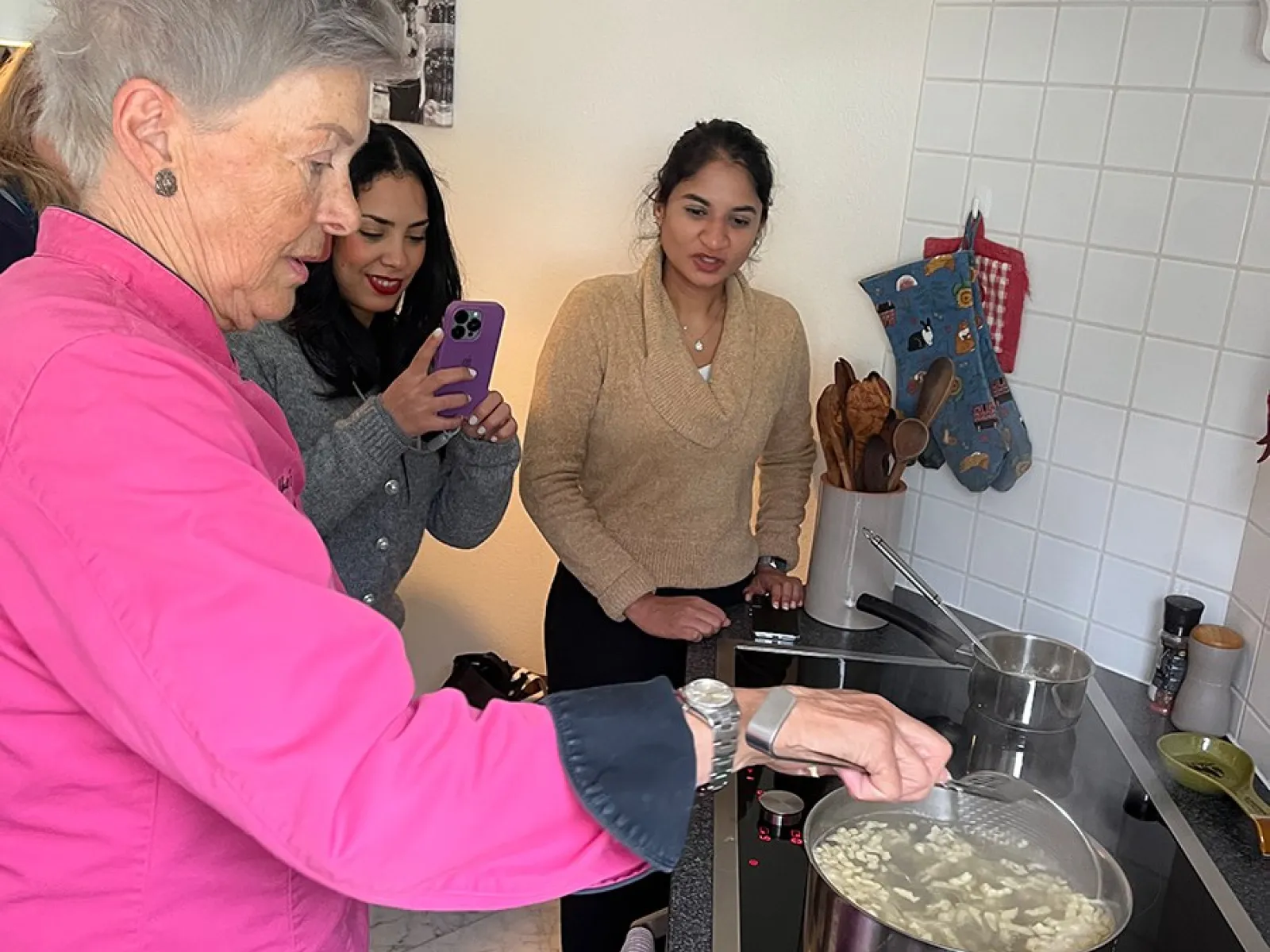
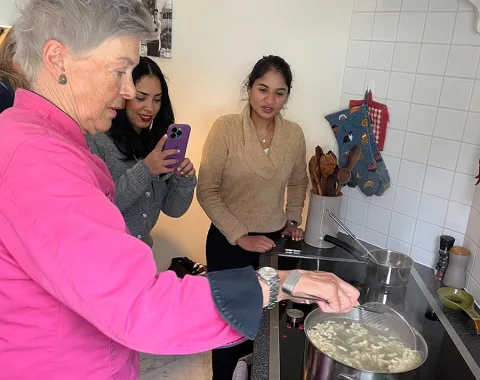
A culinary and cultural highlight was cooking traditional cheese dumplings together with Martha Bühler and a hike to the tower on Dux, followed by a guided tour of the Stein-Egerta education center.


The Staff Training Days provided a valuable opportunity for professional exchange and strengthened the university's international partnerships.

Bachelor Business Administration Students Visit Ivoclar in Schaan

Bachelor Business Administration Students Visit Ivoclar in Schaan

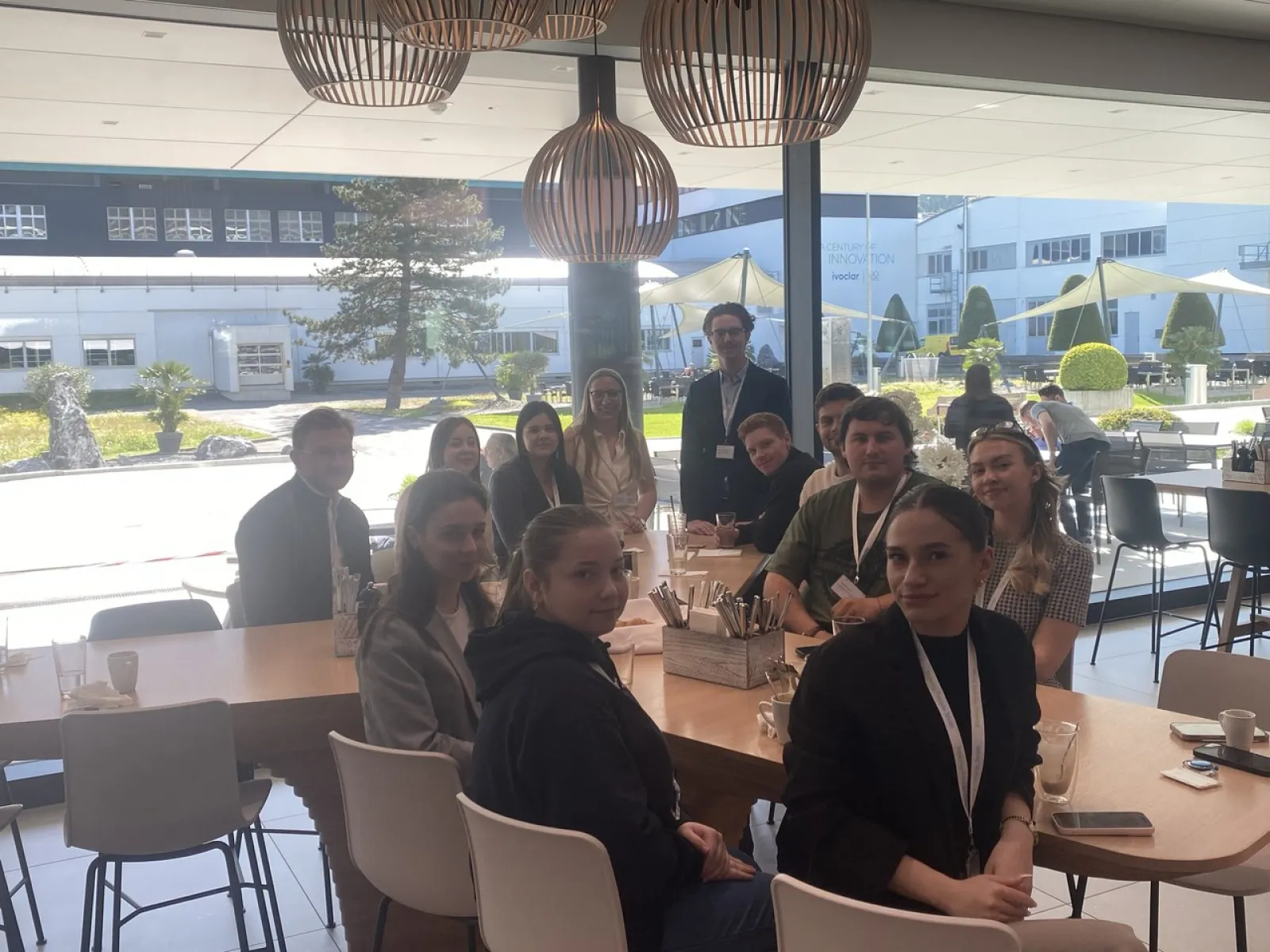
As part of the course “Technology and Innovation Management” in the Bachelor’s programme in Business Administration (specialisation in Entrepreneurship & Management), students had the opportunity to visit Ivoclar, the Liechtenstein-based dental company, at its headquarters in Schaan this semester.


In addition to gaining current insights into Ivoclar’s technology, innovation, and project management practices, the student group from the University of Liechtenstein also enjoyed impressions of the company’s state-of-the-art headquarters—including a visit to the in-house barista coffee bar. The group was accompanied by Clemens Armellini and Marie Scheuffele, both of the Professorship for Technology & Innovation.


The visit began with an interactive presentation of an ongoing process optimisation project focused on implementing a novel Programat sintering system. This hands-on “lecture day” offered the students a real-world look at the company’s internal innovation activities. The hosts walked the group through the entire journey—from the initial idea for streamlining processes, to the development of a new concept, and the current implementation stage of the innovative production system—while enthusiastically answering the students’ many questions.


The second half of the morning was dedicated to product innovation. Students gained valuable insights into Ivoclar’s product lifecycle management and were introduced to the company’s idea generation and evaluation process. In this context, they also learned about the key megatrends shaping Ivoclar’s business and how the company addresses them within its technological and industry context.


A warm thank-you to Ivoclar for the generous hospitality and the insightful programme put together for our students!

Prof. Dr Daniel Stockhammer on Exchange Visit to Georgia

Prof. Dr Daniel Stockhammer on Exchange Visit to Georgia

International University Partnership with the Tbilisi State Academy of Arts


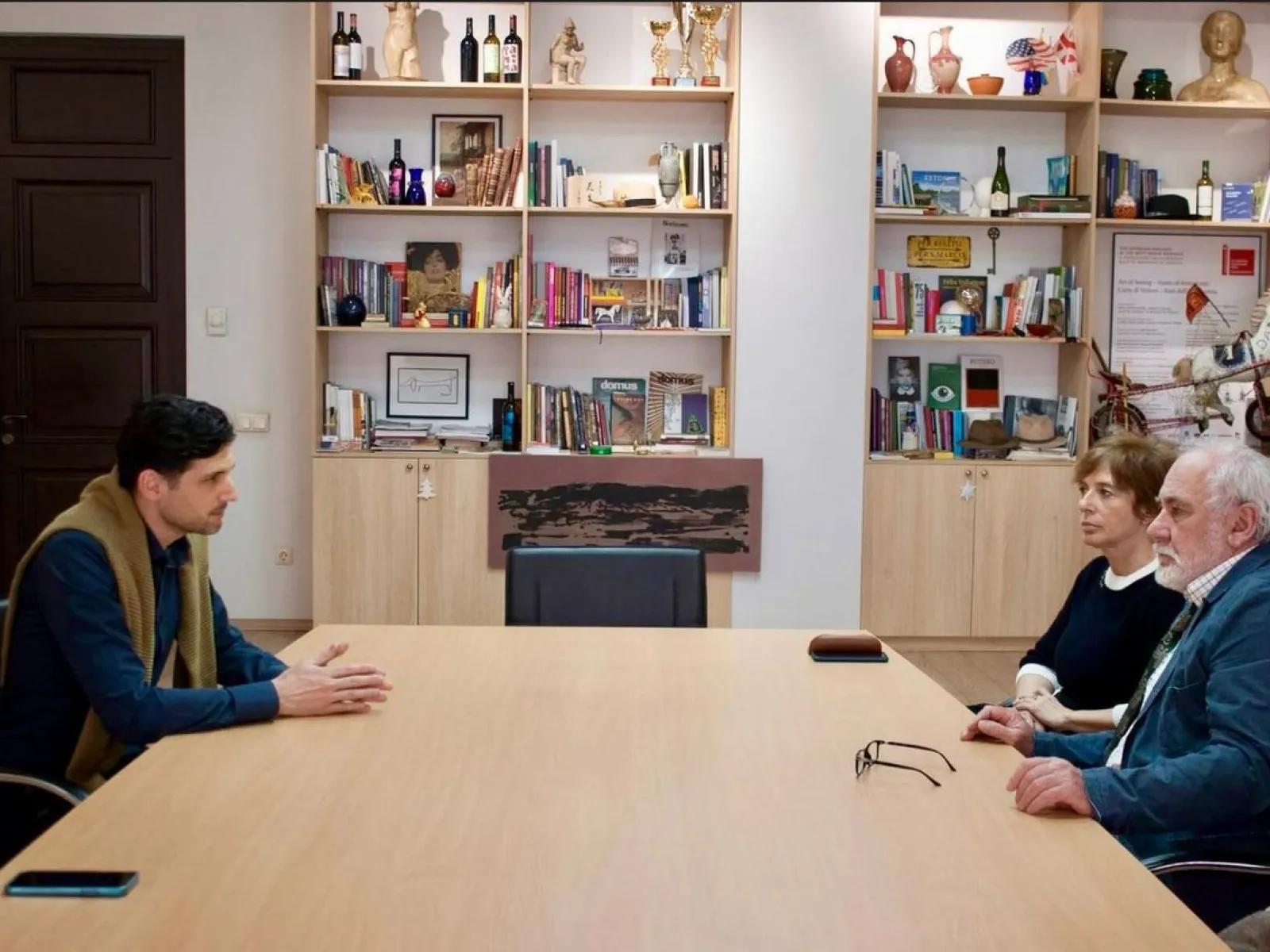
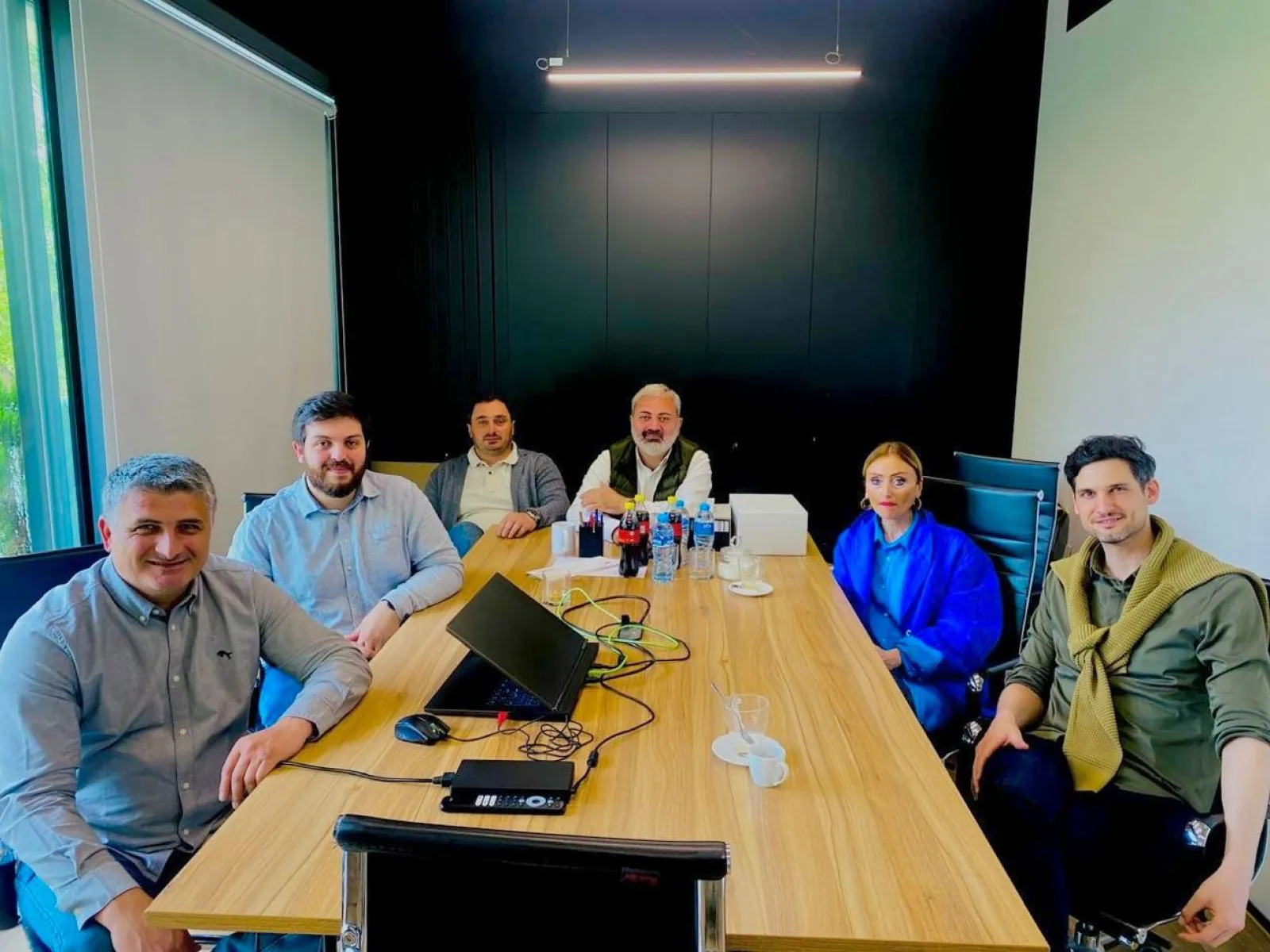
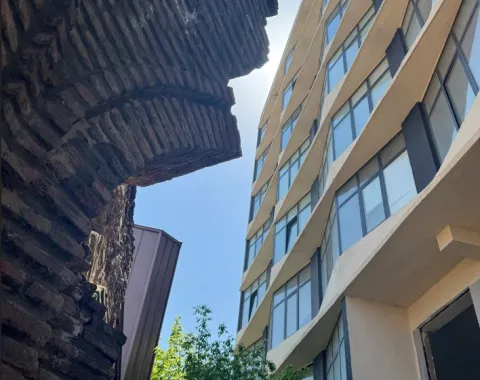
As part of the International Credit Mobility partnership between the University of Liechtenstein and the Tbilisi State Academy of Arts , Prof. Dr Daniel Stockhammer, Dean of the Liechtenstein School of Architecture and Head of the Heritage & Upcycling Research Group, travelled to Georgia for seven days in April 2025.


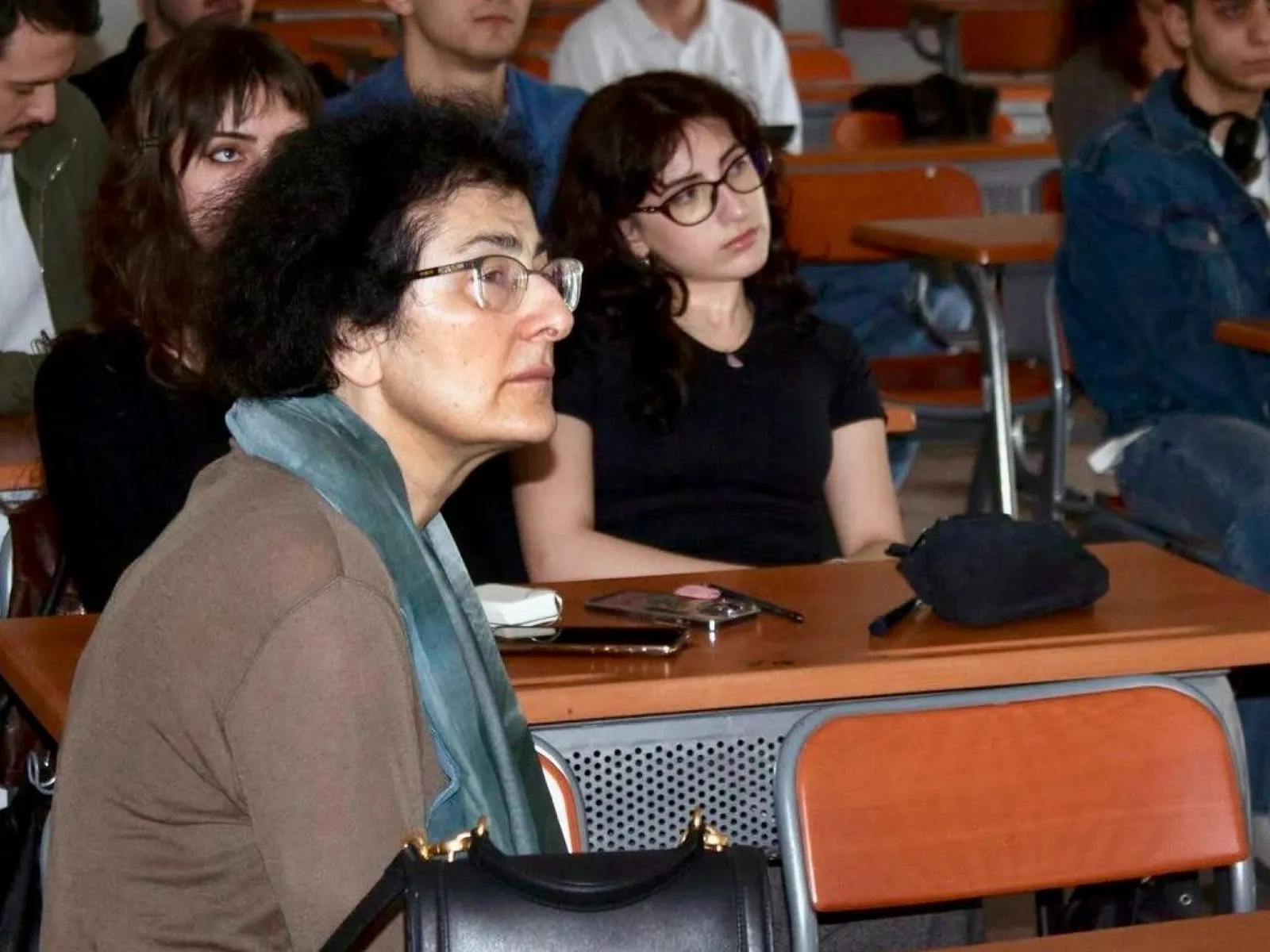
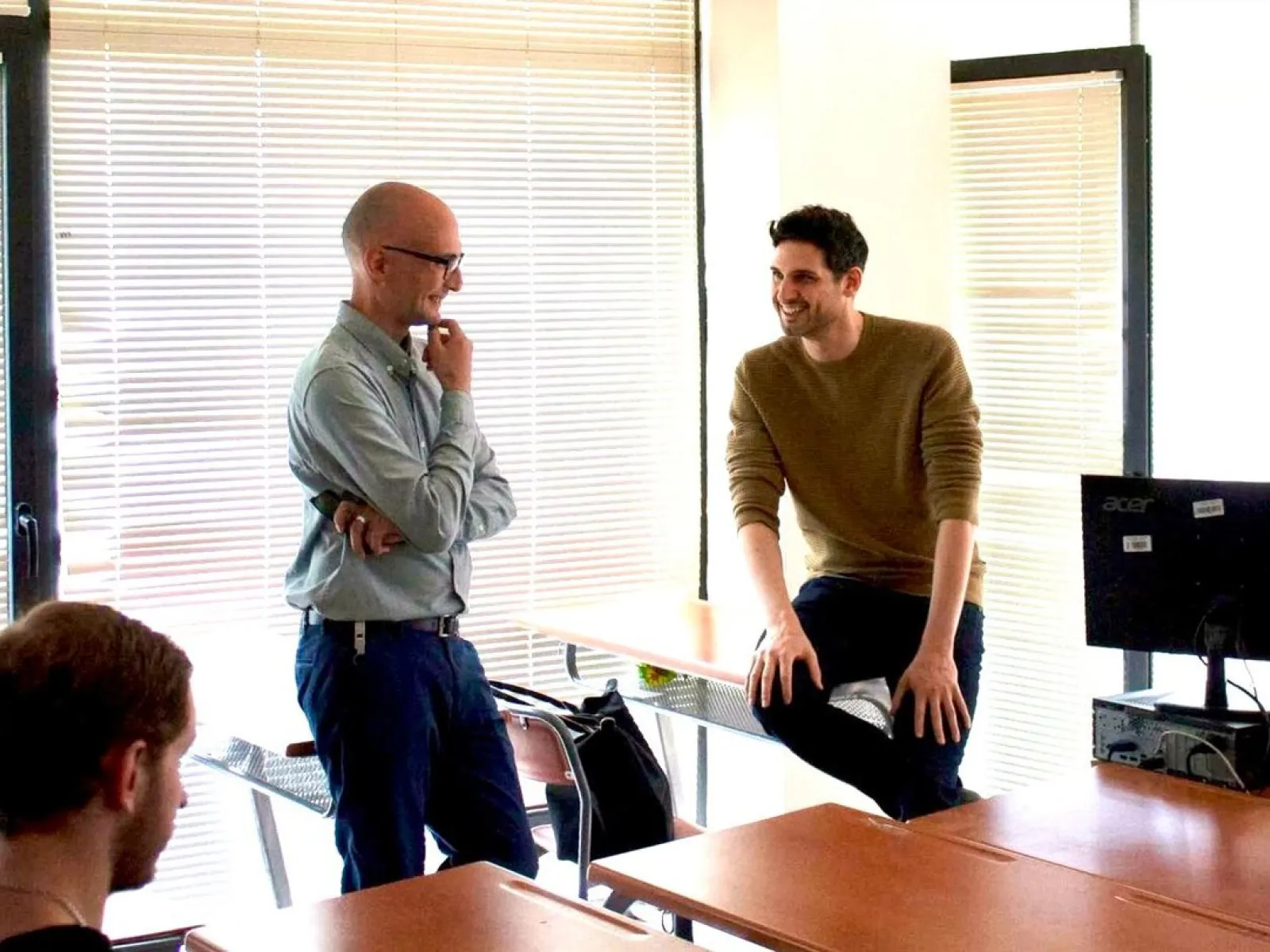
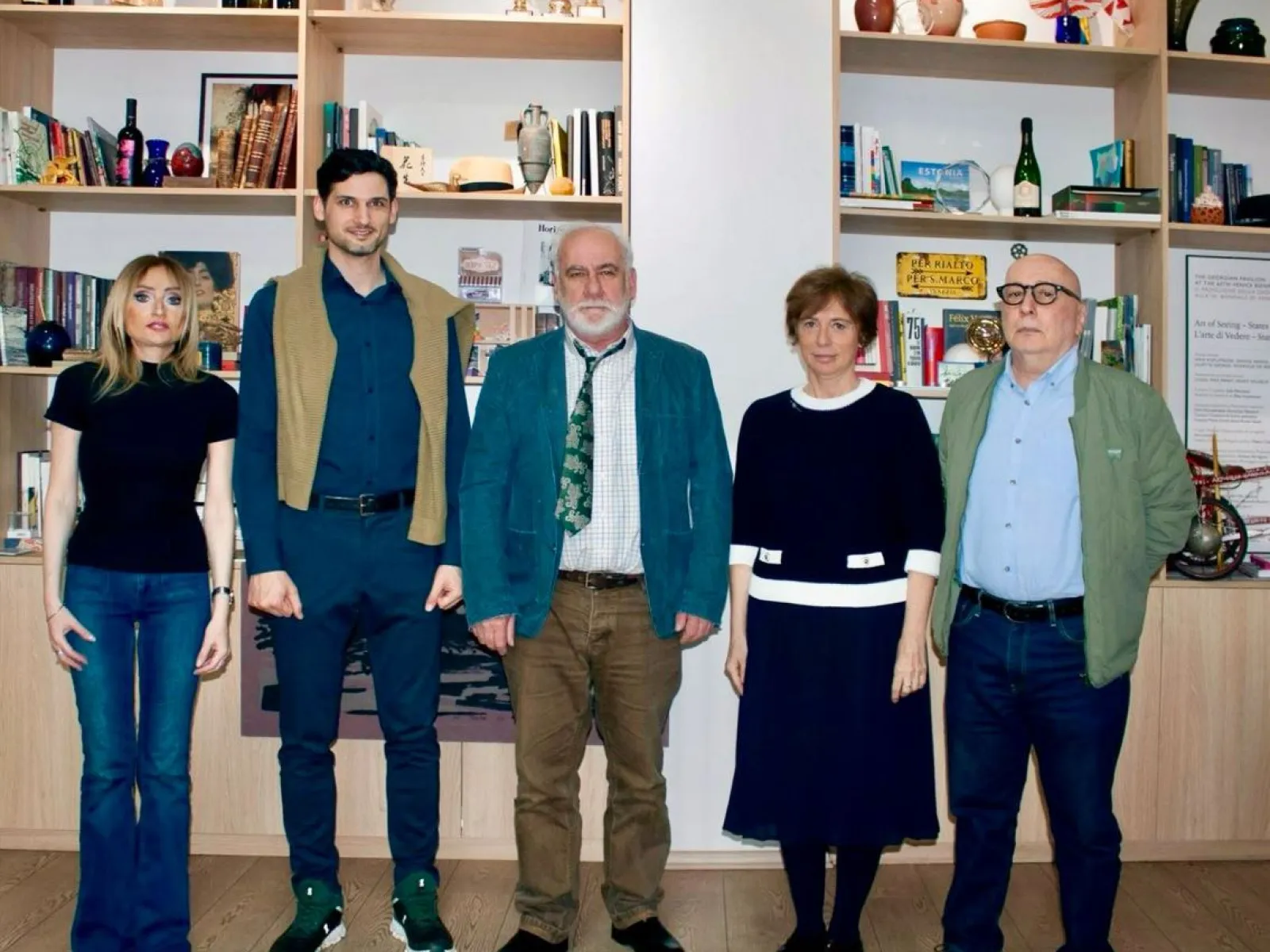
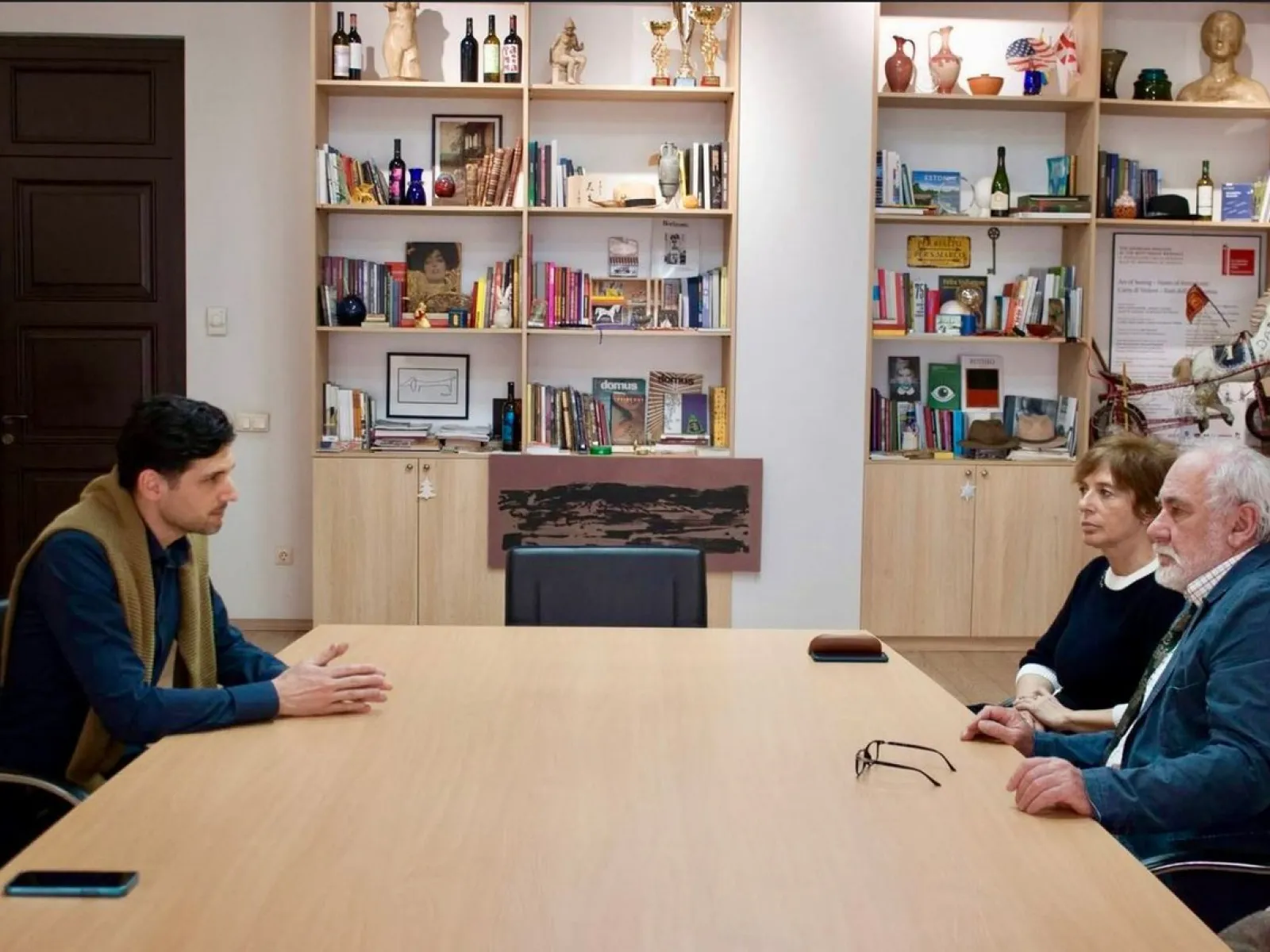
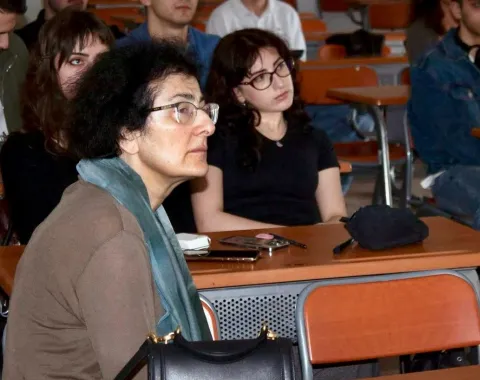
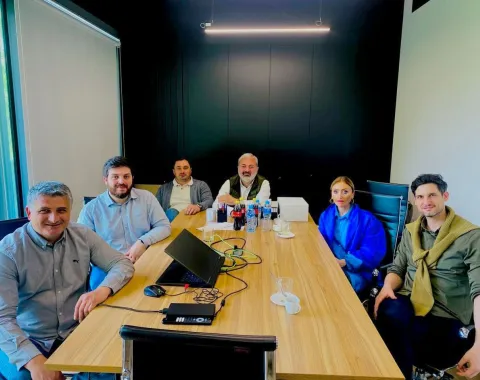
The purpose of the visit was institutional exchange and the strengthening of academic cooperation. Official discussions were held with the Rector and Vice-Rector of TSAA as well as with the International Office. Two follow-up working meetings with the Dean of the Faculty of Architecture focused on future opportunities for collaboration in research and teaching.


Academic Exchange and Lecture on Upcycling


A key component of the visit was the exchange with Georgian professors of architecture, students, and alumni – including architect Giorgi Kurdiani, a graduate of the University of Liechtenstein and a representative of a distinguished Georgian family of architects whose roots go back to 1898.


Prof. Stockhammer also delivered a public lecture on the topic of upcycling in architecture, which was met with great interest by those in attendance.


Experiencing Local Architectural Heritage and Strengthening Networks


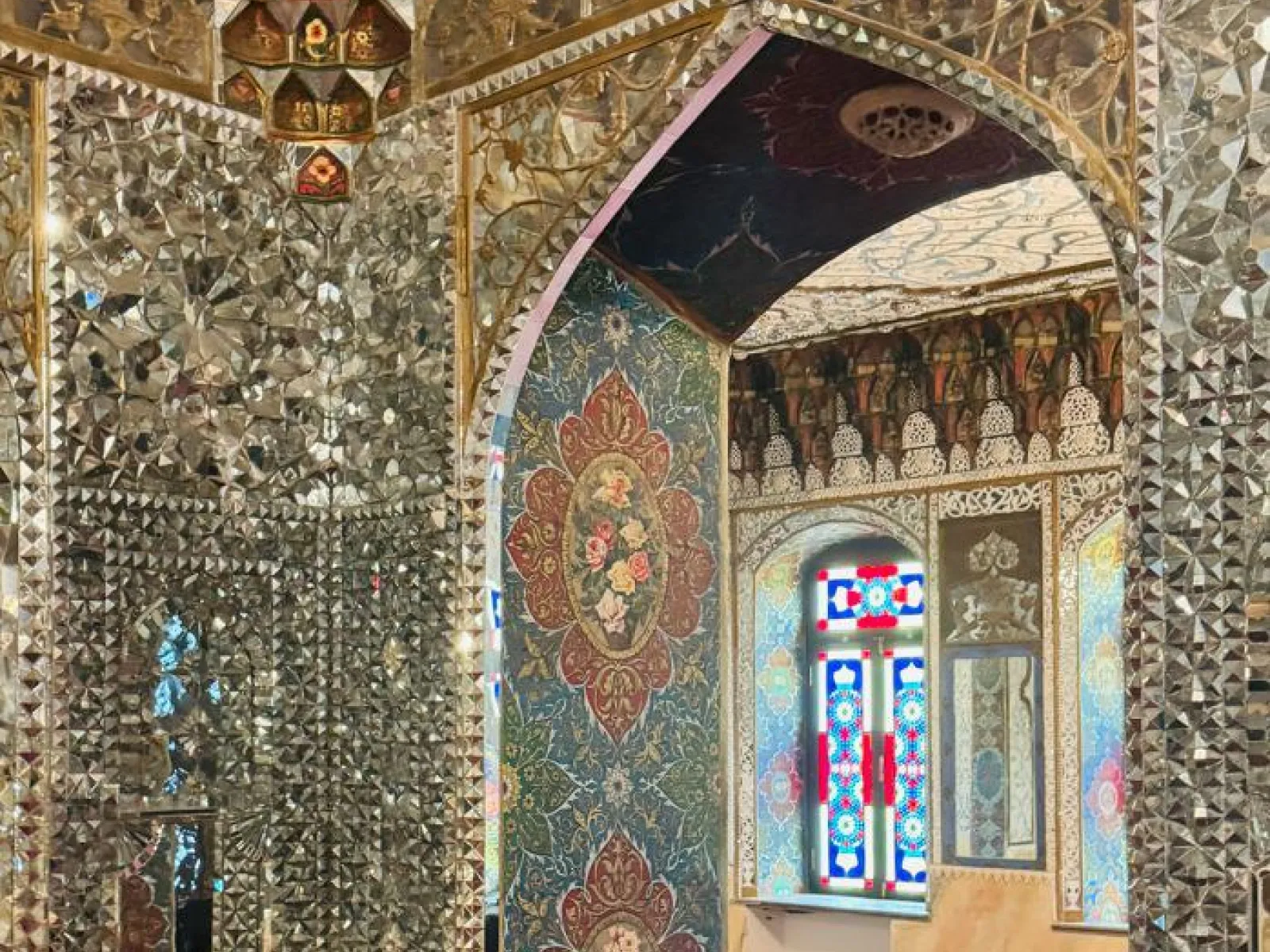
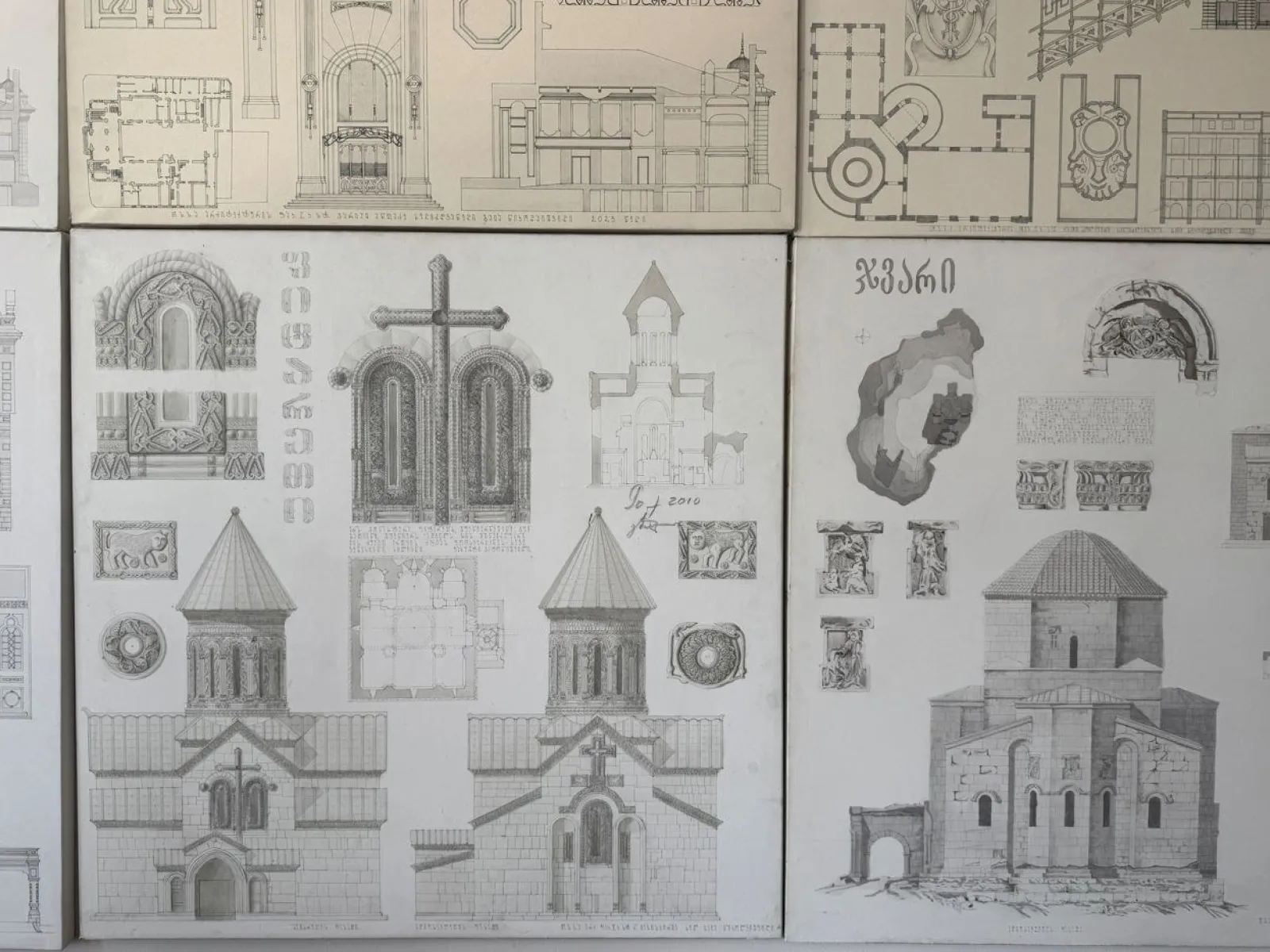
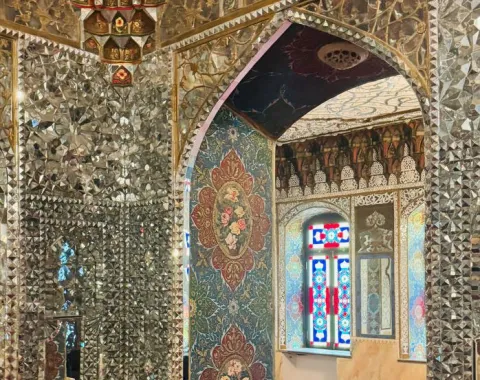
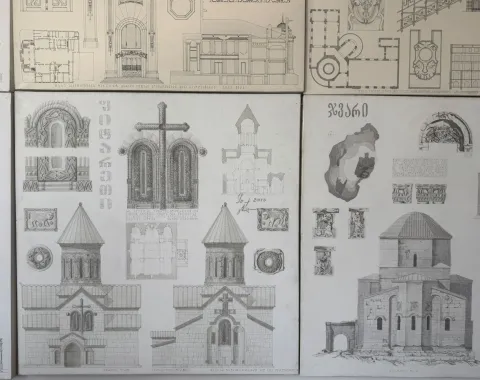
Accompanied by faculty coordinator Nestan Tsiklauri and another Georgian professor, he visited significant examples of both historical and contemporary architecture in and around Tbilisi. Visits to two renowned architecture firms and in-depth exchanges offered further insight into Georgia’s dynamic architectural scene and opened up new perspectives for future collaborations. The stay was rounded off with an exclusive guided tour of the Tbilisi Gold Museum.


Special thanks go to Mirjana Schädler from the International Office of the University of Liechtenstein and Nestan Tsiklauri from the Tbilisi State Academy of Arts for coordinating this international exchange.


Photo Credit: Lizele Osepaishvili-Nemtsova, Tbilisi State Academy of Arts

“Liechtenstein Studio”: Funding from the Guido Feger Foundation Strengthens Sustainable Architecture Projects in Liechtenstein and the Region

“Liechtenstein Studio”: Funding from the Guido Feger Foundation Strengthens Sustainable Architecture Projects in Liechtenstein and the Region

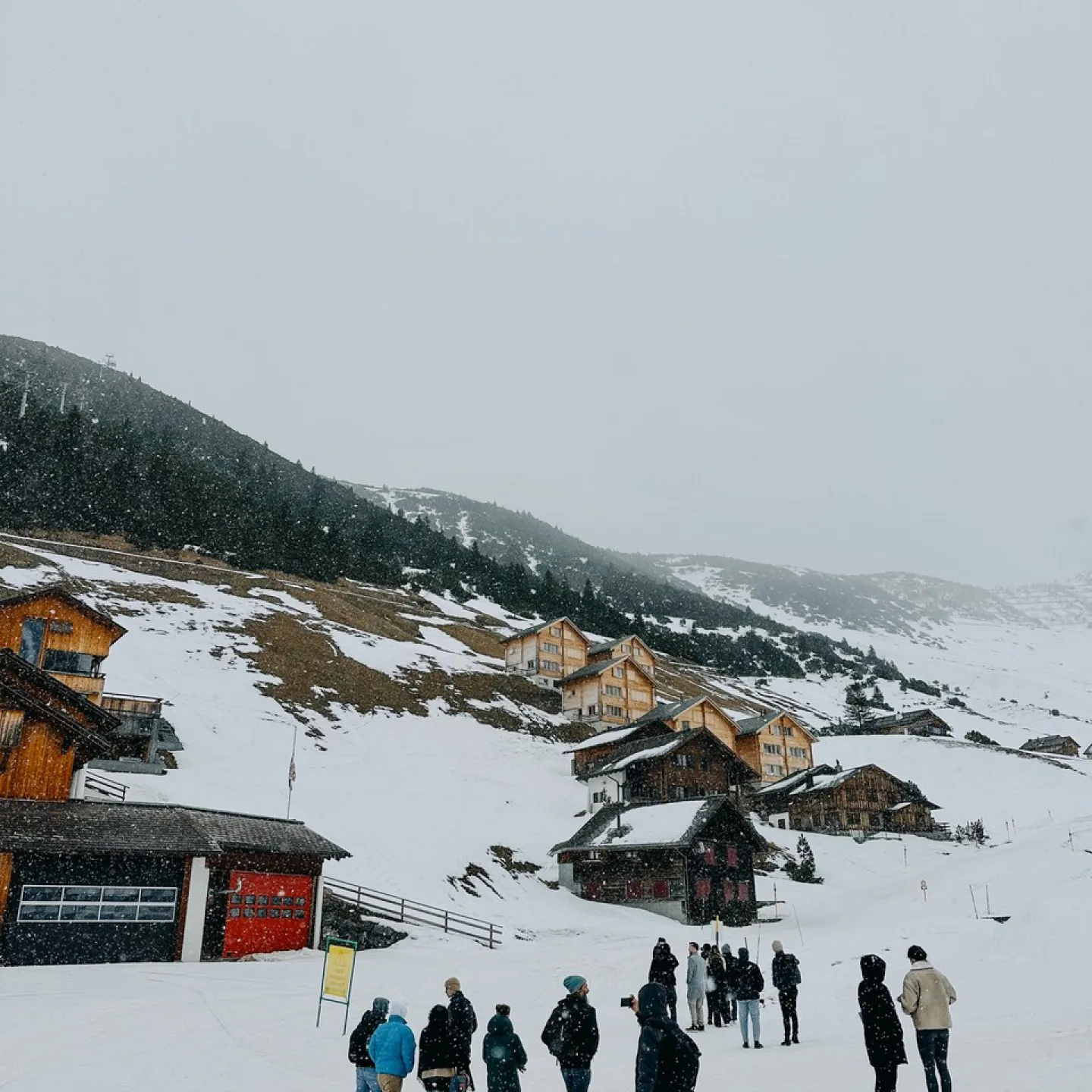
Eine Gruppe von Menschen steht in einer verschneiten Berglandschaft vor traditionellen Holzhäusern. Im Hintergrund sind schneebedeckte Hügel und Nadelbäume zu sehen. Die Szene vermittelt eine winterliche Atmosphäre und zeigt eine Verbindung von Architektur und Natur.

With the support of the Stiftung Fürstlicher Kommerzienrat Guido Feger, the University of Liechtenstein is initiating the “Liechtenstein Studio” at the Liechtenstein School of Architecture. The aim of this studio is to address architectural and spatial planning issues with high social, ecological and cultural relevance for Liechtenstein and the region.


At the heart of architecture education at the University of Liechtenstein is the design studio, in which students independently develop projects based on specific tasks. The new topics, building sites and programs defined each semester are based on current challenges in the areas of sustainability and spatial planning. The support provided by the Guido Feger Foundation specifically promotes projects with a direct link to Liechtenstein and the Alpine Rhine Valley and makes them accessible to the public.


An interdisciplinary approach to sustainable development


The Liechtenstein Studio combines the expertise of various specialist groups at the Liechtenstein School of Architecture. Five thematic focuses contribute to the development of sustainable solutions for the region:


Urbanism, Architecture & Society
This specialist group researches the interactions between social structures and built spaces. It develops transdisciplinary methods to address social challenges such as integration and sustainable urban development through architecture and participatory processes.


Urban Design & Spatial Development
The focus is on sustainable concepts for neighbourhoods, open spaces and landscapes. Topics such as climate adaptation, biodiversity and resource-efficient planning are central to designing resilient and liveable urban structures.


Sustainable Design
Environmentally friendly designs are developed here using sustainable materials and technologies. The holistic approach takes energy, mobility, health and social aspects into account in order to promote sustainable architecture.


Built Heritage & Upcycling
This specialist group is dedicated to the preservation, further development and reuse of existing buildings. It researches strategies for a circular construction industry in order to use resources efficiently and establish circular construction principles.


Craft & Structure
The focus is on the connection between material, construction and structure. Innovative solutions for sustainable architecture are created through experimental prototypes and collaboration with craft businesses.


In the studios, students work together with lecturers and, if necessary, external experts on practical concepts for Liechtenstein and the Alpine Rhine Valley. The results of the studios are documented, published and presented as part of the semester exhibition.


A contribution to Liechtenstein's architectural future


By sponsoring the Liechtenstein Studio, the Guido Feger Foundation is placing a clear emphasis on supporting sustainable and innovative architectural approaches and making a valuable contribution to the architectural debate on the challenges and potential of the region.

Eine Gruppe von Menschen steht in einer verschneiten Berglandschaft vor traditionellen Holzhäusern. Im Hintergrund sind schneebedeckte Hügel und Nadelbäume zu sehen. Die Szene vermittelt eine winterliche Atmosphäre und zeigt eine Verbindung von Architektur und Natur.

A Cool School: The Bahuarwa Primary School

A Cool School: The Bahuarwa Primary School

Shortly after completing their architecture degrees, Isha and Daniel Haselsberger founded the non-profit organisation Arch Aid to bridge their cultural backgrounds – Switzerland and India – and apply their knowledge to the creation of sustainable buildings for disadvantaged communities in India.


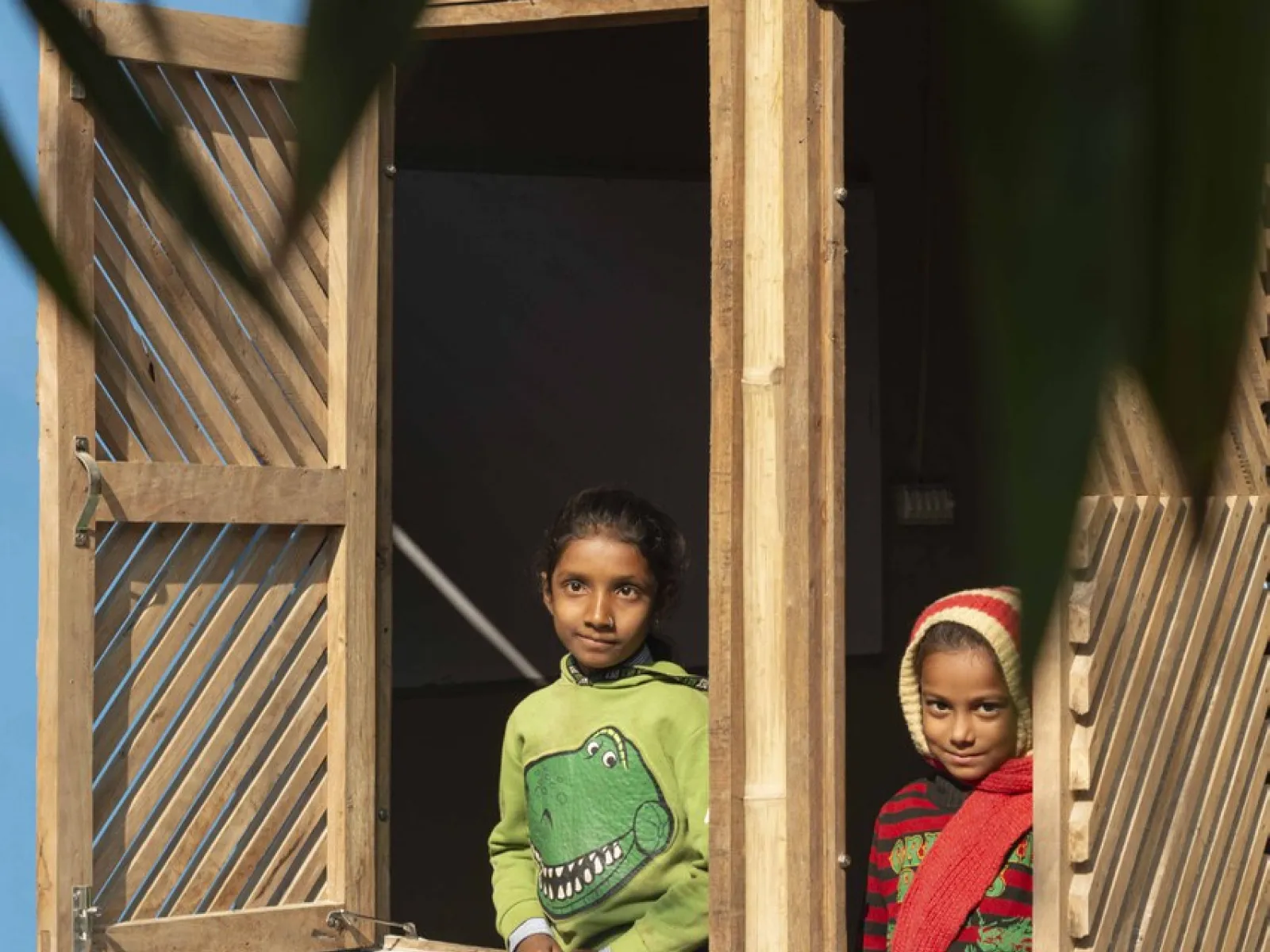
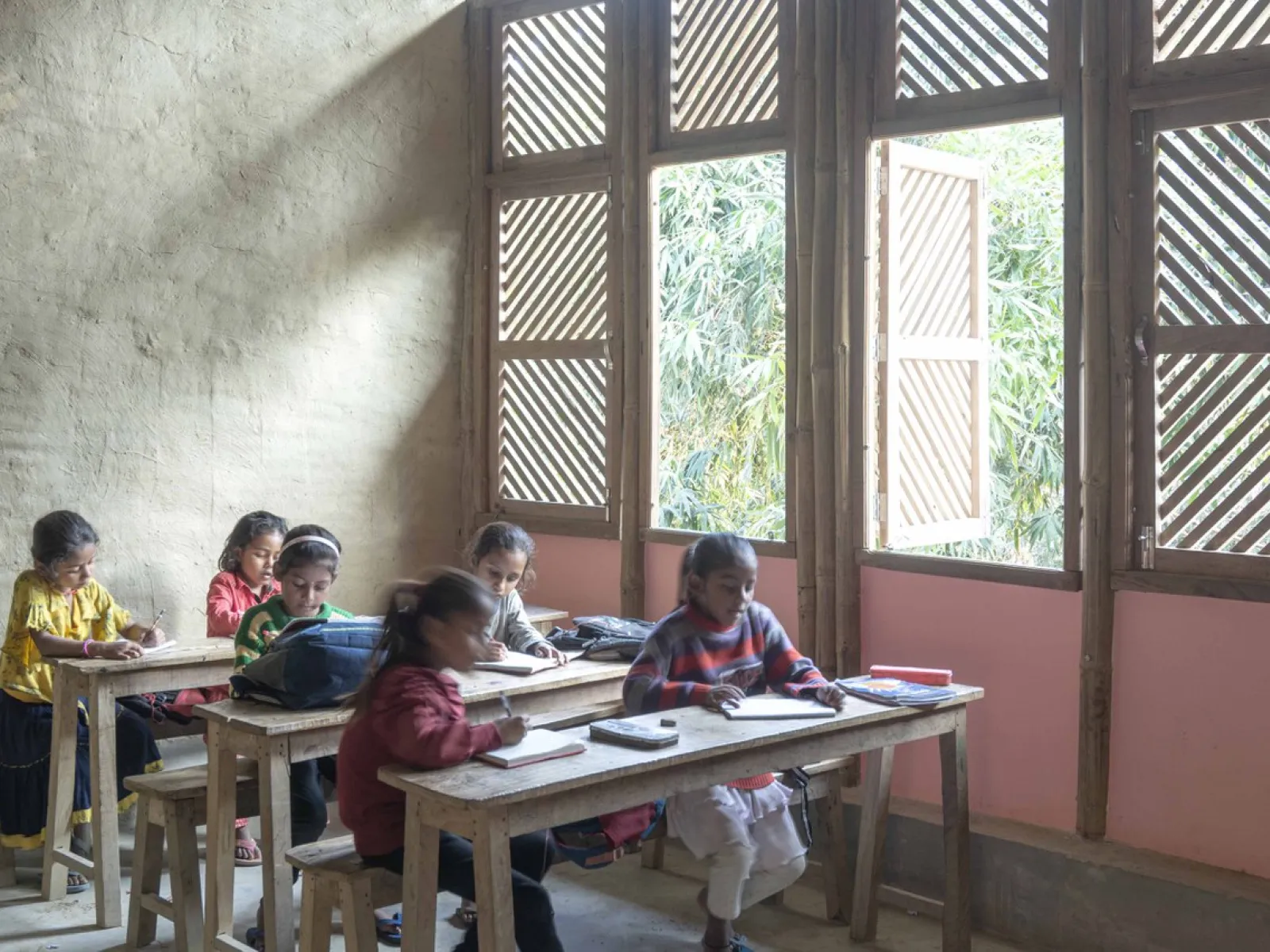
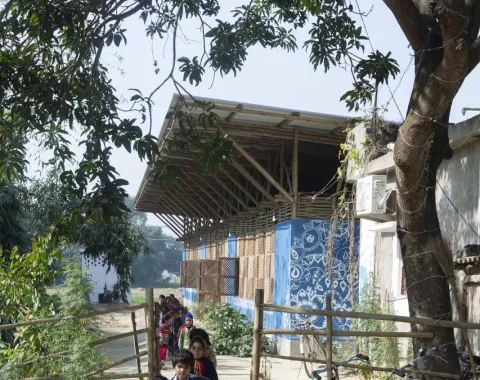
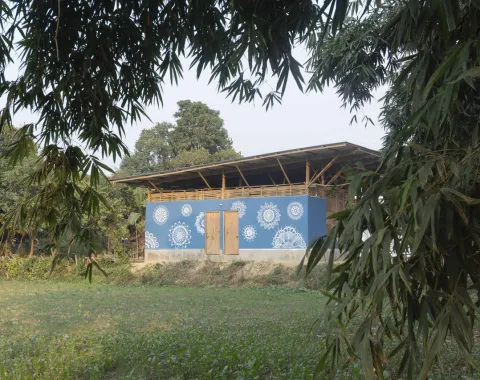
The Bahuarwa Primary School is located in the village of the same name in the Indian state of Bihar. In India’s poorest state, many children lack access to a functioning school system, as public schools are often non-operational. Private schools, on the other hand, remain unaffordable for underprivileged families. In collaboration with the local NGO Bahuarwa Foundation, the two architects initiated and oversaw the construction of a school for disadvantaged children and young people in the area. The school is now operated by the Bahuarwa Foundation, based in the village.


Building through Dialogue


Following the project’s launch in spring 2022, Isha and Daniel Haselsberger studied the local building culture, visited numerous households, conducted interviews and examined local workshops to better understand the factors influencing changing construction practices. Whereas traditional methods in Bahuarwa still made occasional use of regenerative materials, they are increasingly being replaced by cement, steel and fired bricks. Early on, the architects and the NGO agreed that the school’s development should not be about choosing between extremes, but about finding a meaningful combination of regenerative and more emission-intensive materials, as well as traditional and modern techniques. Their goal was to use natural materials in a way that would be accepted by the local community.


This required a building that is durable, low-maintenance, thermally comfortable and affordable, while also aligning with local ideas of contemporary architectural expression.


In contrast to conventional practice, the architects did not design every detail before construction began. Only the foundations, the supporting structure, the roof, and a rough layout of openings were pre-defined. This flexible approach allowed them to develop construction details and material choices directly on site and in collaboration with the target groups, rather than relying on abstract plans alone. The building process thus became a key tool for communication and mutual learning.


Material selection with added value


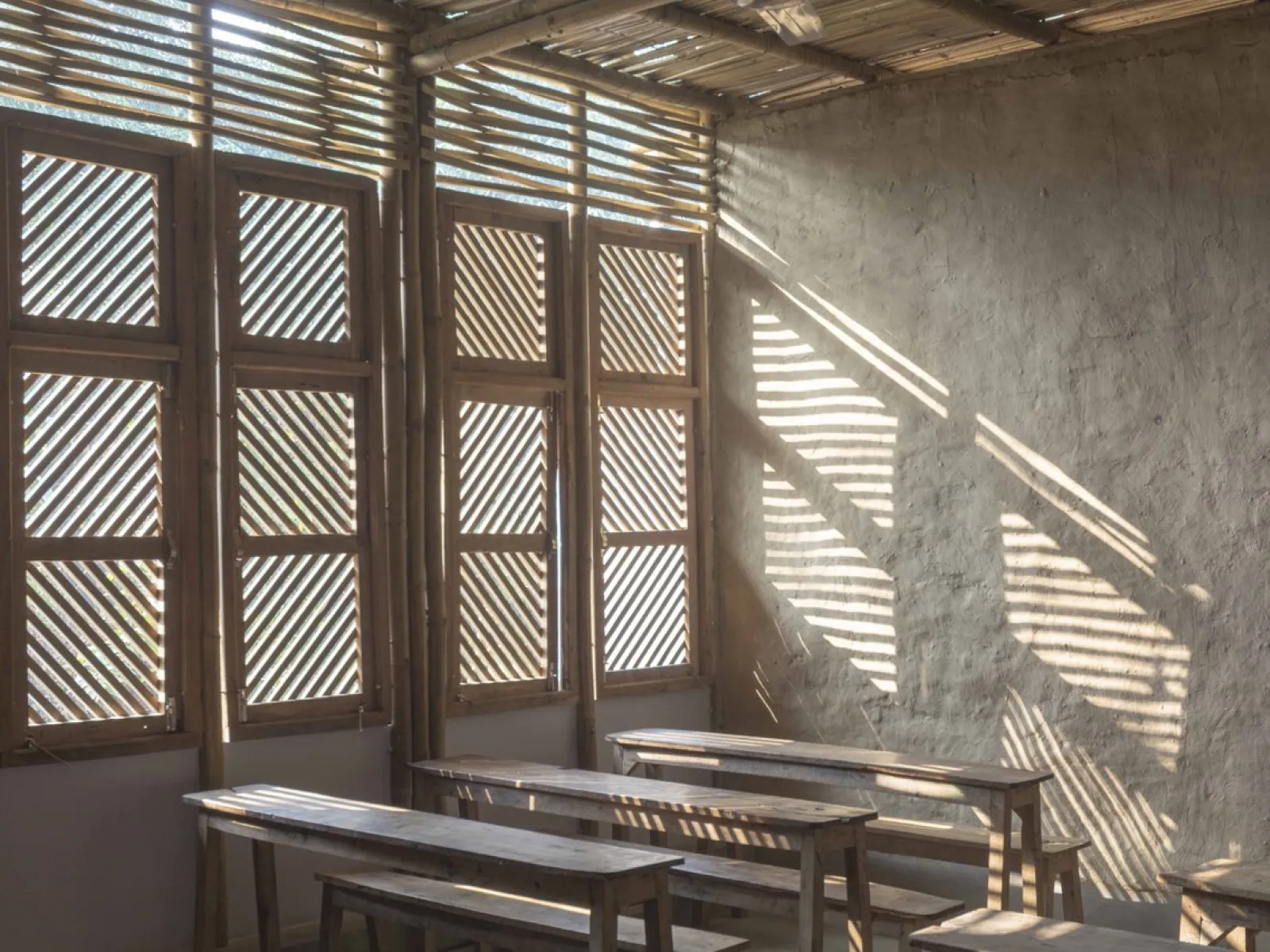
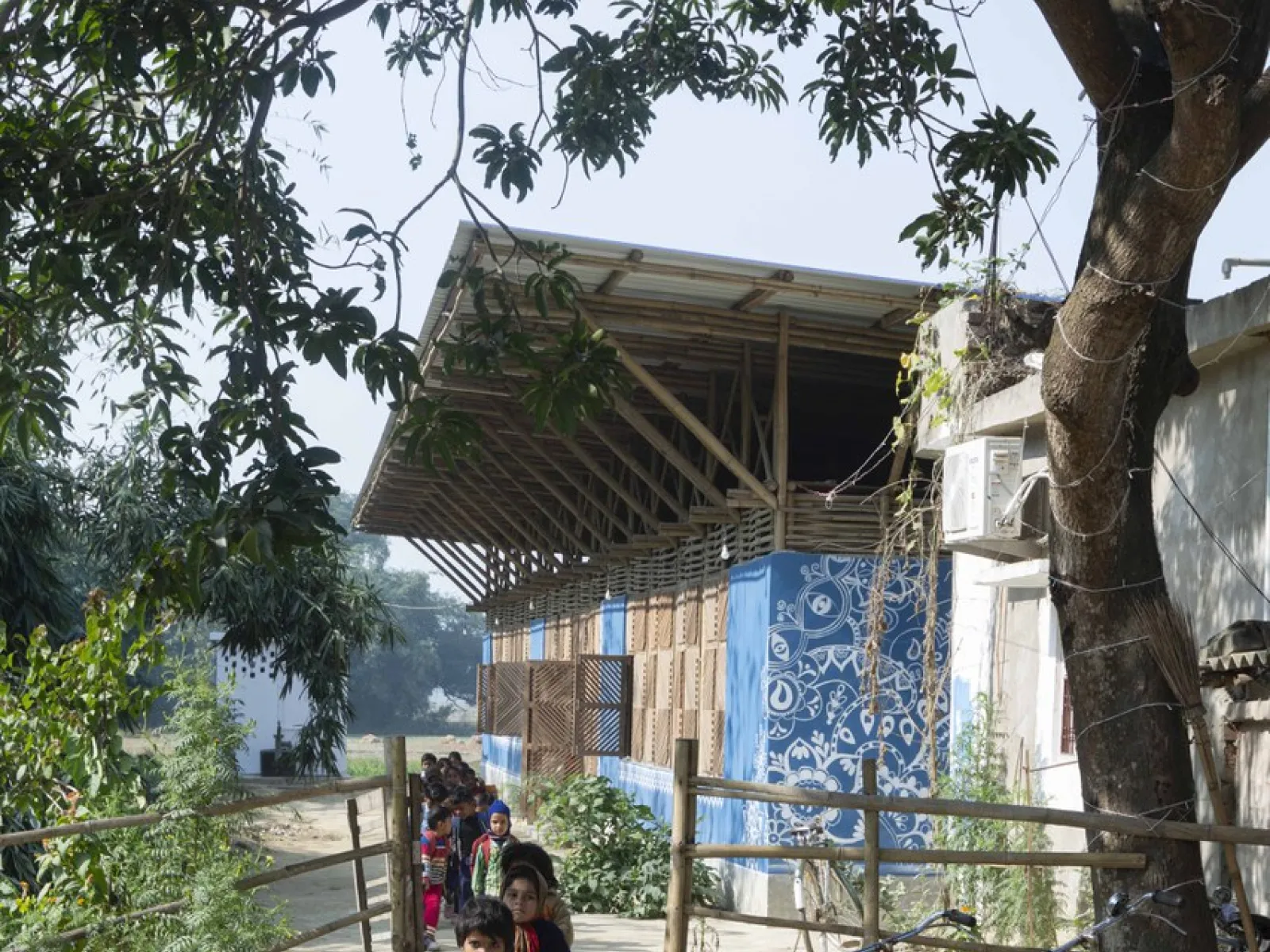
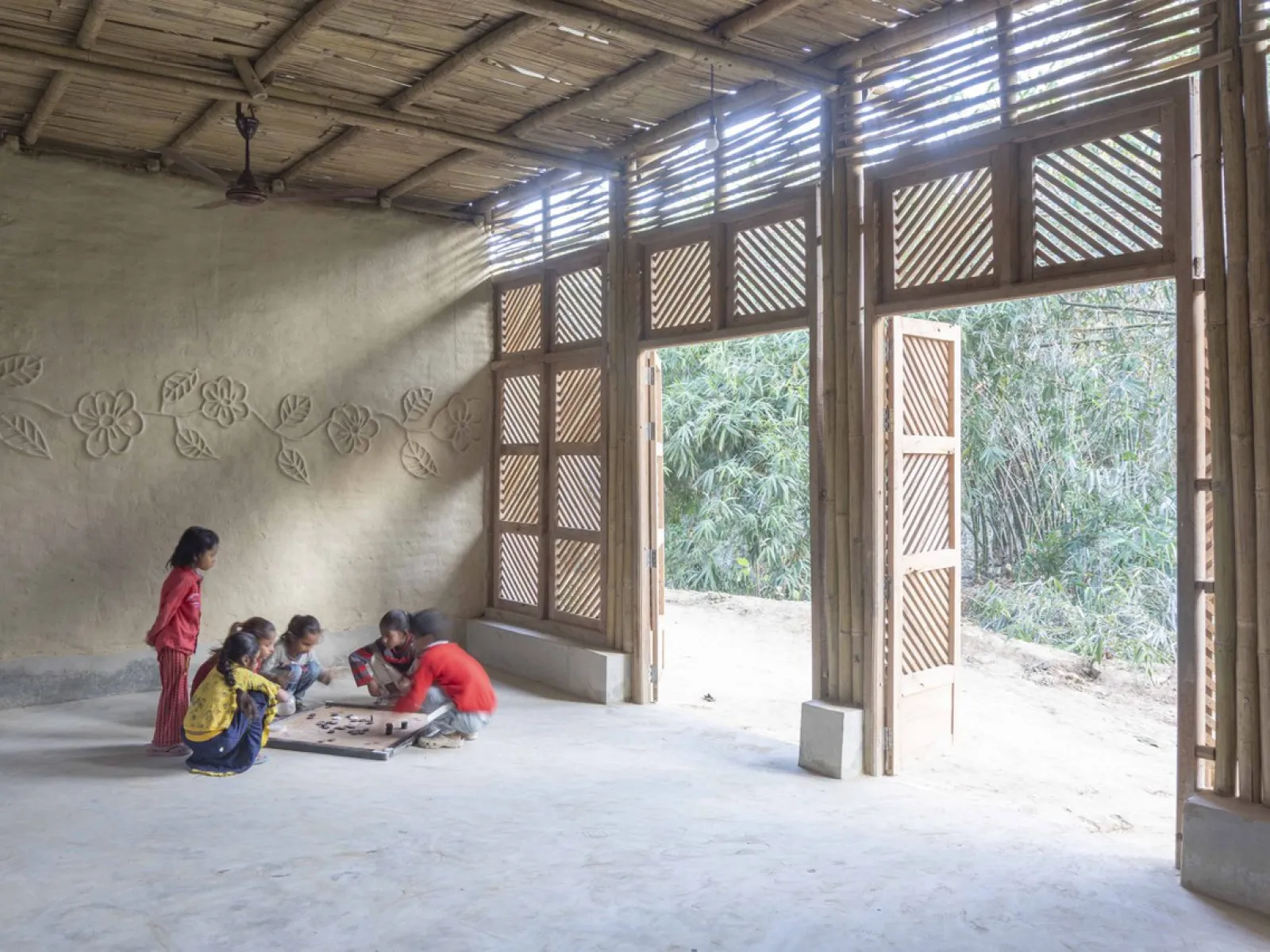
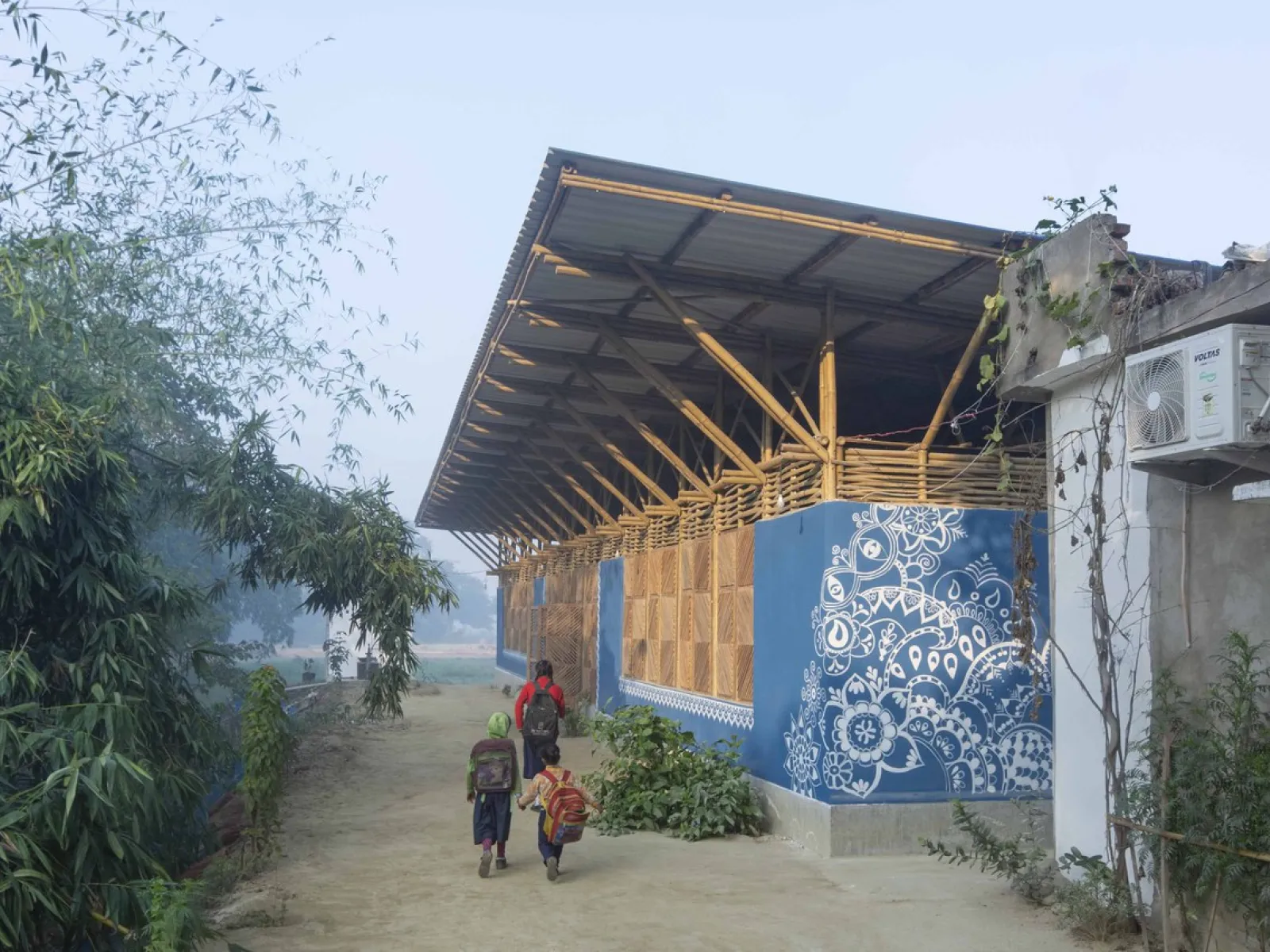
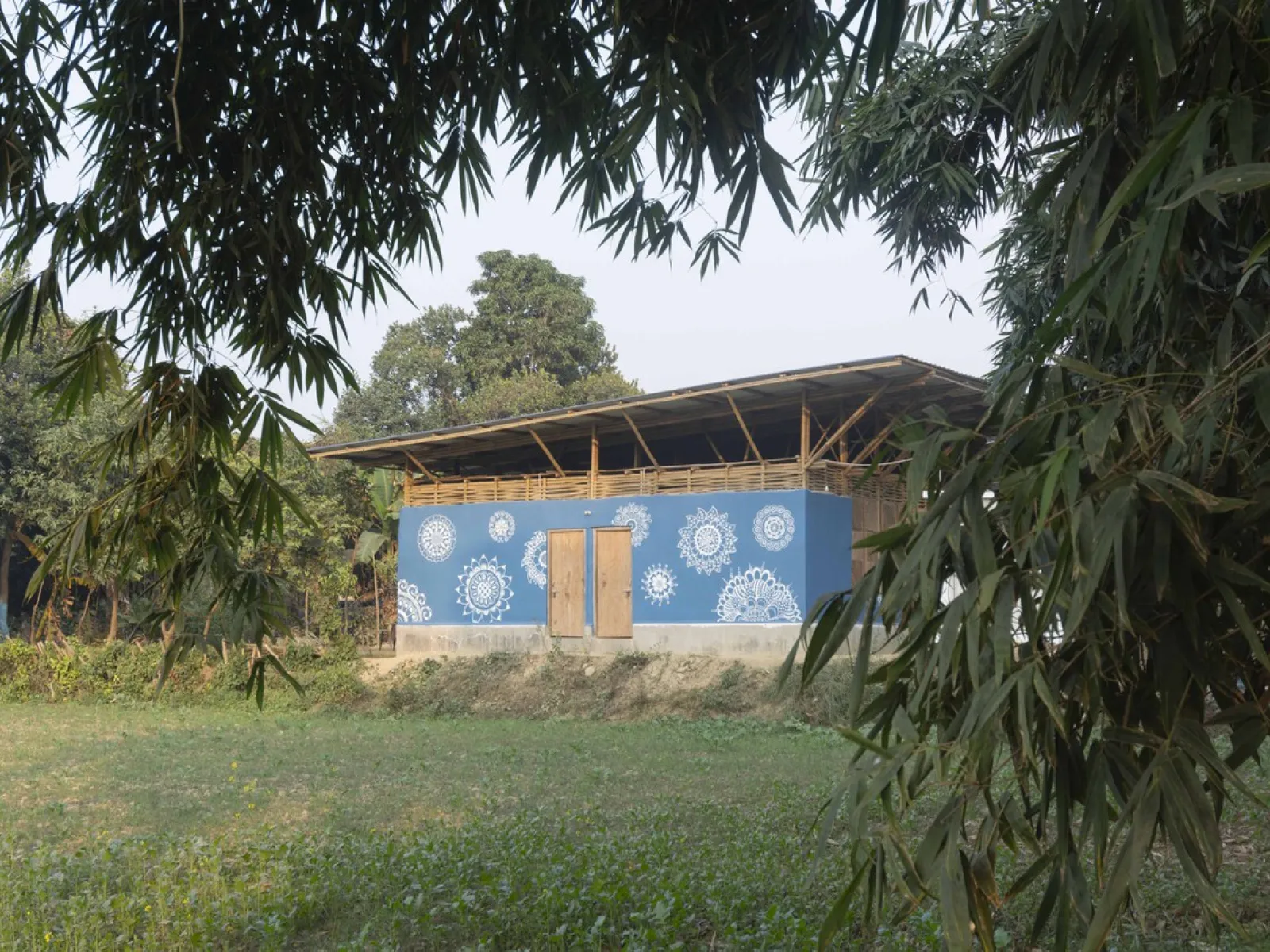
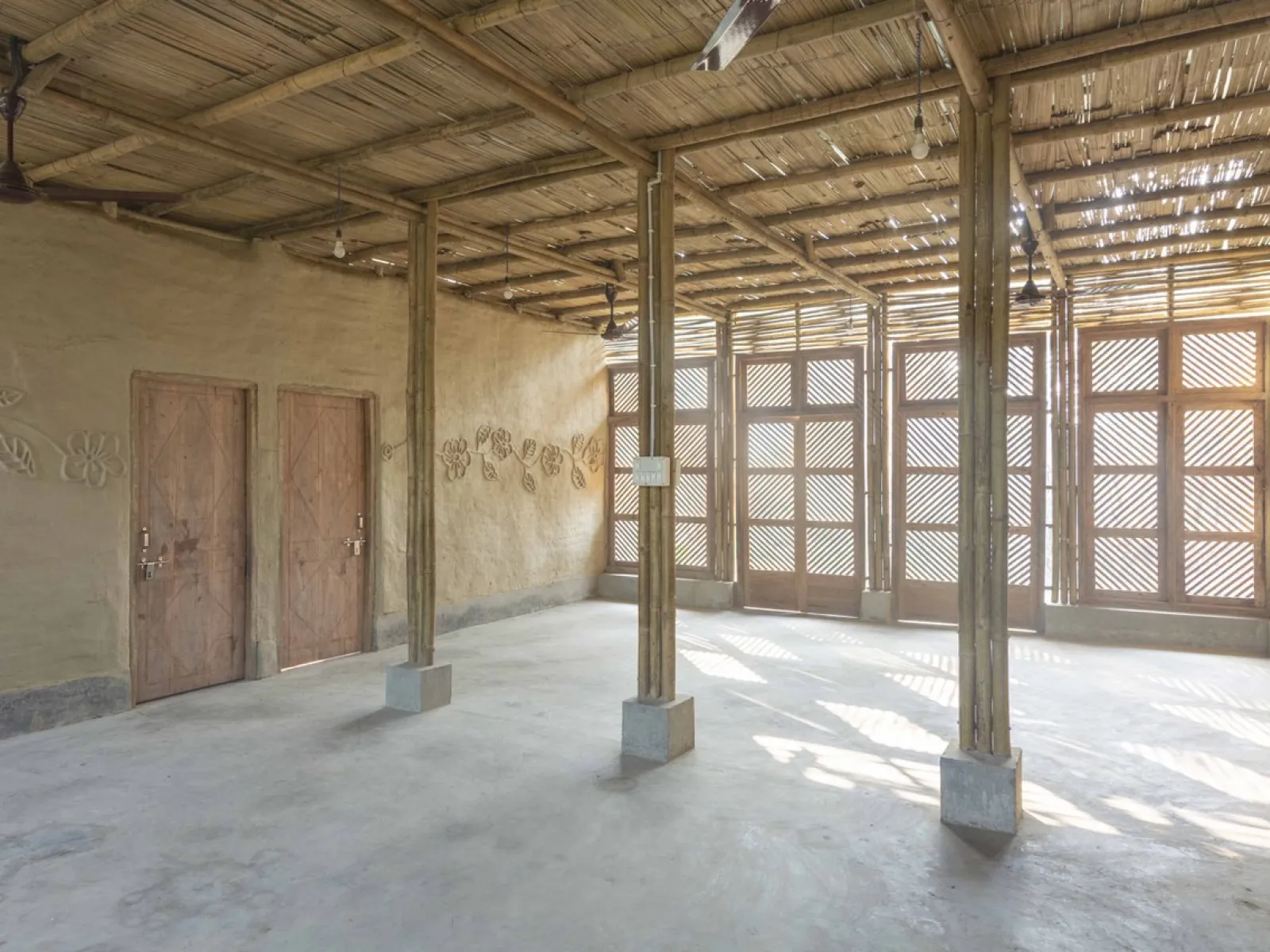
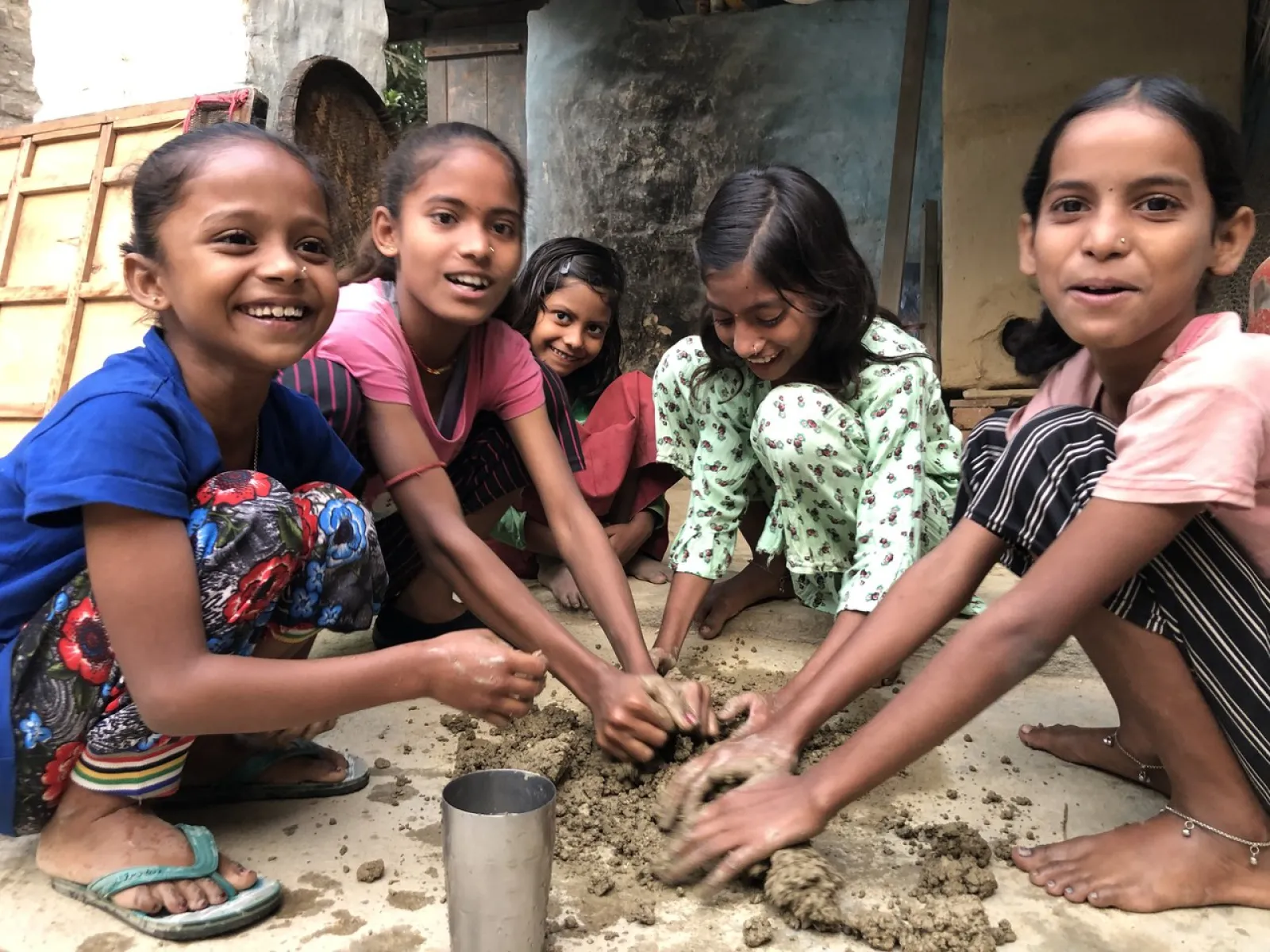
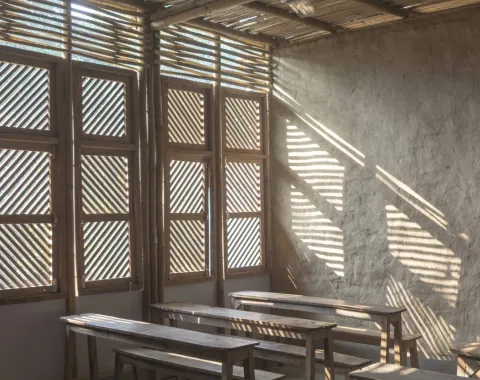
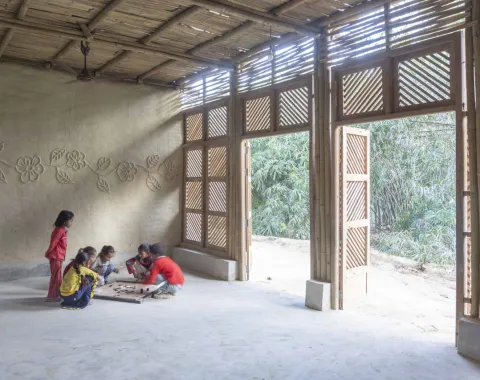
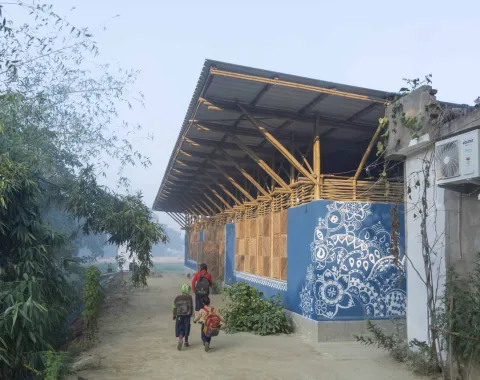
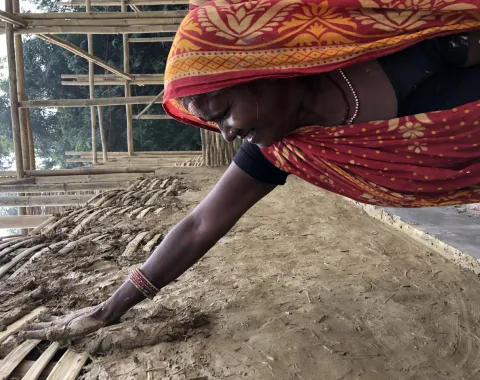
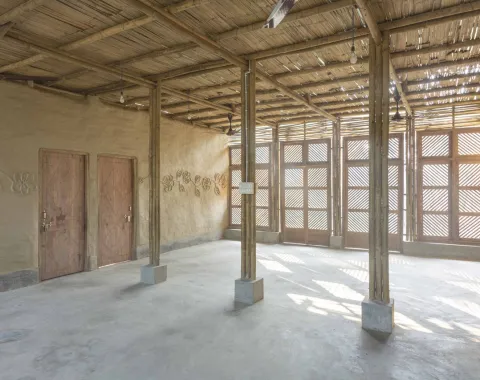
The building rests on an elevated base made from locally produced bricks and reinforced concrete to protect the interiors from regular flooding. The structural elements of walls, ceiling and roof are built from bamboo, and both ceilings and wall panels are crafted from bamboo strips. The sheltered interior walls are filled with a clay and straw mixture, while the exterior walls are rendered with cement and painted. This creates cool interior surfaces, and durable, visually contemporary exterior walls.


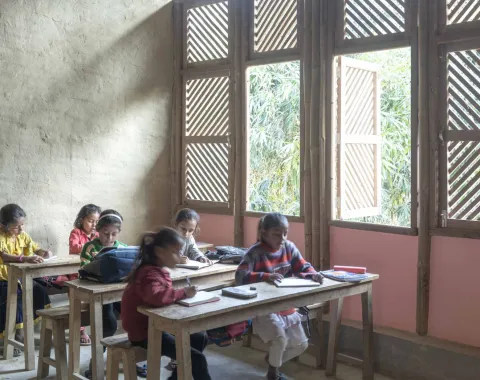
A large overhanging corrugated metal roof protects the walls from the intense monsoon rains. A ventilated cavity between the bamboo ceiling and the metal roof reduces heat radiation and, in combination with the clay walls, ensures a naturally pleasant indoor climate. As a result, the building requires no air conditioning, and ceiling fans are only needed on particularly hot days.


“We have a cool school!” the children proudly exclaim as they pass overheated peers returning from expensive private schools built of concrete and brick.


The lightweight roof and bamboo structure also provide earthquake safety – a critical factor in this high-risk seismic zone.


Designing together


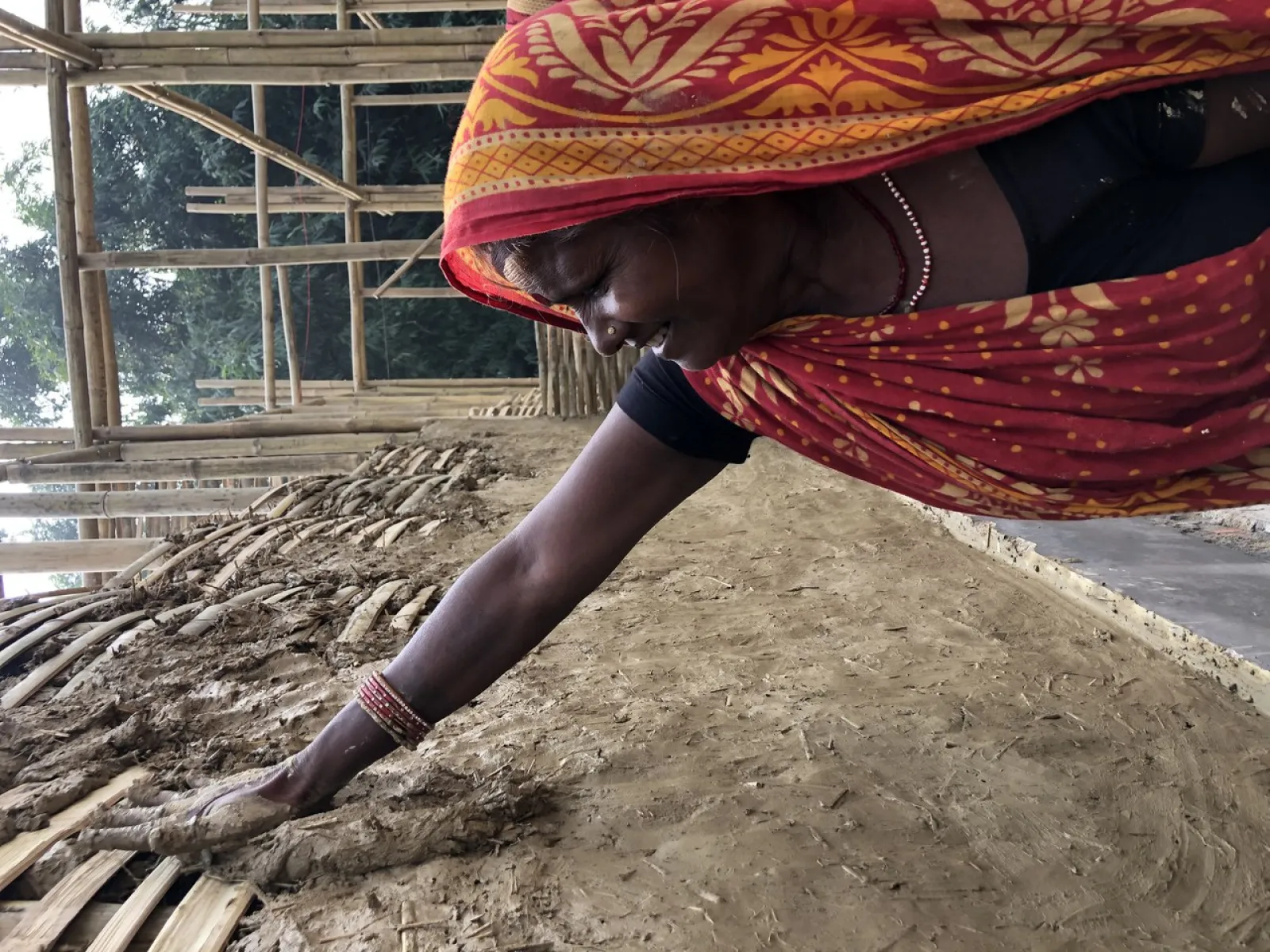
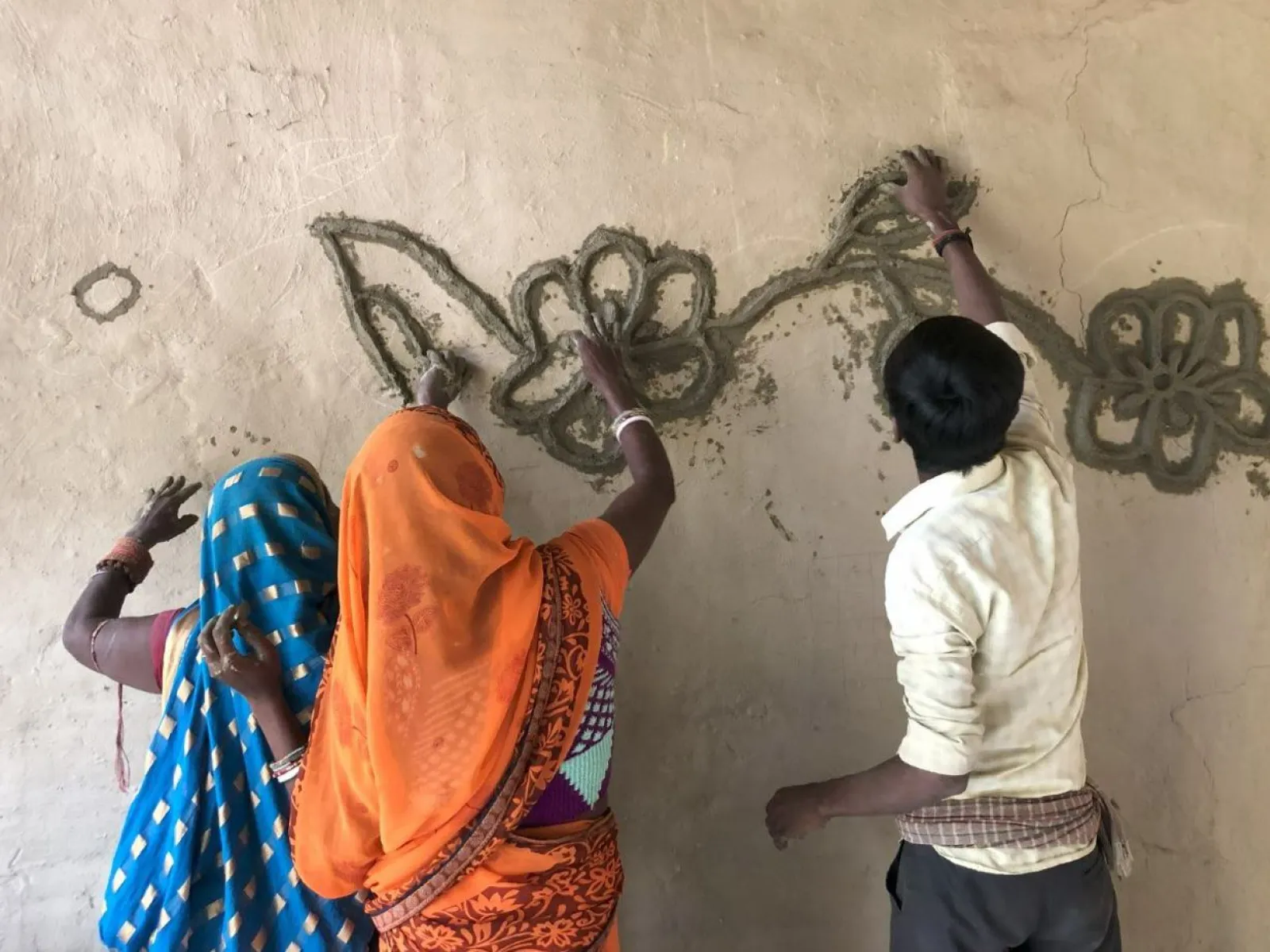
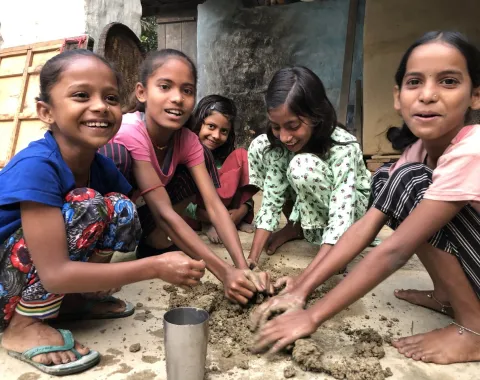
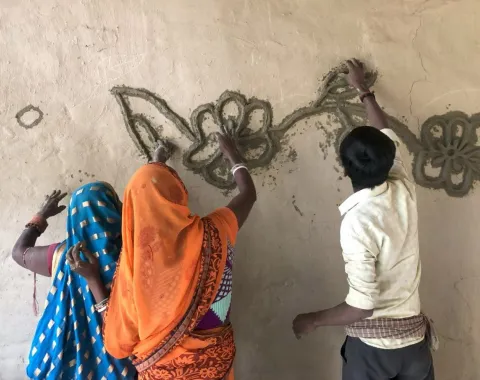
Using bamboo and clay not only reduced costs and environmental impact, but also enhanced regional value creation and enabled an inclusive construction process involving women and men, young and old. Except for three bamboo experts, all workers came from Bahuarwa and surrounding villages – many of them parents or grandparents of the pupils now attending the school.


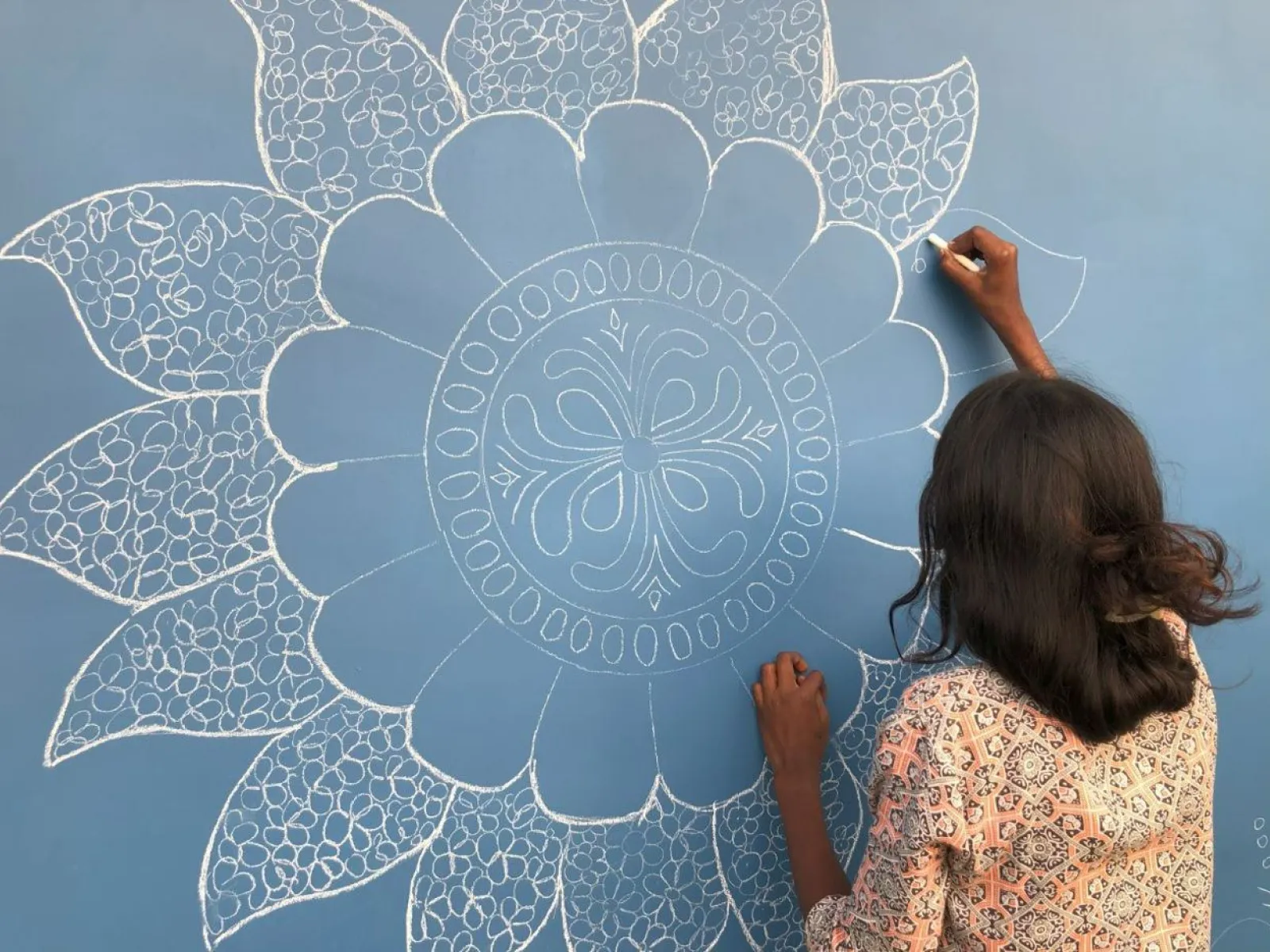
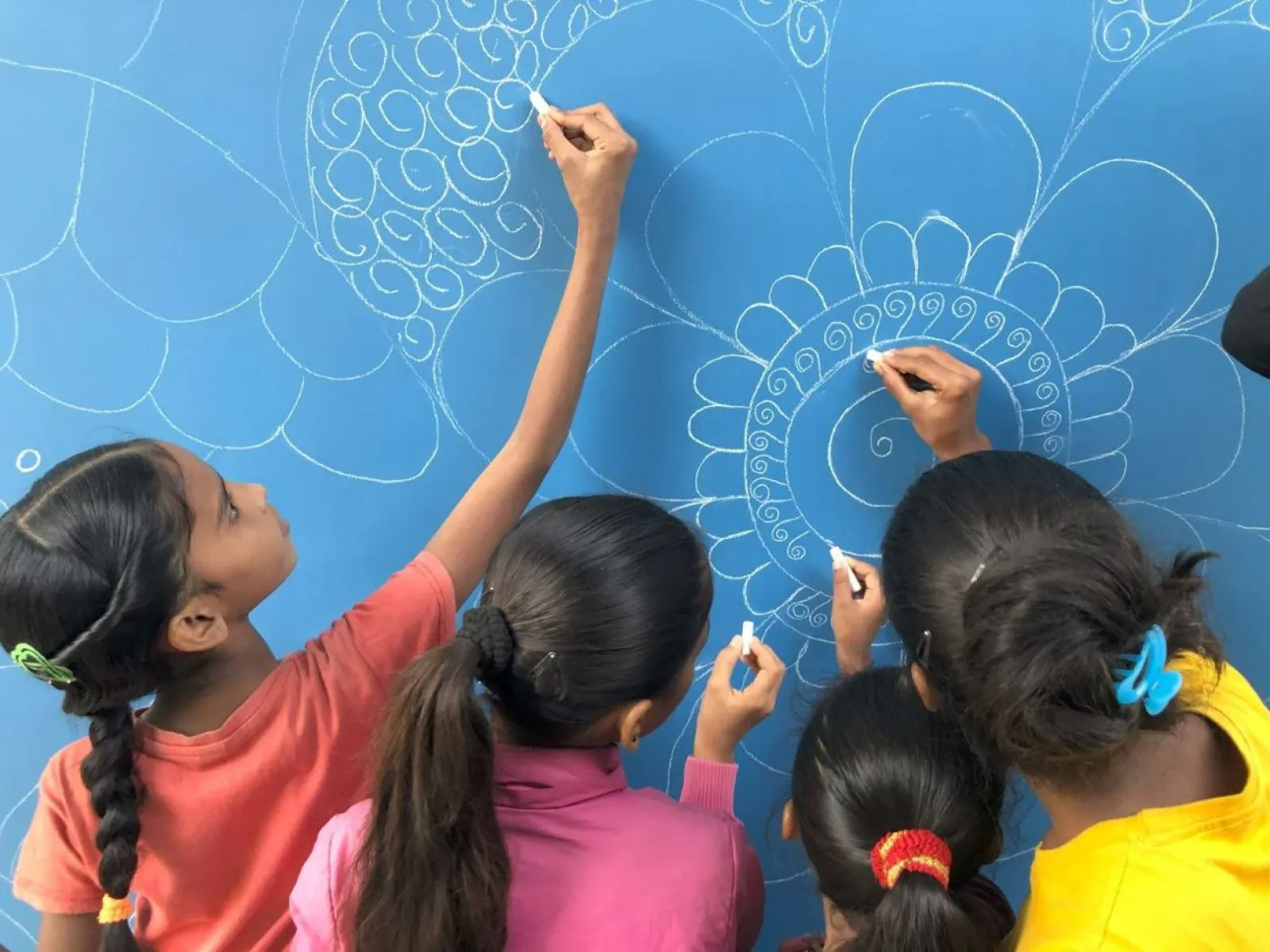
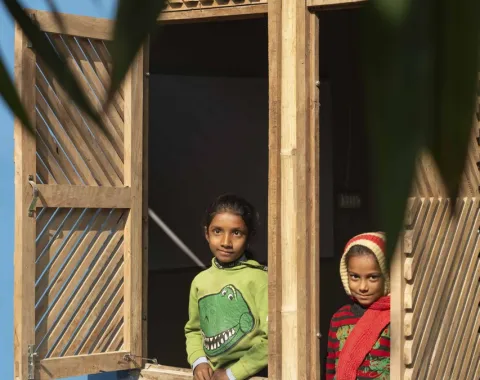
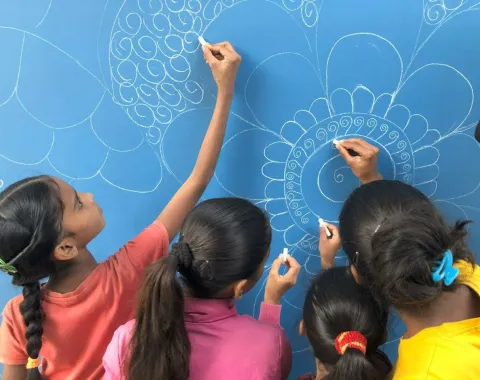
Children and young people also contributed to the design by creating ornamentation for the façades and classrooms. In the case of the classrooms, these were later translated into reliefs by local clay experts; for the façades, the designs were painted in white on bright blue walls. The colour scheme also reflects the wishes of the future users: while the unplastered clay walls help keep the school cool inside, the blue-painted exterior ensures it looks “cool” on the outside too.


Photo Credits: Daniel Haselsberger, Isha Haselsberger

Focus on the Future of Media: Campus Radio at the University of Liechtenstein Embraces Dialogue

Focus on the Future of Media: Campus Radio at the University of Liechtenstein Embraces Dialogue

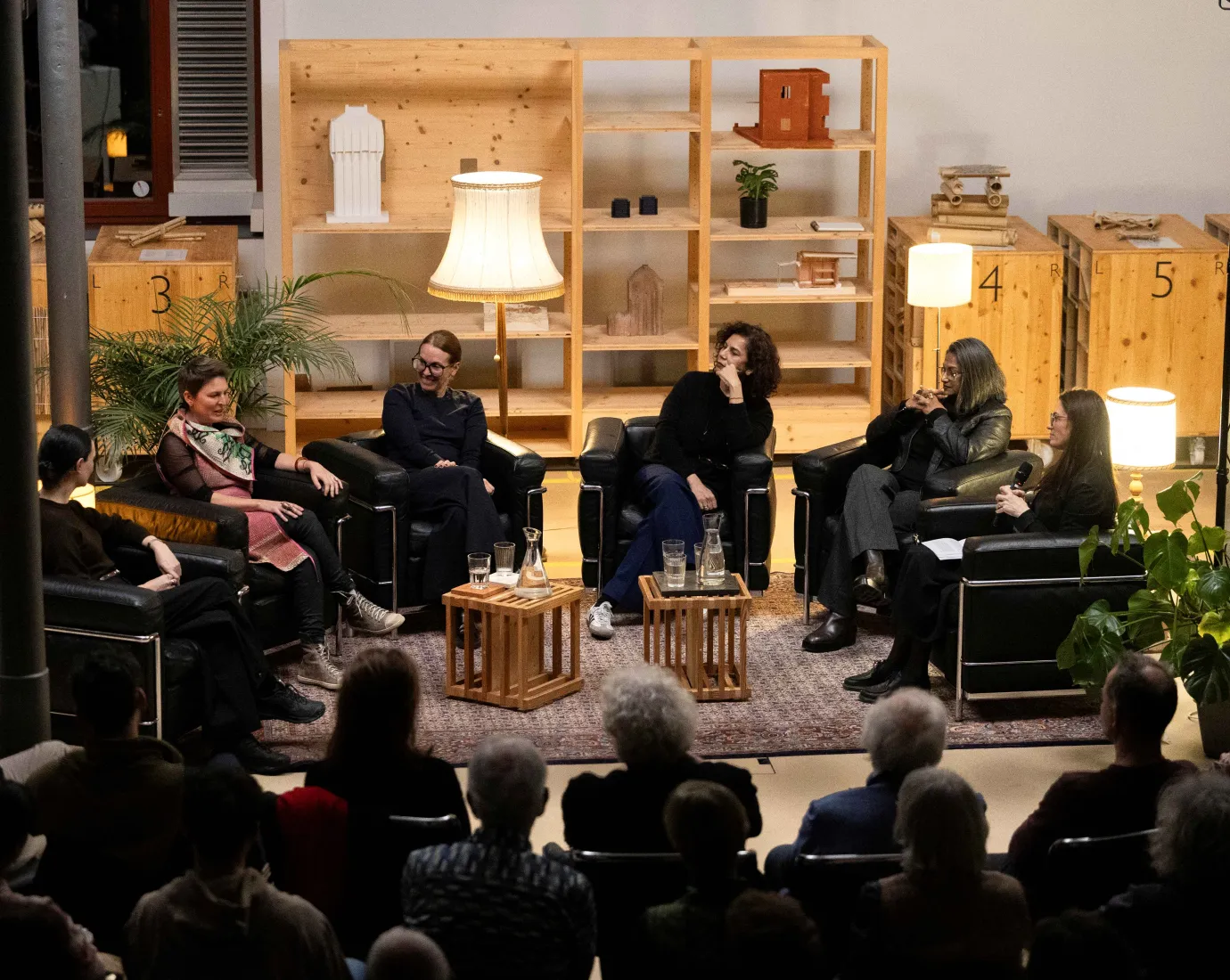
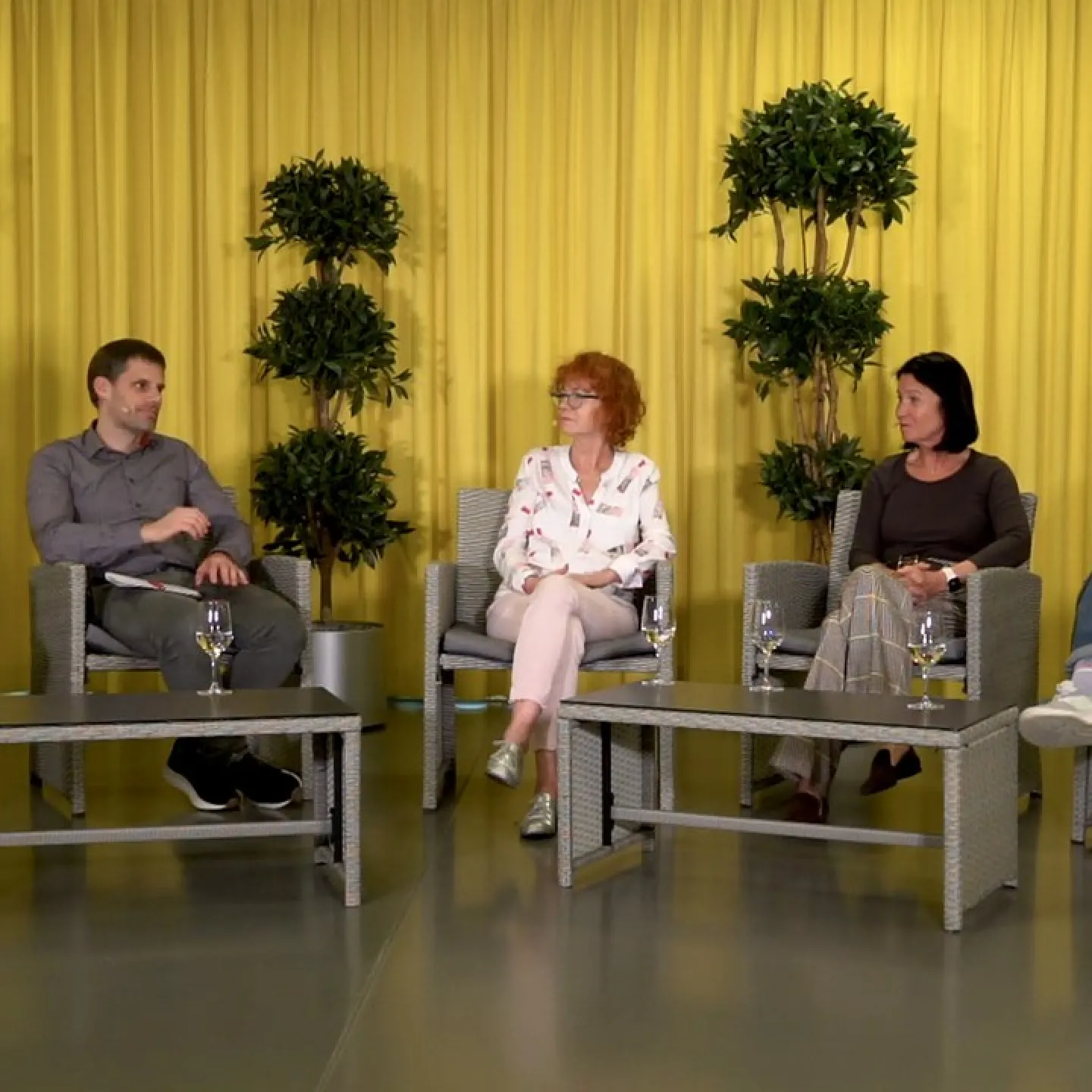
Podiumsdiskussion an der Universität Liechtenstein: Fünf Personen sitzen in einem Studio mit gelbem Vorhang und Pflanzen im Hintergrund. Sie diskutieren über Medienvielfalt und künstliche Intelligenz.
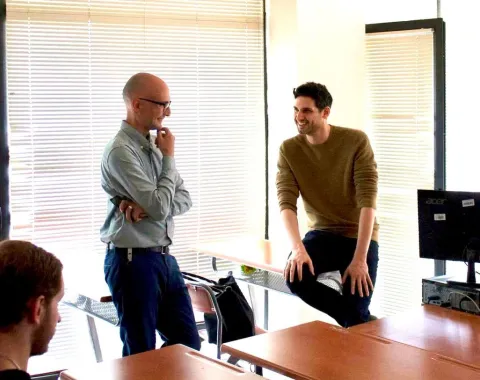
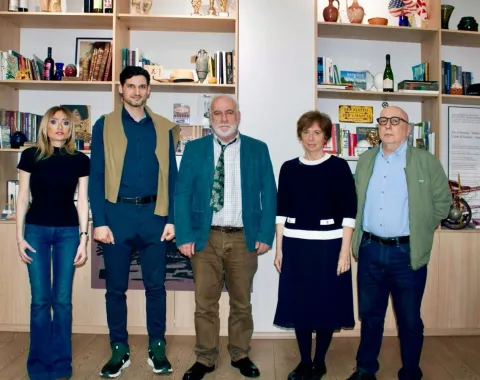
In a new episode of its video podcast on the future of media, Campus Radio at the University of Liechtenstein engages in dialogue with leading experts to discuss the current challenges facing the media landscape. Key topics include media diversity, the use of artificial intelligence, and the role of journalism in an increasingly digital society.


Jnes Rampone-Wanger, President of the Liechtenstein Media Commission, highlighted the importance of regional reporting: “There are many stories in this country that can only be told here. Local journalism strengthens a sense of identity and fosters mutual understanding within the population.”

Christian Frommelt, Rector of the University of Liechtenstein, pointed to the specific dynamics of small states: “Political communication works differently here. Visibility can have great impact with relatively few resources—but it requires precise timing and compelling personalities.”

Carmen Dahl, President of the International Liechtenstein Press Club, expressed concern over the growing use of AI-generated voices in everyday media: “Technology cannot replace the human element. Especially in journalism, the interpersonal dimension must not be underestimated—it’s about trust and presence.”
 

“At a time when media diversity is under pressure in our country, this open exchange was particularly important. I thank all participants for their constructive and honest contributions—as well as the University of Liechtenstein for its ongoing support. This episode also serves as thematic preparation for the International Radio Days in St. Pölten,” said Andreas Krättli.
 

The production was created in collaboration between AK Digital Media and Campus Radio at the University of Liechtenstein. The episode is available on campusradio.li, podcasthus.li, SoundCloud, and via live stream at campusradioli.airtime.pro.

Podiumsdiskussion an der Universität Liechtenstein: Fünf Personen sitzen in einem Studio mit gelbem Vorhang und Pflanzen im Hintergrund. Sie diskutieren über Medienvielfalt und künstliche Intelligenz.

Intensive Course “The Development of Money Laundering in the 20th and 21st Century”

Intensive Course “The Development of Money Laundering in the 20th and 21st Century”

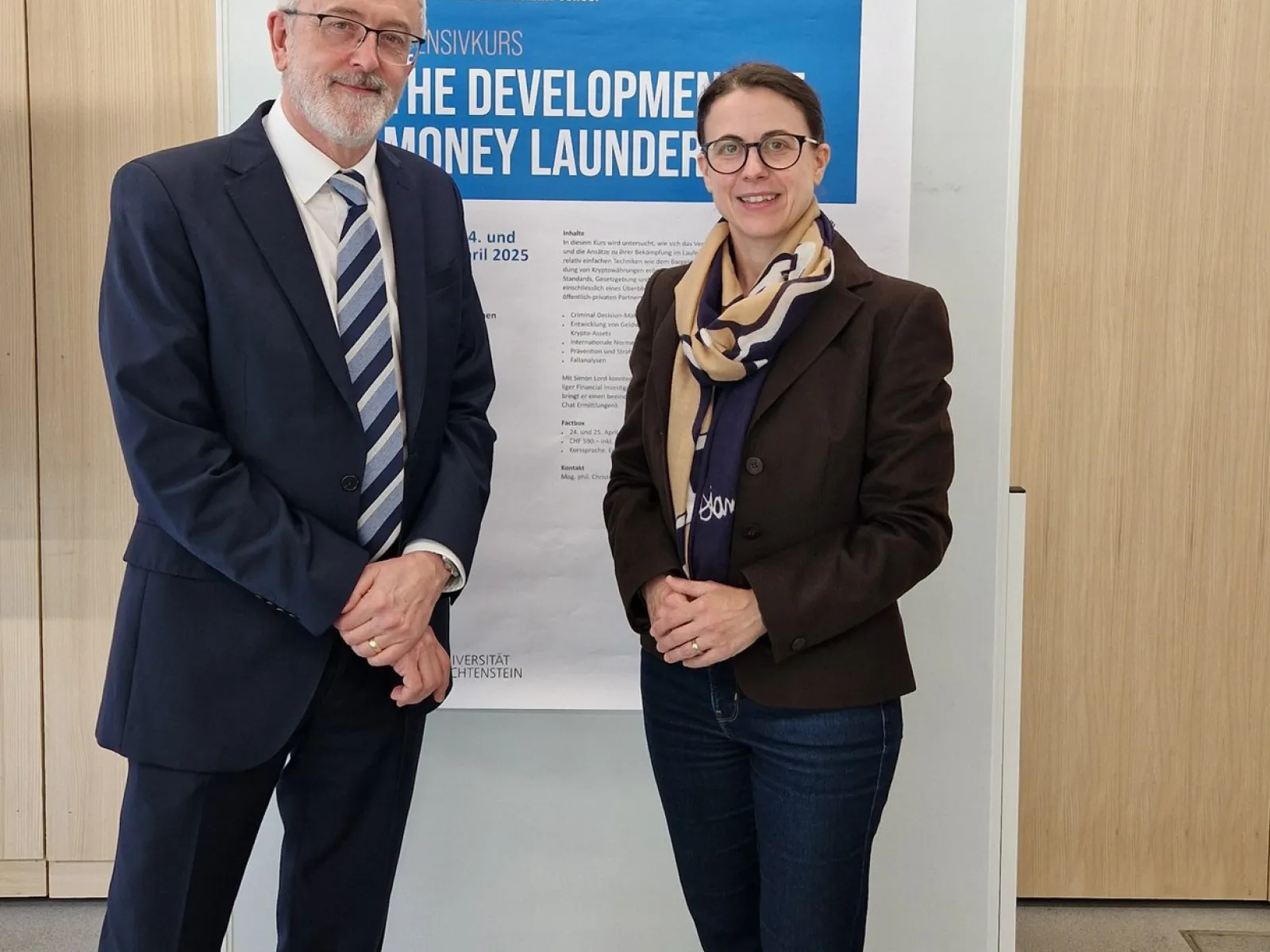
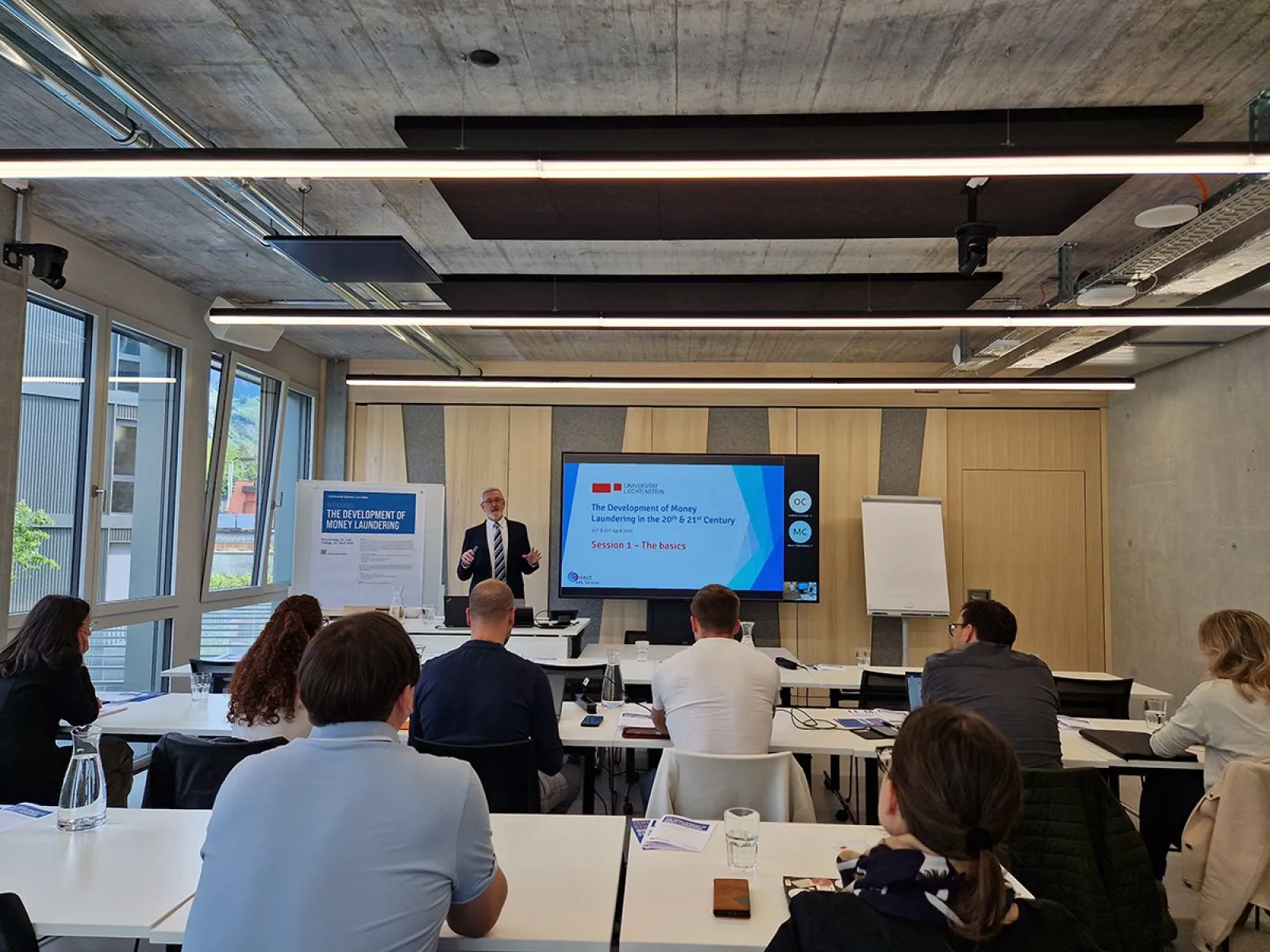
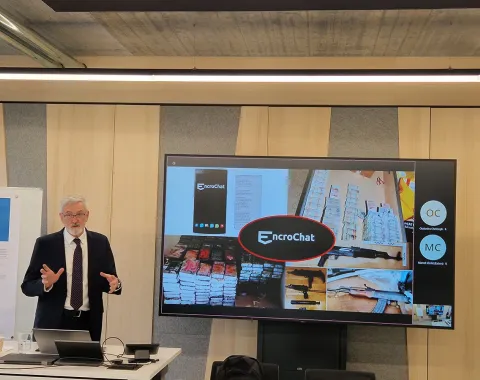
On 24 and 25 April 2025, the Professorship for Economic Criminal Law, Compliance and Digitalisation held the intensive course “The Development of Money Laundering in the 20th and 21st Century.”


The course featured a distinguished expert from the United Kingdom: Simon Lord, founder and director of protect AML Services (UK) and Senior Advisor at Financial Transparency Advisors in Vienna. He served for many years as a Financial Investigator and Strategic Intelligence Analyst with the UK’s National Crime Agency (NCA), gaining extensive experience in financial investigations.


In this intensive course, Simon Lord explained how the understanding of money laundering and the strategies to combat it have evolved over time. He traced the development from relatively simple techniques such as cash smuggling to more sophisticated modern methods involving cryptocurrencies. In particular, he provided detailed insights into techniques and mechanisms used in Informal Value Transfer Services and Trade-Based Money Laundering.


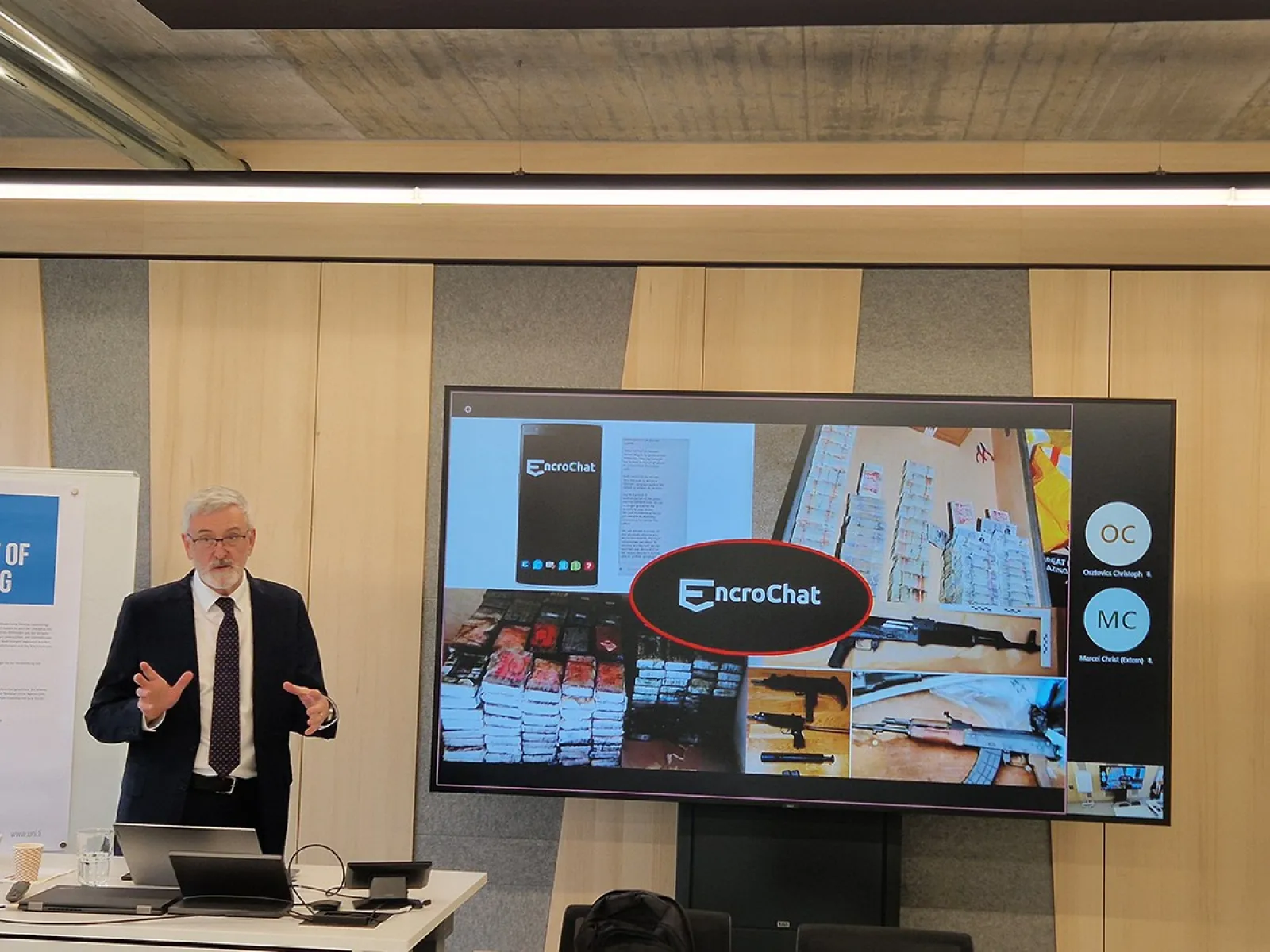
In addition, he outlined how international standards, legislation, and law enforcement practices have adapted to these threats—highlighting key UN conventions, FATF recommendations, and the rise of public-private partnerships. The course concluded with a case study and personal reflections on investigative experience related to EncroChat.


The course was conducted in English.

“Focus on Building” – Triesenberg in the Spotlight of the New Video Podcast

“Focus on Building” – Triesenberg in the Spotlight of the New Video Podcast

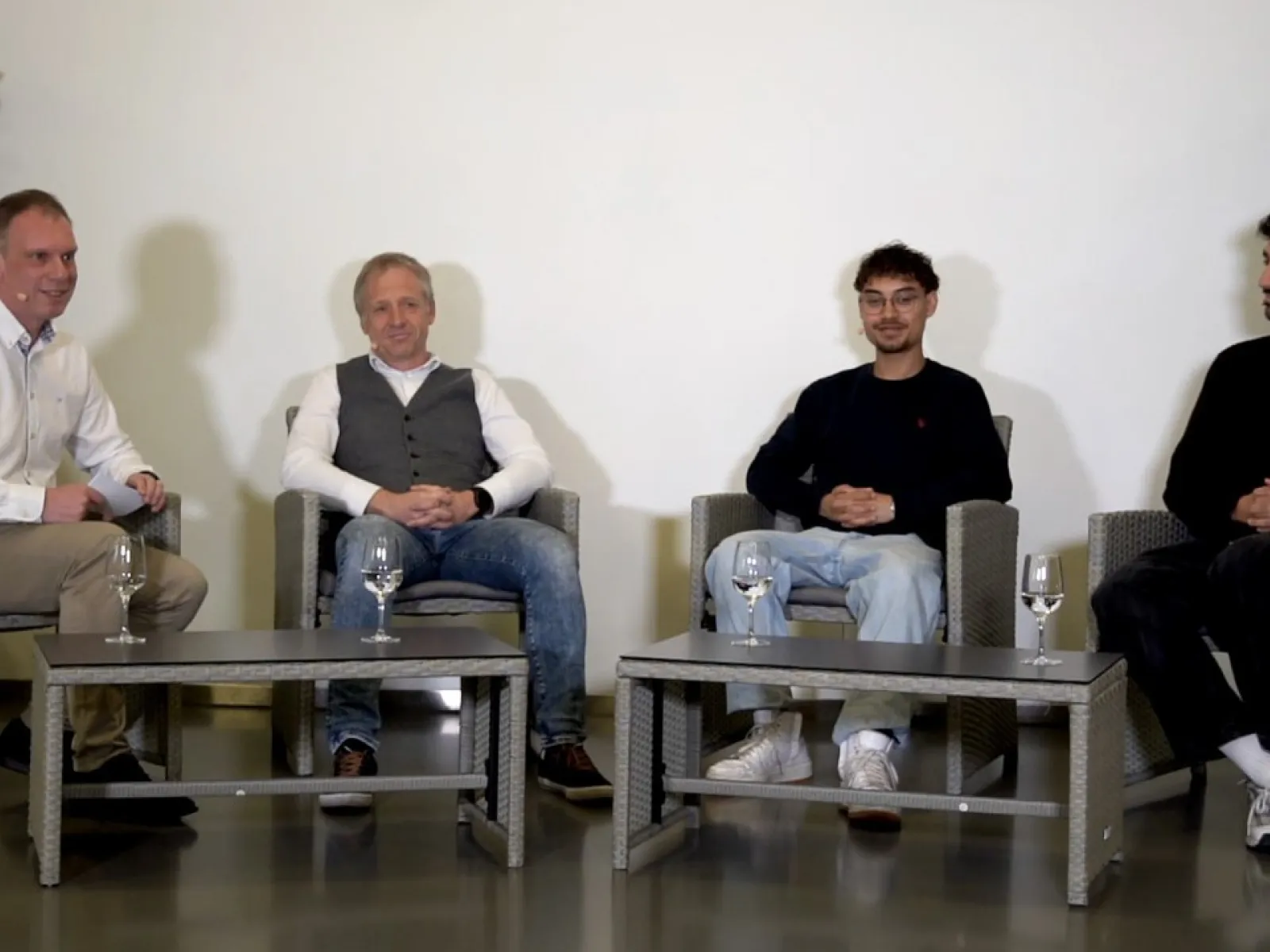
With the first episode of the new video podcast “Focus on Building”, Campus Radio at the University of Liechtenstein launches an exciting conversation series about building in alpine regions. The premiere focuses on the municipality of Triesenberg, its current projects, and visions for the future.


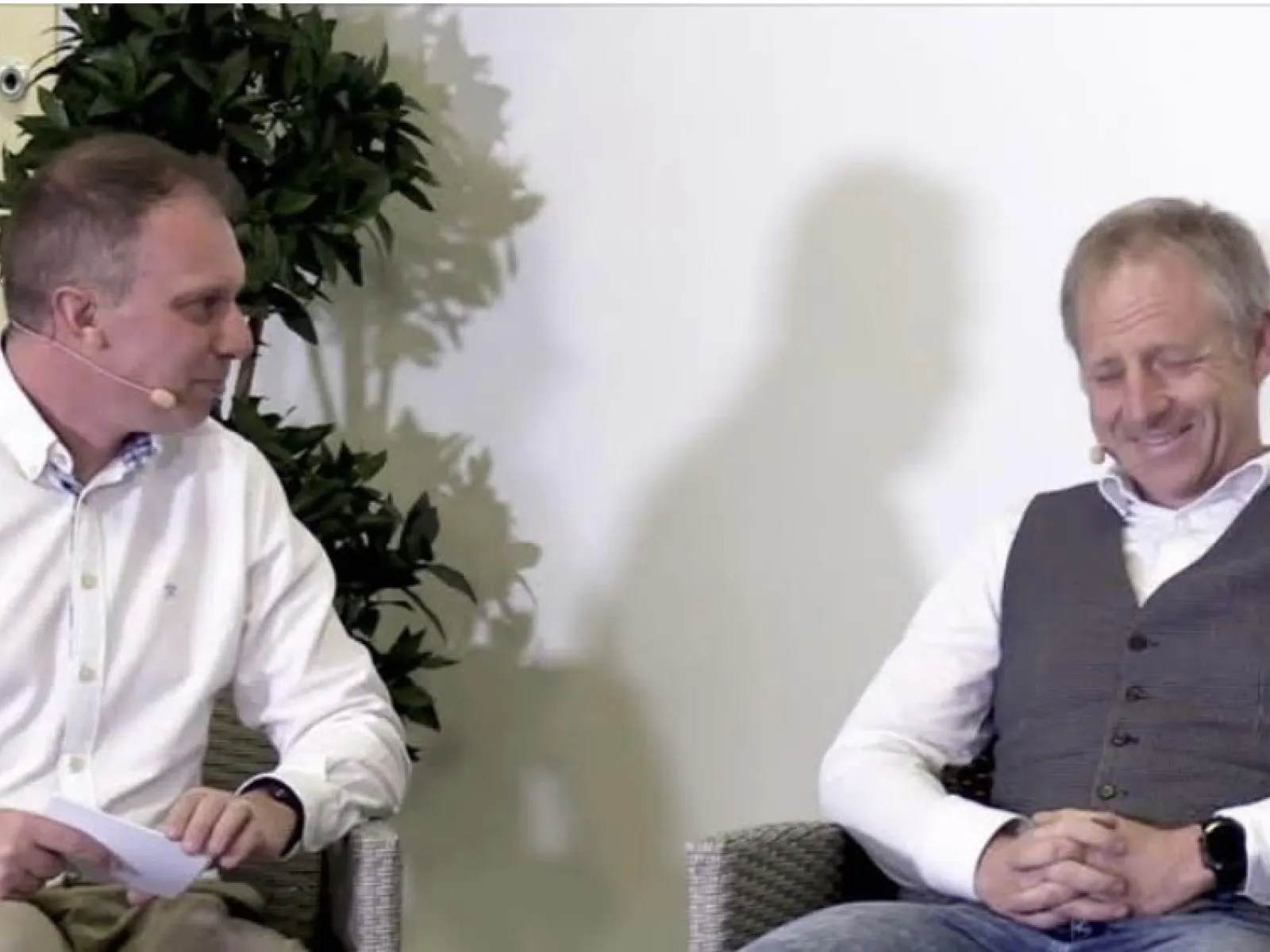
Guest speaker Christoph Beck, Mayor of Triesenberg, joined architecture students Thannavat Dill and Ömer Corbaci to discuss the balance between preservation and development. The episode was hosted by lecturer Andreas Krättli.


A special topic of discussion was the historic Madleni Hus, which is to be revitalised in the near future. The vacant mountain inn Sücka also sparked creative ideas—developed by the students as part of their coursework. “I really enjoyed exchanging ideas with the students—and I always love talking about my favourite place, Triesenberg,” said Christoph Beck.


The conversation took a personal turn when discussing the new fire station, photovoltaic systems, and infrastructure projects. Beck highlighted his commitment to sustainability and alpine identity in architecture. “Triesenberg shows how history, sustainability, and innovation can be meaningfully combined,” said Thannavat Dill. “The level of care applied to construction here is truly instructive for us,” added Ömer Corbaci.


The episode “What’s Happening in Triesenberg?” is now available on YouTube, SoundCloud, Spotify, Apple Podcasts, and via web radio at www.campusradio.li.

Earth, Timber, and the Future: The earth HUB at the Forum Bois Construction in Paris

Earth, Timber, and the Future: The earth HUB at the Forum Bois Construction in Paris

At Europe’s leading timber construction forum, the University of Liechtenstein showcased innovative approaches to climate-conscious building—aligned with the “Stratégie Climat 2050.”


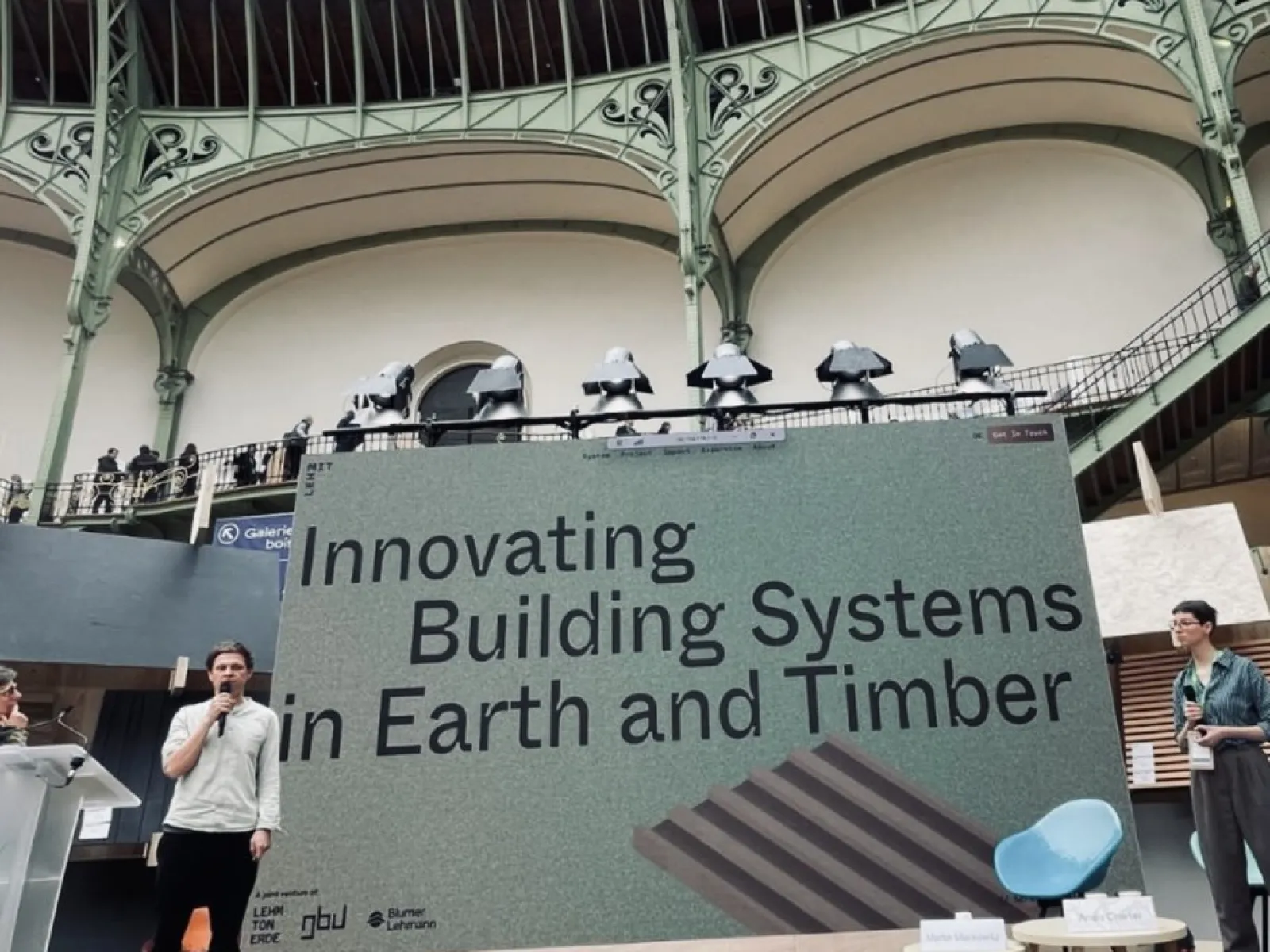
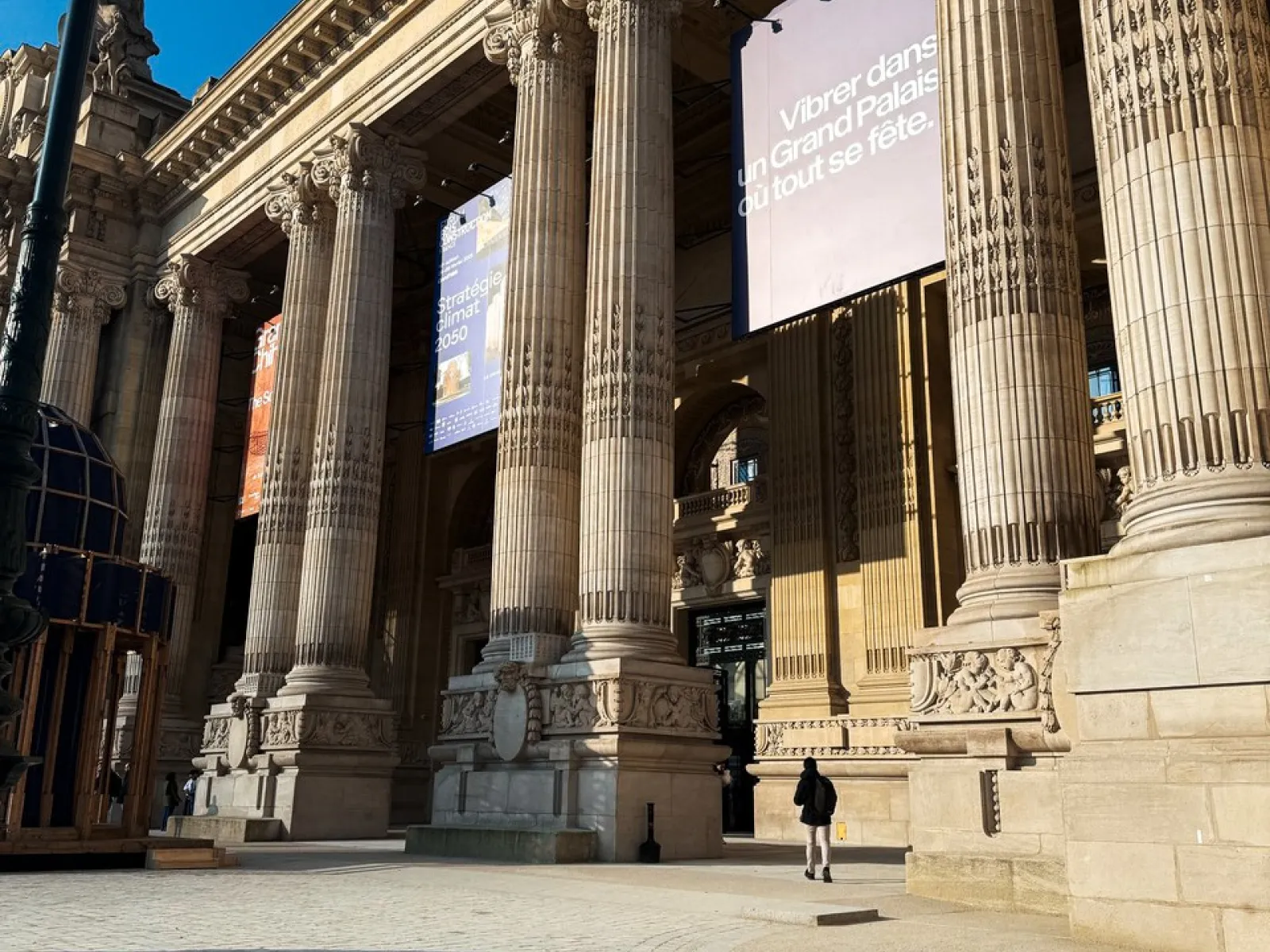
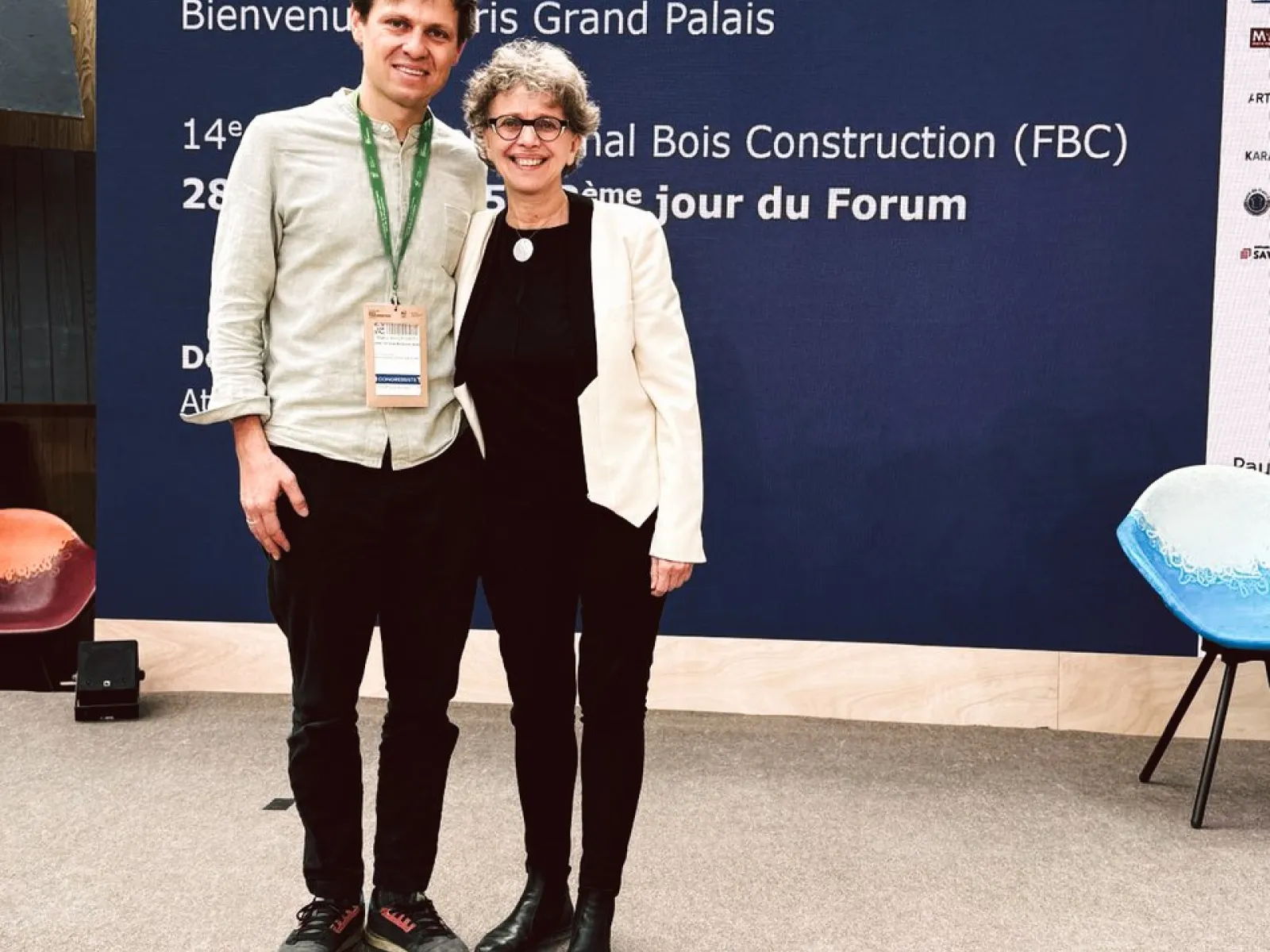
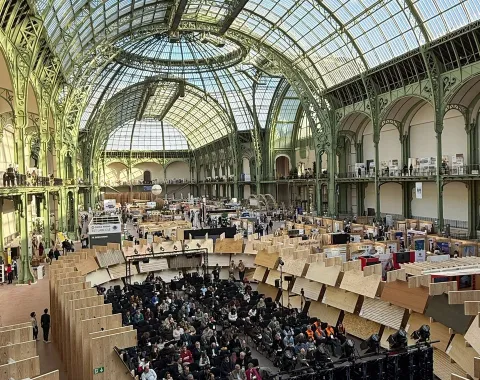
 The Forum Bois Construction 2025 took place from 26 to 28 February 2025 at the newly inaugurated Grand Palais in Paris. The 14th edition of the conference focused on the theme “Stratégie Climat 2050” and highlighted forward-looking solutions for timber construction and sustainable building.


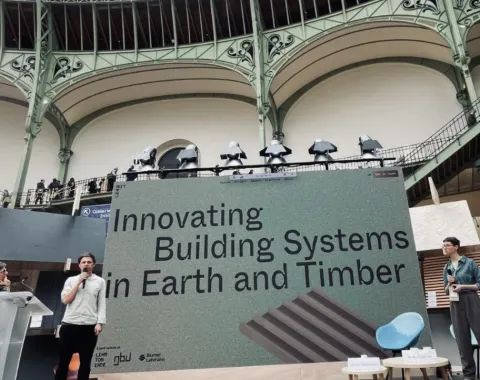
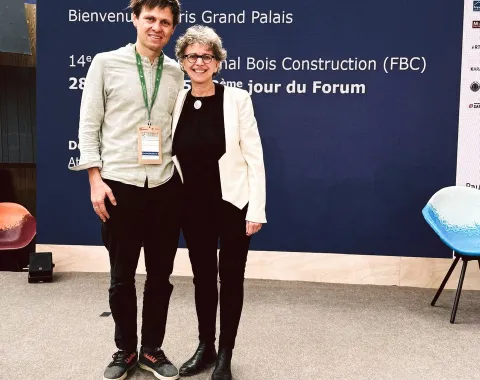
As part of the forum, university lecturer Martin Mackowitz presented the earth HUB of the University of Liechtenstein. The initiative promotes resource-efficient, future-oriented construction with natural materials and reflects the growing relevance of clay and timber in the context of climate strategy.

The forum served as a platform for dialogue among architects, engineers, researchers, and representatives of the timber and construction industries—emphasising the vital role of bio-based materials in the building transition.

Subscribe to